



Executive Summary: Key Takeaways on the Fruit Price Collapse
– The collective fruit price drop in China is widespread, with imported cherries down over 20%, domestic strawberries and oranges halved in price, and blueberries seeing significant declines.
– Primary drivers include a supply glut from years of expanded planting, enhanced supply chain efficiencies reducing costs, and more price-sensitive consumers with diversified choices.
– The downturn pressures upstream growers and wholesalers, squeezing margins and prompting a market correction towards quality over quantity.
– Future trends indicate a bifurcated market: ‘premiumization’ for high-quality fruits and accelerated domestic substitution for imports, reshaping investment landscapes.
– Stakeholders must adapt by focusing on supply chain agility, product differentiation, and monitoring regulatory and consumer shifts for sustainable growth.
The Stark Reality of Falling Fruit Prices
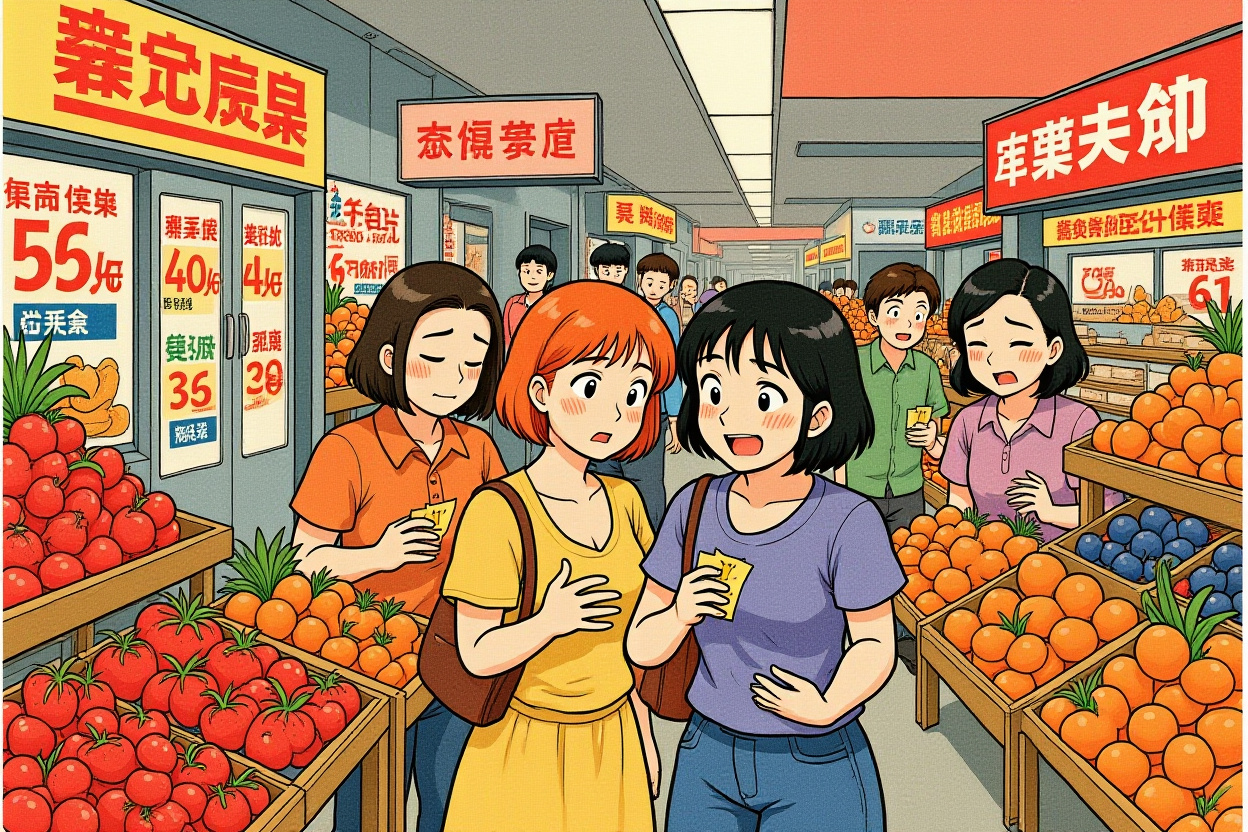
The echoes of “Fruits are cheaper!” blaring from market loudspeakers in Shanghai’s Pudong New District (浦东新区) encapsulate a broader trend sweeping China’s agricultural sector. This collective fruit price drop is not merely a seasonal fluctuation but a significant market correction with deep-rooted causes. Data from the Guangzhou Jiangnan Fruit and Vegetable Wholesale Market (广州江南果菜批发市场)官网 reveals sharp year-on-year declines: imported cherry prices fell from 57元/kg to 45元/kg, blueberries from 56.25元/kg to 50元/kg, and domestic oranges nearly halved from 6元/kg to 3.4元/kg. For investors and industry professionals, understanding this shift is crucial, as it reflects evolving supply chains, consumer behavior, and the increasing国产化 (domestication) of fruit production.
Imported Delicacies Lead the Downward Trend
Imported fruits, once premium symbols, are now at the forefront of the price slump. Cherries, a winter favorite, have seen prices for standard varieties drop by at least 20%, with occasional halvings. A major supermarket procurement head notes that while high-end cherry varieties remain stable, the mass-market segment’s decline is pronounced. This is largely due to surging imports from countries like Chile, which invested heavily in expansion to meet Chinese demand, leading to an oversupply of variable quality. Similarly, blueberries and durians have posted price decreases, driven by increased global shipments and competitive domestic production. The collective fruit price drop here underscores how global agricultural investments are colliding with local market saturation.
Domestic Fruits Follow Suit with Steep Declines
On the domestic front, staples like strawberries and砂糖橘 (sugar mandarins) are experiencing even steeper falls. According to平台 data,砂糖橘 purchase prices in some regions plummeted 30-50% year-on-year, with retail prices hitting as low as 9.9元 for two jin.草莓 (strawberries) have seen prices halve within a month in key producing areas like辽宁丹东 (Liaoning Dandong). Zeng Yulian (曾育炼), General Manager of the Fresh Produce Procurement Center at Benlai Life (本来生活), confirms that seasonal fruits like strawberries and脐橙 (navel oranges) have seen perceptibly lower retail prices. This collective fruit price drop is exacerbated by concentrated harvest periods and intense competition among similar fruit types, such as柑橘类 (citrus fruits) all peaking in December-January.Root Causes: Why Supply is Outpacing Demand
The collective fruit price drop stems from a confluence of factors, primarily a classic supply-demand mismatch amplified by technological and logistical advancements.
Overproduction from Expanded Planting and Investment
Years of favorable market conditions spurred massive planting expansions. Data from一亩田 (Yimutian) analysts shows that砂糖橘 planting面积 (area) exceeds 1000万亩 (million mu), with 2025 output up 25% to 650万吨 (tons).草莓 cultivation has expanded to over 221.18万亩, producing nearly 400万吨, about one-third of global supply. The blueberry boom is particularly illustrative: companies like农药制剂 leader Nuopuxin (诺普信) pivoted to blueberry farming, with its subsidiary光筑农业集团 (Guangzhu Agriculture Group) reporting 16.3 billion yuan in revenue for H1 2025. Hou Junliang (侯军良), a Yunnan blueberry wholesaler, notes that规模化种植 (large-scale cultivation) has low technical barriers but high capital requirements, leading to rapid area growth. This supply surge, coupled with shorter investment cycles, has flooded the market, making the collective fruit price drop inevitable.
Supply Chain Efficiencies and Evolving Consumer Tastes
Improved冷链物流 (cold chain logistics) and the rise of e-commerce and community group buying have slashed distribution costs and中间环节 (middleman layers), allowing prices to better reflect产地行情 (producer prices). Zeng Yulian (曾育炼) points out that these efficiencies create ‘让利空间’ (profit-sharing space) for consumers. Simultaneously, consumers are more price-sensitive and have broader choices—blueberries, kiwis, and other fruits compete directly with traditional柑橘类, suppressing price hikes. This demand-side shift means that even with ample supply, willingness to pay premium prices has waned, reinforcing the collective fruit price drop.Industry Impact: From Orchard to Supermarket Shelf
Upstream Squeeze: Growers and Wholesalers Under PressureDownstream price weakness has cascaded upstream. Guangdong fruit merchant Lin Chun (林春) reports that收购价格 (purchase prices) for citrus fruits have dropped 40-50%, with some varieties at 20-year lows, and buyer enthusiasm is tepid. For blueberries, Hou Junliang (侯军良) laments that国产蓝莓价格 (domestic blueberry prices) decline yearly, with current产地批发价 (wholesale prices) around 15-30元/jin, down 20% from last year. This compression threatens farmer profitability, potentially discouraging future planting and leading to unsustainable cycles. The一亩田 analyst warns that if price drops stem from同质化扩种 (homogeneous expansion) and low-cost competition, they could harm long-term industry health by eroding reasonable margins.Corporate Responses and Market Adaptation
Companies are adjusting strategies. Nuopuxin (诺普信), when contacted, acknowledged blueberry price declines in Q4 2025 but emphasized its diversified model. The market is seeing a shakeout where only those with efficient supply chains and quality focus will thrive. As侯军良 observes, the blueberry planting frenzy is slowing as price drops threaten cost coverage. This collective fruit price drop is forcing a reevaluation of business models, pushing players towards附加值 (added-value) products and integrated operations to buffer against volatility.Future Trajectory: Trends Shaping the Fruit Market
Looking ahead, the collective fruit price drop is likely to morph into a more nuanced market structure with clear winners and losers.Short-Term Fluctuations and Seasonal Rebound
In the immediate term, Lunar New Year demand may stabilize prices for premium gift boxes and certain fruits, as noted by the supermarket procurement head. However, with abundant库存 (inventory) and late-ripening varieties still to hit markets, any rebound will be limited. Zeng Yulian (曾育炼) predicts ‘短期节日企稳,长期分化加剧’ (short-term festival stabilization, long-term intensifying differentiation). Post-holiday, prices are expected to resume downward pressure, making the collective fruit price drop a persistent theme in early 2026.Long-Term Shift Towards Quality and Domesticization
The core future trend is ‘优质优价,劣质低价’ (premium for quality, cheap for inferior). The industry will compete on品质 (quality), with high-standard fruits commanding price premiums. Moreover,国产化替代 (domestic substitution) is accelerating.曾经依赖进口的高端水果如阳光玫瑰、车厘子 (once import-dependent premium fruits like Shine Muscat grapes and cherries) are now grown locally at scale, reducing import溢价 (premiums). Yuan Shuai (袁帅), Deputy Director of the Investment Department at the China Urban Development研究院 (研究院), highlights that policy support, standardized planting, and channel diversification will further stabilize supply. Even foreign brands like Driscoll’s (怡颗莓) are本地化种植 (localizing cultivation) in云南 (Yunnan), integrating into China’s agricultural fabric.Investment and Strategic Implications for Market Participants
For investors and executives, the collective fruit price drop presents both risks and opportunities in the Chinese equity and agribusiness sectors.Identifying Opportunities in a Transforming Landscape
– Focus on companies with strong supply chain capabilities and vertical integration, such as those investing in冷链物流 and direct-to-consumer platforms.– Consider agritech firms enabling precision farming and quality enhancement, as the market rewards ‘优果优价’ (good fruit, good price).
– Monitor players in深加工 (deep processing) and value-added products, like dried fruits or juices, which can mitigate fresh fruit volatility.
– Evaluate domestic fruit producers leading in premium varieties, as they may capture market share from imports.
Managing Risks in a Volatile Environment
– Be wary of overexposed growers or traders without cost advantages or differentiation strategies.– Assess regulatory risks, as government policies on农业补贴 (agricultural subsidies) and进口关税 (import tariffs) could shift market dynamics.
– Track consumer trends closely; the move towards场景细分化 (scenario segmentation) demands innovation in packaging, marketing, and product formats.
– The collective fruit price drop highlights the need for agile investment theses that account for rapid industry consolidation and technological adoption.