



Key Takeaways from the Leapmotor Annual Meeting Controversy
The recent uproar over 零跑汽车 (Leapmotor) annual meeting conditions has sparked wider discussion on corporate health in China’s electric vehicle (EV) sector. This incident offers critical insights for investors and industry watchers.
- Employee Dissatisfaction as a Leading Indicator: Public complaints from staff about basic amenities at the Leapmotor annual meeting highlight potential underlying issues with internal morale and resource allocation, which can precede operational or financial challenges.
- Cost Management Under Scrutiny: The apparent austerity measures at a key corporate event prompt questions about the intensity of Leapmotor’s cost-cutting strategies and their impact on brand perception and talent retention in a hyper-competitive market.
- Broader EV Market Pressures: This episode reflects the immense margin pressures facing Chinese EV makers like Leapmotor, caught between aggressive pricing wars, technological investment demands, and evolving consumer expectations.
- Governance and Communication Gaps: The handling of the event suggests potential shortcomings in internal communication and employee relations management, areas critical for sustaining innovation and execution in capital-intensive industries.
- Investor Sentiment Implications: Such incidents, while seemingly operational, can quickly influence market perception, affecting stock volatility and investor confidence in a company’s long-term management narrative.
Unpacking the Employee Backlash: A “拉垮” Event Under the Microscope
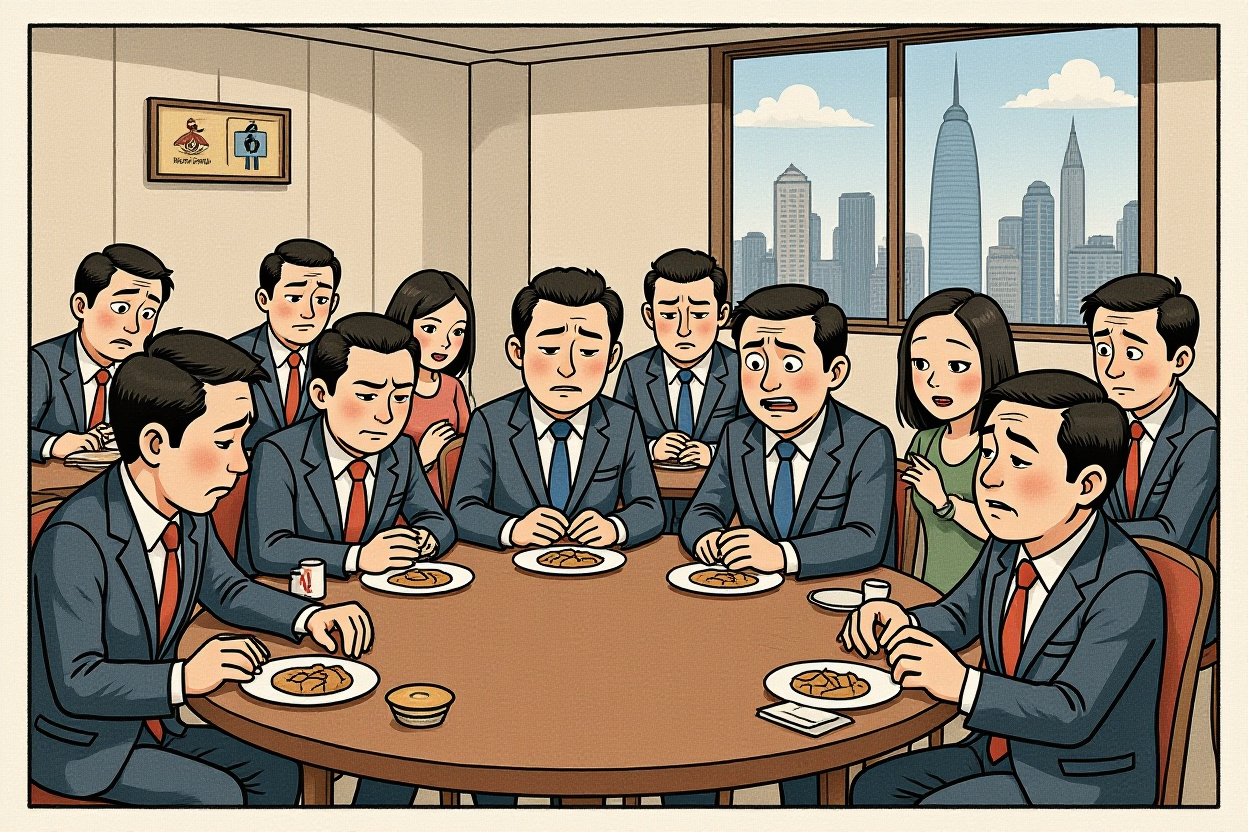
The Leapmotor annual meeting for 2026, intended as a morale-boosting corporate celebration, instead became a focal point for employee frustration and public scrutiny. Details emerging from staff on social media and internal forums paint a picture of an event that failed to meet basic expectations, branding it as “拉垮” or spectacularly underwhelming. This public airing of grievances is rare in China’s corporate culture and warrants a closer examination of what transpired and why it matters.
Chronicle of Complaints: From No Food to No Heat
According to multiple employee accounts aggregated from platforms like the Bianews report, the Leapmotor annual meeting was plagued by a series of logistical failures. Attendees were reportedly advised by the Human Resources department to bring their own food, as no lunch was provided. This set the tone for an event where participants were left searching for snacks and bread to stave off hunger. The venue itself compounded the problems; a lack of air conditioning left employees uncomfortably cold, inadequate restroom facilities caused long queues, and insufficient hot water supply added to the discomfort. For some divisions, the situation was exacerbated by holding events in temporary outdoor structures during rainy weather, a far cry from the polished image projected by most modern automotive firms.
A Stark Contrast to Industry Norms
The narrative of the Leapmotor annual meeting becomes even more striking when contrasted with the standard practices of peers in China’s technology and automotive sectors. Companies like 华为 (Huawei), 比亚迪 (BYD), and 蔚来 (NIO) are known for hosting lavish annual gatherings that often include substantial bonuses, luxury gifts, and high-profile entertainment. These events are strategically used to reward performance, foster loyalty, and project an image of success and stability. The perceived frugality of Leapmotor’s event, therefore, stands out not just for its operational shortcomings but for the symbolic message it sends to employees and the market about the company’s current priorities and financial posture.
Financial and Operational Implications for Leapmotor
While a poorly executed corporate event might seem like a minor HR issue, for a publicly listed company like Leapmotor operating in the capital-intensive and sentiment-driven EV space, it carries significant financial and operational weight. The Leapmotor annual meeting debacle acts as a prism through which to analyze the company’s strategic choices and their potential consequences.
Cost-Cutting in Context: Necessary Prudence or Damaging Austerity?
Leapmotor, like many EV startups, operates in a challenging financial environment. The company has been navigating the dual pressures of scaling production for models like the C11 and T03 while investing heavily in research and development for next-generation platforms and autonomous driving. Analyst reports, including those from 中国国际金融有限公司 (China International Capital Corporation Limited, CICC), have highlighted the industry-wide squeeze on profitability. In this light, controlling operational expenses (OpEx) is a rational, investor-mandated priority. However, the optics of cutting corners on an employee-facing event like the Leapmotor annual meeting risk being counterproductive. It can signal to the market that cost containment is affecting core employee experience, potentially undermining productivity and innovation—the very engines of long-term value creation. Investors must discern whether this is a targeted, intelligent reduction in discretionary spending or a symptom of broader cash flow constraints.
Employee Morale, Talent War, and Retention Risks
The automotive industry, especially the EV segment, is in a fierce war for engineering and software talent. Companies compete with not only traditional automakers but also tech giants like 百度 (Baidu) and 小米 (Xiaomi) entering the space. Employee morale is a critical, albeit intangible, asset. A negative experience at a flagship internal event like the Leapmotor annual meeting can erode goodwill, increase attrition risk, and make recruiting top talent more difficult and expensive. For a company whose valuation is tied to its ability to execute complex technological roadmaps, a demotivated workforce poses a direct threat to its operational milestones and, by extension, its stock price. Human capital is a line item that, when compromised, can have exponential negative effects on R&D cycles and time-to-market for new vehicles.
The Broader Canvas: China’s EV Market Under Pressure
The Leapmotor annual meeting incident cannot be viewed in isolation. It is a microcosm of the immense pressures shaping the entire Chinese electric vehicle landscape. Understanding these macro forces is essential for contextualizing the company’s decisions and forecasting its trajectory.
Intensifying Competition and Price Wars
The Chinese EV market is arguably the most competitive in the world. Dominated by 比亚迪 (BYD) and featuring strong contenders like 特斯拉 (Tesla) China, 蔚来 (NIO), 理想汽车 (Li Auto), and 小鹏汽车 (XPeng), the sector is characterized by continuous price competition and rapid model iterations. In 2023 and 2024, several rounds of price cuts initiated by Tesla and BYD forced others, including Leapmotor, to follow suit to maintain volume. This has dramatically compressed gross margins across the board. The 中国汽车工业协会 (China Association of Automobile Manufacturers, CAAM) has frequently cited overcapacity and intense competition as key industry challenges. In such an environment, every expense is scrutinized. The Leapmotor annual meeting, therefore, becomes a visible manifestation of the cost discipline being enforced across operations, a discipline that is simultaneously necessary for survival yet perilous if it hollows out corporate culture.
Regulatory Environment and Corporate Governance Expectations
Chinese regulators, including the 中国证券监督管理委员会 (China Securities Regulatory Commission, CSRC) and stock exchanges like the 香港交易所 (Hong Kong Exchanges and Clearing, HKEX) where Leapmotor is listed, increasingly emphasize ESG (Environmental, Social, and Governance) factors and corporate social responsibility. The “S” or social component directly encompasses employee welfare and relations. While not a regulatory breach, public discontent over working conditions or corporate treatment can attract scrutiny from both regulators and influential institutional investors who integrate ESG scores into their decision-making. A poorly received Leapmotor annual meeting could prompt questions during earnings calls or in analyst reports about the company’s governance practices concerning its human capital management, adding another layer of reputational risk.
Market Reactions and Expert Commentary
The financial market’s response to operational or PR incidents is often immediate and telling. Gathering perspectives from analysts and tracking stock movements provides a real-time gauge of the incident’s perceived significance.
Analyst Perspectives on the Leapmotor Annual Meeting Fallout
Industry experts have begun weighing in on the implications. “While cost control is paramount in the cash-burn phase of EV development, the employee experience at corporate events is a visible cultural thermometer,” noted a senior auto analyst from 中信证券 (CITIC Securities) who preferred not to be named. “For investors, the key question is whether this is an isolated misstep in event planning or indicative of a broader, potentially value-destructive austerity that could hurt innovation.” Another analyst from 摩根士丹利 (Morgan Stanley) commented in a research note that “sentiment-driven stocks like EV makers are particularly susceptible to narratives around execution and culture. Management’s response to this incident will be closely watched for signals about their operational priorities and communication efficacy.” These insights underscore that the Leapmotor annual meeting is being analyzed not just as an HR story, but as a data point in the company’s overall investment thesis.
Stock Performance and Investor Sentiment Analysis
Following the viral spread of employee complaints, Leapmotor’s stock (HKEX: 9863) showed increased volatility. While direct causation is difficult to isolate from broader market moves, trading volumes spiked, and the stock underperformed the 恒生指数 (Hang Seng Index) and the 恒生科技指数 (Hang Seng Tech Index) in the days after the news broke. This suggests that the market is factoring in the reputational risk. The incident may exacerbate existing investor concerns about the company’s path to profitability and its ability to manage both its finances and its human resources effectively amidst fierce competition. The Leapmotor annual meeting saga has thus become a tangible element in the risk premium assigned to the stock.
Strategic Pathways Forward and Investment Considerations
The controversy surrounding the Leapmotor annual meeting presents both a challenge and an opportunity for the company’s leadership. How management addresses the fallout will offer critical clues about its strategic maturity and could influence investment decisions for years to come.
Recommended Actions for Leapmotor Management
To mitigate the damage and rebuild internal and external trust, Leapmotor’s executives, including CEO 朱江明 (Zhu Jiangming), should consider a multi-pronged approach. First, transparent internal communication acknowledging the shortcomings and outlining concrete improvements for future events is essential. Second, a symbolic, though not necessarily extravagant, gesture to make amends with employees could help repair morale. More importantly, the company should use this as a catalyst to review its overall employee value proposition, ensuring that cost-cutting does not undermine the tools and environment needed for its workforce to thrive. Finally, clear communication with investors about the rationale behind operational expenditures and the balance between frugality and growth investment will be key during the next earnings call. The handling of the Leapmotor annual meeting aftermath is now a test of leadership.
Guidance for Investors and Stakeholders
For institutional investors and fund managers evaluating Chinese EV equities, this episode serves as a reminder to look beyond quarterly delivery numbers and balance sheets. Qualitative assessments of corporate culture, employee satisfaction, and management credibility are increasingly vital in a sector where execution risk is high. When analyzing Leapmotor or its peers, investors should:
- Scrutinize management commentary on OpEx and human capital in quarterly reports and conference calls.
- Monitor employee review trends on platforms like LinkedIn and local Chinese sites for early warning signs of cultural issues.
- Compare talent turnover rates and R&D productivity metrics across competitors to gauge relative organizational health.
- Consider the long-term brand impact of cost-cutting decisions on both consumer perception and employer branding.
The Leapmotor annual meeting incident, therefore, reinforces the need for a holistic investment framework that integrates both quantitative financials and qualitative governance factors.
Synthesizing the Signals from a Corporate Misstep
The employee critique of the Leapmotor annual meeting is more than a viral anecdote; it is a significant data point in the complex equation of valuing a high-growth, high-risk Chinese EV company. It highlights the tension between financial survival through cost discipline and the intangible yet critical investment in human capital and corporate culture. For Leapmotor, the path forward requires deft management to reassure both its workforce and the investment community that it can navigate this tension without compromising its strategic goals. The company’s response will be indicative of its operational resilience and managerial foresight. For the broader market, this event underscores the importance of environmental, social, and governance (ESG) factors in assessing Chinese automotive stocks, where social license to operate and internal innovation capacity are inextricably linked to financial performance. Stakeholders would be prudent to watch not only for Leapmotor’s next vehicle launch but also for its next internal communication and how it stewards the relationship with its employees—the true drivers of its future in the relentless race for electric mobility supremacy.