



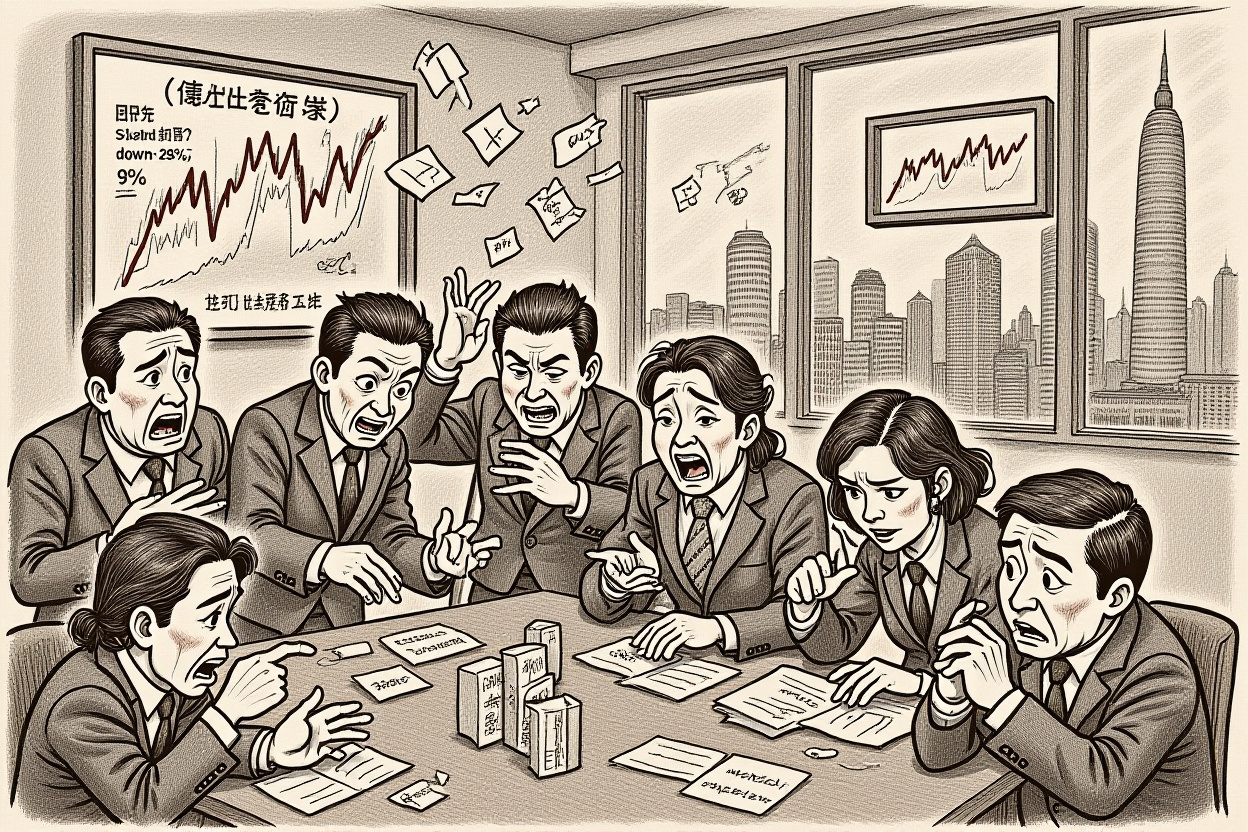
In a shocking reversal of fortune, the global precious metals market was engulfed by a historic wave of selling pressure on Friday, January 30th. Just as bullish sentiment reached a fever pitch with gold breaching $5,600 and silver eyeing $120, a violent and swift correction erased billions in market value within hours. This seismic event, marking the worst single-day performance for silver in over four decades, serves as a stark reminder of the extreme volatility lurking beneath parabolic rallies and has profound implications for asset allocation strategies worldwide, including within the complex tapestry of Chinese equity and commodity markets.
Executive Summary: Key Takeaways from the Precious Metals Carnage
- The sell-off was historic: Spot silver plummeted approximately 28%, its worst day since March 1980, while gold fell roughly 9%, triggering massive losses in leveraged ETFs and futures contracts.
- The immediate catalyst was a shift in Fed policy expectations following former President Trump’s nomination of Kevin Warsh (凯文·沃什), perceived as more hawkish than anticipated, which caused a sharp spike in the US Dollar.
- Underlying the plunge was a dangerously leveraged market structure; the parabolic 2025 rally in both metals had attracted excessive speculative and retail leverage, leading to a cascade of margin calls and forced liquidations.
- For China-focused investors, the event underscores the critical interplay between global liquidity expectations, the USD/CNY exchange rate, and commodity prices, impacting everything from domestic gold ETFs to mining stocks and currency-hedging strategies.
- Moving forward, a focus on fundamentals over momentum, careful position sizing, and an understanding of market microstructure are essential for navigating similar episodes of volatility.
The Anatomy of a Historic Market Collapse
The scale and speed of the decline on January 30th were extraordinary, catching even seasoned traders off guard. The precious metals market崩盘 unfolded with breathtaking velocity, transforming paper profits into devastating losses and liquidating over-leveraged positions en masse.
By the Numbers: A Day of Record Losses
The data paints a clear picture of the devastation. Spot silver prices cratered by 28% intraday, briefly touching the $82 per ounce level. Silver futures contracts fared even worse, collapsing by 31.4% to settle at $78.53. This performance officially marked the metal’s most brutal trading session in 46 years, eclipsing even the volatility seen during the 2008 financial crisis. Gold, often considered the more stable sibling, did not escape unscathed. Spot gold fell about 9%, breaking decisively below the psychologically important $4,900 support, while gold futures tumbled 11.4% to approximately $4,745.
The damage was magnified exponentially in leveraged products. The ProShares Ultra Silver ETF (AGQ), which seeks twice the daily return of silver, imploded by over 62% in a single session. This single statistic encapsulates the extreme danger of applying leverage to already volatile assets during a market崩盘 event.
The Immediate Trigger: A Hawkish Surprise from the Fed
The match that lit the fuse was a significant shift in the outlook for US monetary policy. The market had been pricing in a continued dovish stance from the Federal Reserve, a primary fuel for the metals’ rally. However, former President Trump’s formal nomination of Kevin Warsh (凯文·沃什) to chair the Federal Reserve shocked this consensus.
- Market Expectations vs. Reality: Investors had anticipated a nominee firmly committed to aggressive rate cuts and liquidity provision. Warsh, a former Fed governor, is known for his inflation vigilance and historically more hawkish-leaning views compared to other candidates.
- The Dollar’s Violent Reaction: The nomination was interpreted as a potential pivot away from ultra-loose policy. The US Dollar Index (DXY) spiked 0.8% almost instantly. Since gold and silver are priced in dollars, a stronger dollar makes them more expensive for holders of other currencies, depressing demand and triggering sell orders.
- The Narrative Shatters: The core “anti-dollar” and “monetary debasement” narrative that had propelled gold to record highs suffered a direct hit. The prospect of a less accommodative Fed chief led to a rapid repricing of interest rate expectations, increasing the opportunity cost of holding non-yielding bullion.
Unpacking the Mechanics: Why the Fall Was So Severe
While the Warsh nomination provided the catalyst, the explosive severity of the precious metals market崩盘 was rooted in precarious market conditions that had developed during the preceding months of relentless buying. This was not merely a news-driven dip but a full-blown liquidation event.
The Leverage Trap and the Margin Call Cascade
The parabolic gains of 2025—a 66% surge for gold and a staggering 135% rally for silver—were not built on stable, long-term investment alone. They were amplified by an influx of speculative, retail, and leveraged capital chasing momentum.
- Crowded and Leveraged Trades: Analysts like Matt Maley pointed out that precious metals had become a favorite playground for retail traders and short-term speculators, many of whom used options, futures, and leveraged ETFs to magnify their bets.
- The Domino Effect: As prices began to fall sharply from their highs, brokers issued margin calls to investors using leverage. Unable or unwilling to post additional collateral, these investors were forced to sell their positions. This forced selling drove prices lower, triggering more margin calls in a self-reinforcing downward spiral—a classic example of a liquidation cascade.
- ETF Flows Exacerbating Volatility: The massive redemptions from physically-backed gold ETFs and the collapse of leveraged products like AGQ created additional selling pressure on the underlying futures markets, further accelerating the decline.
A Sudden Shift in Market Sentiment and Positioning
Beyond leverage, the market’s psychological footing had become extremely fragile. Investment manager Katy Stoves aptly compared the situation in gold to the previous “crowded trade” in AI tech stocks. When extreme bullish consensus forms, the exit door becomes very narrow when everyone tries to leave at once.
- Geopolitical Premium Evaporates: Prior to the sell-off, a premium had been baked into gold prices due to heightened tensions involving Greenland, Venezuela, and Iran. As these specific flashpoints showed no immediate escalation, some of this “fear premium” quickly unwound.
- From Greed to Panic: The combination of a shifted macro narrative (Fed policy) and technical breakdown triggered a rapid sentiment reversal. The CBOE Gold ETF Volatility Index (GVZ) likely spiked, reflecting the extreme fear and uncertainty gripping the market.
Implications for China Markets and Global Asset Allocators
For the sophisticated, China-focused readership of Yuan Trends, this global precious metals market崩盘 is not a distant event. It has direct and indirect repercussions for Chinese equities, currency management, and commodity-dependent sectors.
Impact on Domestic Gold Assets and Related Equities
The volatility in international benchmarks transmits directly to China’s domestic markets.
- Gold ETFs and Futures: China-listed gold ETFs, such as those tracking the SGE Gold 99.99 price, undoubtedly experienced significant net asset value (NAV) declines and potential investor outflows. Trading in Shanghai Gold Exchange (上海黄金交易所) futures contracts would have seen heightened volatility and margin requirements.
- Mining and Resource Stocks: Listed Chinese gold mining companies like Zijin Mining (紫金矿业) and Shandong Gold Mining (山东黄金矿业) likely faced heavy selling pressure. Their equity valuations are highly sensitive to the global spot price of gold, and such a sharp correction would negatively impact earnings forecasts and investor sentiment toward the sector.
- Retail Investor Behavior: The Chinese retail investor base is a significant participant in both physical gold and gold-backed financial products. A shock of this magnitude could cool speculative fervor in the sector for some time, shifting capital towards other asset classes.
Broader Macro and Currency Considerations
The event reinforces several critical lessons for institutional allocators monitoring China.
- USD/CNY Dynamics: The sharp rally in the US Dollar following the news highlights the ongoing sensitivity of global capital to Fed policy. A persistently strong dollar creates headwinds for emerging market currencies, including the Renminbi (人民币), complicating the People’s Bank of China’s (中国人民银行) monetary policy decisions.
- Inflation Hedge Reassessment: The violent breakdown challenges the simplistic view of gold as a always-reliable near-term inflation hedge. It demonstrates that liquidity conditions and real interest rate expectations can overwhelm other drivers in the short term.
- Portfolio Diversification Lessons: The episode is a case study in the perils of “momentum chasing” and over-concentration in any single thematic asset, even one with sound long-term fundamentals. It argues for robust risk management frameworks that account for tail-risk events and correlation breaks.
Navigating the Aftermath: Strategic Guidance for Investors
In the wake of such a violent repricing, emotion-driven decisions are the greatest danger. The precious metals market崩盘 provides a clear moment to reassess strategies with a disciplined, forward-looking approach.
Immediate Actions: What to Avoid and What to Consider
- Avoid Panic Selling and Premature “Bottom-Fishing”: For long-term holders of physical metal, selling into a capitulation event is rarely optimal. Conversely, attempting to immediately “buy the dip” in a market still undergoing deleveraging is highly risky. As noted in market commentary, the forced liquidation phase can extend volatility.
- Focus on Fundamentals Over Noise: Analysts from firms like Evercore ISI suggested the market reaction to Warsh’s nomination may have been overdone, noting he is not an extreme hawk. Investors should now scrutinize the actual trajectory of real yields, central bank balance sheets, and physical demand fundamentals rather than headlines.
- Monitor Market Structure Signals: Watch for signs that the liquidation pressure is abating, such as a stabilization in leveraged ETF flows, a reduction in futures open interest, and a calming in volatility indices (like the GVZ).
Long-Term Portfolio Implications
This event should inform broader asset allocation decisions.
- Re-evaluate Position Sizing and Leverage: The catastrophic losses in leveraged products are a definitive lesson. Any allocation to volatile assets like silver should be sized appropriately and avoid leverage unless within a strictly defined, professional risk framework.
- Reaffirm the Role of Gold: Despite the short-term pain, the long-term drivers for gold—including global debt levels, geopolitical fragmentation, and central bank diversification (particularly by institutions like the People’s Bank of China)—remain intact. Its role as a strategic, non-correlated asset in a portfolio is undiminished, but its tactical entry points require more nuance.
- Stress Test Your Portfolio: Use this event as a template to ask: “What other crowded, leveraged trades exist in global markets, and how would my portfolio withstand a similar unwind?” This is crucial for exposure to other high-flying sectors.
Key Lessons from a Defining Market Moment
The historic plunge in gold and silver prices is more than a dramatic market footnote; it is an educational event of the highest order. It vividly illustrates how exogenous policy shocks can intersect with endogenous market fragility—excessive leverage and crowded positioning—to produce violent dislocations. For China-market participants, it underscores the inescapable interconnectedness of global liquidity, the US dollar, and commodity asset classes, directly affecting domestic ETFs, mining equities, and macroeconomic policy options.
The path forward demands a blend of caution and perspective. While the immediate volatility may subside, the market’s structure has been damaged and will require time to repair. Investors are advised to let the dust settle, recommit to fundamental analysis over narrative-driven speculation, and rigorously review the risk controls on all portfolio holdings. The precious metals market崩盘 of January 30th serves as a powerful reminder that in financial markets, the most exuberant rallies often plant the seeds for the most severe corrections. The savvy investor’s task is not to predict these events perfectly, but to construct portfolios that can endure them and identify the strategic opportunities they eventually create.