



Executive Summary:
– The imminent appointment of Li Xiaodong (李小东) as the first 80s-born chairman of Changhong Meiling (长虹美菱) signals a critical juncture for this iconic Chinese home appliance brand, reflecting deeper generational and strategic shifts.
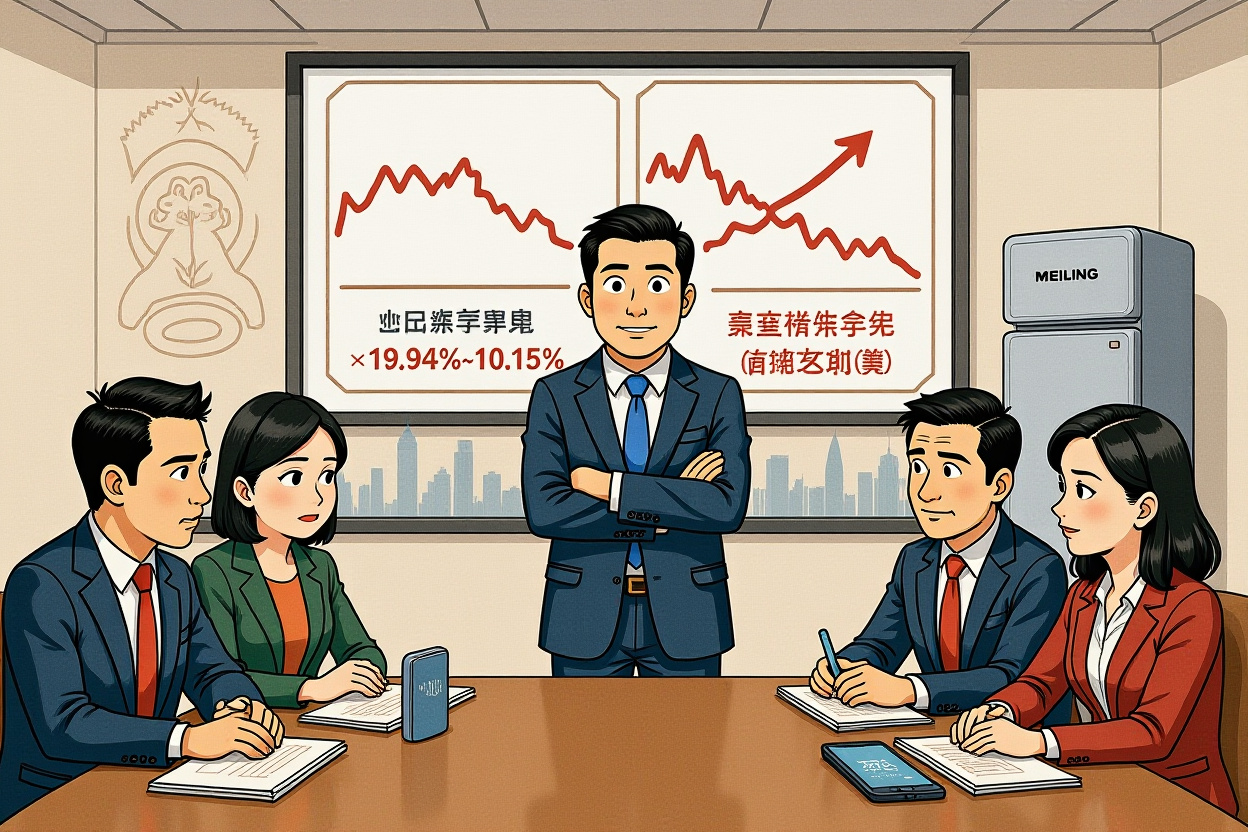
– Financial performance reveals a persistent ‘increasing revenue without increasing profit’ dilemma, with毛利率 (gross profit margin) eroding from 19.94% in 2016 to 10.15% in the first three quarters of 2025, amid rising consumer complaints over product quality.
– Changhong Meiling’s past glory as a founding member of China’s refrigerator ‘Four Golden Flowers’ contrasts starkly with its current position, struggling to keep pace with competitors like Haier (海尔) which have evolved into global IoT leaders.
– The leadership transition underscores the broader challenges in China’s appliance industry: moving from incremental to stock competition, necessitating innovation in digitalization, green technology, and brand trust rebuilding.
– Success for the new management hinges on addressing internal control weaknesses, leveraging the Changhong merger synergies, and recapturing the entrepreneurial spirit of founder Zhang Jusheng (张巨声).
The Recent Leadership Shift: A Symbol of Deeper Turbulence
A sudden management reshuffle at Changhong Meiling (长虹美菱) has captured the attention of market watchers and investors alike. According to reports from Wildfire Finance (野火财经), the company is poised to elect directors at a shareholders’ meeting on February 11, with Li Xiaodong (李小东) expected to ascend to the chairman role before the Lunar New Year. This move makes him the eighth chairman since 2000 and the first born in the 1980s, marking a symbolic passing of the torch. However, this change is far more than a routine generational update. It arrives against a backdrop of financial strain and operational headaches, prompting a necessary re-examination of Changhong Meiling’s past. The departure of former chairman Wu Dinggang (吴定刚), who had been instrumental in expanding into biomedical cold storage through the acquisition of Zhongke Meiling, highlights the unresolved tension between diversification and core business vitality. As the baton passes, the fundamental question looms: can a new leader revitalize a brand that once embodied a nation’s domestic aspirations?
The Golden Era: Founding and Rise of Meiling
To understand Changhong Meiling’s present, one must revisit its origins. Changhong Meiling’s past is fundamentally the story of one man’s vision amid China’s reform and opening-up.
The Pioneering Vision of Zhang Jusheng (张巨声)
In 1983, the Hefei Second Light Industry Machinery Factory was on the brink of collapse. Technical expert Zhang Jusheng (张巨声), then 50 years old, was tasked with its rescue. With sheer determination, he led a team to reverse-engineer technology from Japanese giant Mitsubishi, naming the new venture ‘Meiling’—a hopeful declaration that Chinese products could surpass their foreign counterparts. At a time when refrigerators were cinematic luxuries for most households, Zhang Jusheng (张巨声) anticipated the booming demand from rising living standards. Without blueprints, his team meticulously measured imported units; without a production line, they designed and built one from scratch. In 1984, the first Meiling refrigerator, model BY-158, rolled off the assembly line, marking Anhui province’s entry into refrigerator manufacturing. Zhang Jusheng (张巨声) earned his place as a foundational figure in China’s appliance industry, embodying the gritty, innovative spirit of the era.
Market Dominance and the Legend of the ‘Four Golden Flowers’
The following decade was Meiling’s heyday. The brand rapidly gained national popularity, becoming synonymous with modern home life. Alongside Haier (海尔), Rongsheng (容声), and Xinfei (新飞), it was crowned one of the ‘Four Golden Flowers’ of China’s refrigerator sector—a prestigious cohort that defined quality and reliability for a generation. In 1993, Meiling achieved another milestone by listing on the Shenzhen Stock Exchange (深圳证券交易所), becoming Anhui’s first publicly traded company. This period represented the peak of Changhong Meiling’s past, where it was not just a manufacturer but a cultural icon fueling the Chinese dream of domestic comfort and technological progress.
The Merger and Subsequent Integration Challenges
The turn of the millennium brought consolidation waves across China’s overcrowded appliance sector. Changhong Meiling’s past took a decisive turn in 2005 when Meiling Electric (000521.SZ) was acquired by Sichuan Changhong and rebranded as Changhong Meiling (长虹美菱). This ‘black-and-white alliance’—referring to Changhong’s strength in black goods (TVs) and Meiling’s in white goods (refrigerators, washing machines)—was orchestrated to create synergies in distribution, technology, and supply chains.
Initial Synergies and Long-Term Frictions
Initially, the merger provided scale and resource sharing, helping Changhong Meiling maintain market share. However, the integration of two large enterprises with distinct corporate cultures proved challenging. Over time, the once-pioneering Meiling brand began to lose its distinctive edge, evolving from an industry trailblazer into a mainstream follower. The deep-seated issues of Changhong Meiling’s past, including bureaucratic inertia and diluted focus, started to surface. While the merger was a strategic response to industry consolidation, it also marked the beginning of a slow erosion of the aggressive, customer-centric innovation that had characterized Meiling’s early years.
Mounting Current Challenges: Profitability Erosion and Quality Concerns
Today, the legacy of Changhong Meiling’s past is overshadowed by pressing operational and financial woes. The company is caught in a vicious cycle where top-line growth fails to translate into bottom-line health, while product reliability issues chip away at hard-earned consumer trust.
Financial Performance: A Pattern of ‘Increasing Revenue Without Increasing Profit’
Financial data paints a stark picture of profitability pressure. The毛利率 (gross profit margin) has been on a steady decline:
– 2016: 19.94%
– 2024: 11.15%
– First three quarters of 2025: 10.15%
For the first nine months of 2025, operating revenue rose 11.49% year-on-year to RMB 253.93 billion, yet归母净利润 (net profit attributable to shareholders) fell 8.20% to RMB 4.88 billion. Even more alarming,扣非净利润 (non-GAAP net profit) dropped 12.47%, and net cash flow from operating activities plummeted 51.17%. This ‘increasing revenue without increasing profit’ syndrome indicates severe cost pressures, possibly from intense price competition, rising raw material costs, and inefficient operations. It starkly contrasts with the prosperous Changhong Meiling’s past.
Consumer Trust Under Siege: Quality Control Failures
Parallel to financial struggles is a crisis of consumer confidence. On platforms like Black Cat投诉 (Hei Mao Tou Su), over 200 complaints related to Changhong Meiling products have been logged, citing recurrent issues such as poor refrigerator cooling, unresponsive after-sales service for repairs, and abnormal noises from range hoods. These are not isolated incidents but symptoms of potential systemic flaws in quality assurance and supply chain management. For a brand that once stood for durability, such complaints represent a significant reputational risk, directly impacting customer loyalty and pricing power in a competitive market.
Leadership in Flux: The 80s Generation Steps Into the Breach
The appointment of Li Xiaodong (李小东) comes amid notable executive instability, underscoring the turbulence within. Since June 2025, key personnel have departed: financial controller Pang Haitao (庞海涛) resigned due to personal work changes, followed by board secretary Li Xia (李霞) in October. This churn at the top suggests internal restructuring pressures as the company seeks a new direction.
Li Xiaodong’s Mandate: Inheriting a Complex Legacy
Li Xiaodong (李小东), the incoming 80s-born chairman, inherits a multifaceted challenge. His mandate extends beyond financial turnaround to encompass:
– Rebalancing the scales between scale expansion and profitability enhancement.
– Overhauling quality control protocols and售后 (after-sales) service networks to restore brand credibility.
– Harnessing digital transformation and green appliance trends to reposition the product portfolio.
– Preserving the core values of Changhong Meiling’s past—the practical innovation and customer focus championed by Zhang Jusheng (张巨声)—while modernizing corporate culture for the digital age. His success will depend on navigating these inherited challenges from Changhong Meiling’s past while charting a credible future course.
The Broader Competitive Landscape: How Changhong Meiling’s Past Informs Its Future
Changhong Meiling’s current predicament cannot be viewed in isolation. The entire Chinese home appliance industry has undergone a radical transformation, shifting from a high-growth, volume-driven market to a saturated, value-oriented one.
From ‘Four Golden Flowers’ to Diverging Paths
The fate of the legendary ‘Four Golden Flowers’ illustrates this shift. Haier (海尔) has successfully transformed into a global Internet of Things ecosystem leader. Rongsheng (容声), under the umbrella of Hisense (海信), has maintained a steady market presence. Xinfei (新飞) has faced its own struggles with ownership changes. Changhong Meiling, meanwhile, appears to have lagged in this race for reinvention. Its journey reflects a broader narrative of Chinese manufacturing: the need to evolve from low-cost production to innovation-driven, brand-centric competition.
Strategic Imperatives: Digitalization, Green Technology, and Global Outreach
Future growth hinges on several key trends where Changhong Meiling must catch up:
– Smart Home Integration: Appliances are now expected to be interconnected and AI-enabled, a domain where leaders like Haier have significant leads.
– Energy Efficiency and Sustainability: With China’s ‘Dual Carbon’ goals, demand for green, energy-saving appliances is rising.
– Overseas Expansion: While offering growth potential, international markets require sophisticated localization, brand building, and navigation of trade policies.
Addressing these areas requires not just investment but a fundamental shift in R&D priorities and market approach—a move away from the operational paradigms of Changhong Meiling’s past.
Synthesizing the Journey: Can the Sigh Turn to Renewed Vigor?
The story of Changhong Meiling is a microcosm of China’s industrial maturation. Reflecting on Changhong Meiling’s past offers crucial lessons: entrepreneurial vision can build empires, but sustaining them demands constant adaptation, rigorous quality control, and financial discipline. The recent leadership change is a necessary step, but not a panacea. For Li Xiaodong (李小东) and his team, the path forward involves making tough choices—potentially streamlining product lines, investing decisively in smart technology, and repairing the brand’s relationship with consumers. The sighs heard today are for what was, but the future remains unwritten. Institutional investors and market observers should monitor the new management’s strategic announcements, operational execution, and quarterly financials closely. The revival of Changhong Meiling (长虹美菱) would not only signify a corporate turnaround but also offer a blueprint for other legacy Chinese manufacturers navigating the complexities of a new economic era.