



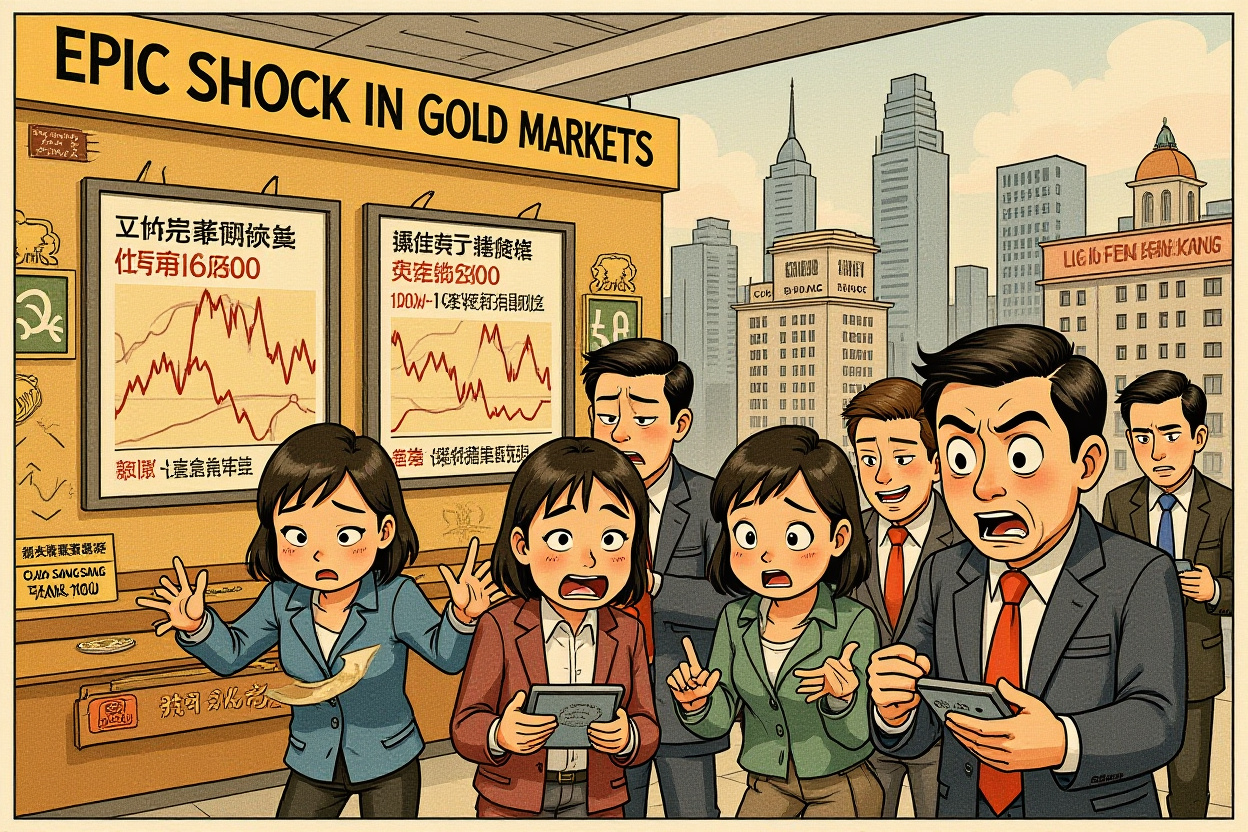
– Gold prices witnessed an unprecedented ‘epic shock in gold markets,’ with spot gold swinging violently, losing over 5% before a partial V-shaped recovery, highlighting extreme volatility.
– Major Chinese jewelry brands like Chow Sang Sang and Lao Feng Xiang immediately adjusted prices downward, with declines of up to 46 yuan per gram, directly impacting consumer costs and retail margins.
– The event underscores the interconnectedness of global precious metals markets with Chinese domestic economy, influencing investor sentiment and portfolio strategies in equity and commodity sectors.
– Key drivers include macroeconomic indicators, central bank policies, and geopolitical tensions, necessitating a reassessment of safe-haven assets in turbulent times.
– For investors, this volatility presents both risks and opportunities, emphasizing the need for vigilant monitoring of gold-linked instruments and regulatory developments in China.
The global precious metals landscape was rattled by an extraordinary session of turbulence, as spot gold prices embarked on a rollercoaster ride that sent shockwaves through financial markets worldwide. In what analysts are terming an ‘epic shock in gold markets,’ the dramatic price movements saw values plummet over 5% from highs near $5500 per ounce, only to stage a rapid V-shaped recovery. This volatility had an immediate and tangible impact on Chinese consumers, with domestic gold jewelry prices slashing by as much as 46 yuan per gram overnight. For sophisticated investors and corporate executives focused on Chinese equity markets, understanding the ramifications of this event is crucial, as it reflects broader economic undercurrents and regulatory dynamics shaping investment decisions. The ‘epic shock in gold markets’ serves as a stark reminder of the fragility in asset classes often perceived as stable, prompting a reevaluation of risk management strategies in portfolios exposed to commodities and retail sectors.
The Epic Shock: Unpacking Gold’s Historic Volatility
The recent trading session delivered a masterclass in market volatility, with spot gold experiencing swings that left traders and analysts alike grasping for explanations. This ‘epic shock in gold markets’ was not merely a blip but a significant event with deep-seated implications for global finance.
Technical Analysis of the Price Swing
On the morning of April 30, spot gold underwent a sharp intraday plunge, dropping over $50 within five minutes and breaching the $5300 support level. Data from trading platforms showed a swift descent from the $5500 peak to below $5100 per ounce, representing a loss exceeding 5% in a matter of hours. The subsequent recovery to approximately $5335.815 per ounce by the close indicated a V-shaped reversal, but not before highlighting key technical levels:
– Resistance at $5500 proved formidable, triggering profit-taking and algorithmic selling.
– Support near $5100 attracted bargain hunters, fueling the rebound.
– Volume spikes correlated with the downturn, suggesting institutional moves and stop-loss triggers.
This technical behavior underscores the sensitivity of gold to momentum shifts, often exacerbated by high-frequency trading and leveraged positions in markets like the Shanghai Gold Exchange (上海黄金交易所).
Immediate Market Reactions and Liquidity Crunch
The rapid price movements strained liquidity in derivatives markets, with gold futures and options experiencing widened bid-ask spreads. Market participants reported increased margin calls, particularly for over-the-counter contracts tied to physical delivery. The ‘epic shock in gold markets’ also triggered a flight to quality in other assets, briefly boosting the US dollar and Treasury yields. Real-time data from the People’s Bank of China (中国人民银行) indicated heightened interventions in currency markets to stabilize the yuan, as gold volatility often correlates with foreign exchange fluctuations. For investors, this episode emphasized the importance of monitoring liquidity metrics and counterparty risks during such events, as detailed in reports from the China Securities Regulatory Commission (中国证券监督管理委员会).
Ripple Effects on Chinese Jewelry Retailers and Consumer Markets
The volatility in international gold prices had a direct and swift impact on domestic Chinese jewelry retailers, who adjusted their pricing models to reflect the new market reality. This transmission mechanism highlights the integration of China’s consumer economy with global commodity trends.
Price Adjustments at Major Brands
Consumer Sentiment and Demand ImplicationsThe price drops may initially boost sales volume as consumers perceive value, but prolonged volatility could dampen confidence in gold as a store of value. Surveys from the China Gold Association (中国黄金协会) suggest that retail buyers often time purchases based on price trends, with recent dips likely triggering a short-term surge in buying interest. However, if the ‘epic shock in gold markets’ persists, it might lead to deferred purchases in anticipation of further declines, impacting revenue streams for retailers. Additionally, the shift toward digital gold products, such as those offered by Alibaba Group’s (阿里巴巴集团) platforms, could accelerate as investors seek more liquid alternatives.
Underlying Drivers: What Fueled the Gold Rollercoaster?
The dramatic price action was not occurrin in a vacuum; it was driven by a confluence of macroeconomic, geopolitical, and market-specific factors that every investor must comprehend.
Macroeconomic Indicators and Central Bank Policies
Geopolitical Tensions and Safe-Haven FlowsGold’s Role in Chinese Investment Portfolios and Market CorrelationsIn China, gold holds a unique position as both a cultural staple and a financial asset, influencing portfolio construction for retail and institutional players alike. The recent volatility offers lessons on asset allocation and diversification.
Retail vs. Institutional Gold Holdings
Correlation with Equity Market MovementsRegulatory and Market Structure Considerations in ChinaChina’s regulatory framework and market infrastructure play a pivotal role in modulating gold volatility, offering insights for global investors navigating this space.
Shanghai Gold Exchange and Domestic Pricing Mechanisms
The Shanghai Gold Exchange (上海黄金交易所) serves as the primary platform for physical and derivative gold trading in China, with its benchmark price often influencing retail rates. During the volatility, the SGE implemented circuit breakers and adjusted margin requirements to maintain orderly markets. Key aspects:
– The SGE’s international board, which allows foreign participation, saw heightened activity, linking domestic prices more closely to global moves.
– Regulatory guidelines from the People’s Bank of China (中国人民银行) ensure that gold imports and reserves management cushion extreme swings.
– The ‘epic shock in gold markets’ tested these mechanisms, demonstrating their effectiveness in preventing systemic disruptions.
Understanding these structures is essential for investors seeking exposure to Chinese gold markets.
Impact on Gold-Backed Financial Products
Forward Outlook: Navigating Volatility in Precious MetalsLooking ahead, the gold market is poised for continued uncertainty, but with strategic insights, investors can turn challenges into opportunities.