



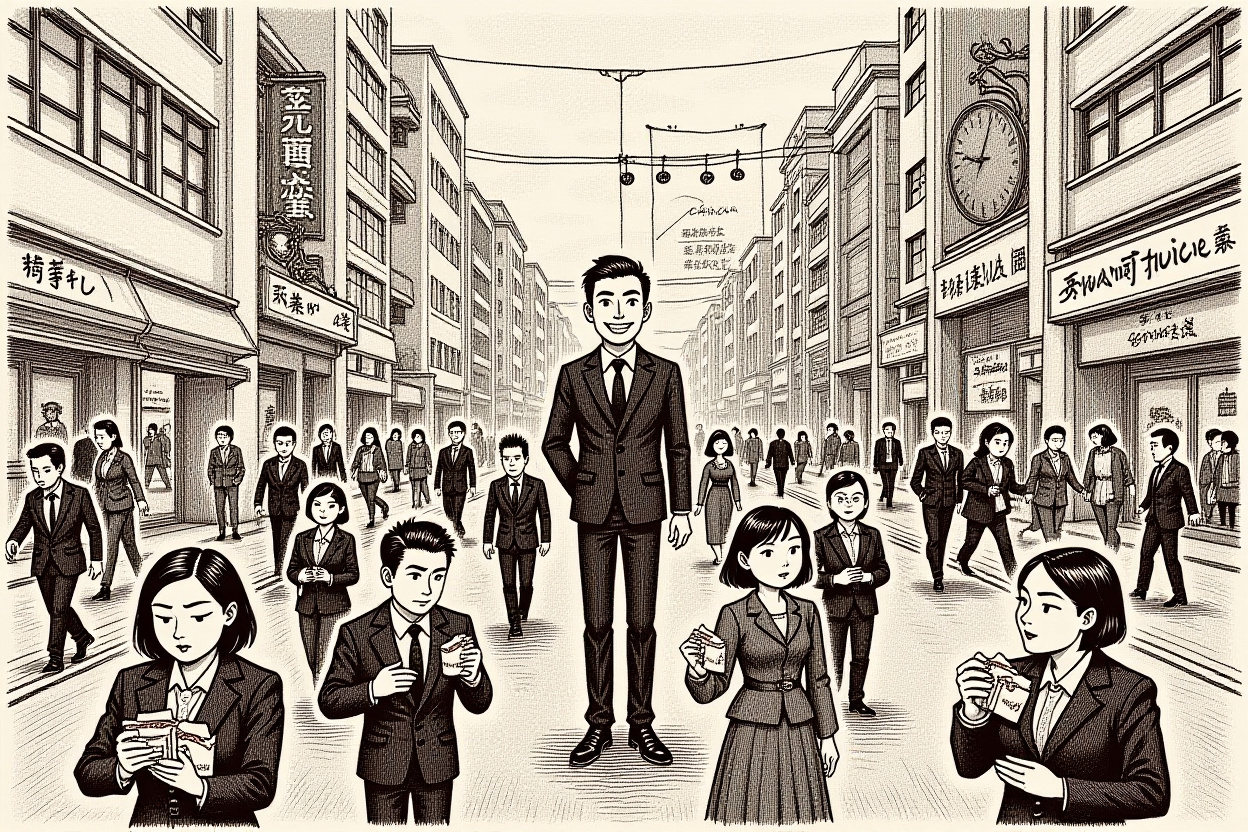
As the Lunar New Year approaches, the scene of Huiyuan Juice cartons gracing family reunion dinners is a fading memory for a generation of Chinese consumers. The brand’s iconic slogan, “With Huiyuan, it’s truly the New Year,” once cemented its status as a cultural staple. From its pioneering role in China’s juice market to its recent, very public corporate implosion, the story of Huiyuan is a stark lesson in the life cycle of a national brand. The dramatic, acrimonious control battle between its founder and its financial savior-turned-adversary in early 2026 is not just corporate theater; it is the explosive finale to a series of profound strategic failures. This saga provides a masterclass in how a dominant market leader can squander its position through a combination of operational missteps, governance neglect, and a fundamental misreading of the modern consumer landscape. The rise and fall of this national brand offers critical insights for investors, executives, and observers of China’s dynamic consumer market.
The Critical Strategic Failures That Eroded Market Dominance
Huiyuan Juice once commanded an unassailable 53.4% share of China’s 100% juice market, a true monopoly position. Today, that share has collapsed to around 11.0%, eclipsed by rivals like Coca-Cola and Uni-President. This dramatic reversal was not an accident of fate but the direct result of two catastrophic, self-inflicted strategic wounds.
The Fatal Channel Retreat and the “Unconsummated Marriage”
Huiyuan’s first major misstep began with a bet on its own demise. In 2008, Coca-Cola made a landmark HK$17.9 billion offer to acquire the company. In anticipation of the deal’s approval, founder Zhu Xinhui (朱新礼) made the fateful decision to dismantle Huiyuan’s extensive, self-built sales and distribution network. This move, intended to make the company a leaner acquisition target, amounted to voluntarily severing its direct connection to the market.
When the acquisition was ultimately blocked by Chinese regulators on antitrust grounds, Huiyuan was left crippled. Its market access had been gutted. Crucially, the company failed to swiftly rebuild an effective alternative distribution system. This vacuum was rapidly filled by savvy competitors:
– Wahaha perfected its “联销体” (Lianxiaoti) distribution model, penetrating deep into township and county-level markets.
– Nongfu Spring aggressively deployed “refrigerator placement + terminal display” tactics, seizing prime shelf space in supermarkets and convenience stores.
These rivals executed with a granular, operational focus that Huiyuan, in its disrupted state, could not match. The consequence was a terminal decline in product availability. Consumers who wanted to buy Huiyuan simply couldn’t find it, leading to a slow but steady erosion of brand salience and market share.
Missing the Health Wave: A Product Portfolio Stuck in the Past
If the channel collapse was an external shock, the failure to innovate was an internal malignancy. As Huiyuan grappled with its distribution woes, the entire juice category was undergoing a seismic shift. Consumer preferences moved decisively away from traditional concentrated, reconstituted juices toward healthier, premium segments like NFC (Not-From-Concentrate) and HPP (High-Pressure Processing) juices, valued for their “no additives, fresh nutrition” proposition.
Market data underscores this trend. According to Euromonitor, the retail sales value of NFC juice in China grew from 3.12 billion yuan in 2019 to an estimated 6.41 billion yuan in 2024. Competitors like Nongfu Spring and Uni-President quickly launched successful NFC lines. Huiyuan, however, was conspicuously late to the party, only introducing its first NFC product—a strawberry and raspberry blend—in 2024, long after the market had been shaped by others.
The brand’s innovation efforts seemed misdirected, occasionally venturing into niche flavors like coriander juice or birch sap, which failed to address mainstream health trends. Meanwhile, retailers like Hema and Sam’s Club began launching their own private-label, value-priced NFC juices, further squeezing traditional brands. Trapped by mounting losses post-2016, Huiyuan lacked the financial firepower for serious R&D, creating a vicious cycle where product stagnation led to further market marginalization. The dual failure in channel and product strategy created a perfect storm from which the brand has never recovered, marking a critical chapter in the national brand’s decline.
The Founder’s Gambler Mentality Meets Modern Corporate Governance
The narrative of Huiyuan’s downfall is inextricably linked to the high-stakes, all-or-nothing mentality of its founder, Zhu Xinhui (朱新礼). In the wild east days of China’s early reform era, this audacious “gambler” spirit fueled rapid growth. However, as China’s business environment matured and regulatory frameworks solidified, this same DNA became a lethal liability. Zhu’s journey can be charted through four pivotal, reckless bets.
Four High-Stakes Bets That Defined an Empire’s Fate
Zhu Xinhui’s (朱新礼) approach was characterized by a series of massive, binary wagers on the company’s future.
1. Bet on CCTV Advertising: In the early 1990s, he wagered the company’s future on a massive advertising blitz during CCTV’s golden hour, successfully building national brand awareness overnight.
2. Bet on the Coca-Cola Acquisition: In 2008, he bet the entire company on the Coca-Cola takeover, restructuring operations accordingly. The regulatory rejection left Huiyuan strategically stranded and operationally weakened.
3. Bet on Unapproved “Financial Support”: Between 2017-2018, in a stark violation of corporate governance, Zhu authorized the transfer of 4.28 billion yuan from the listed company to related parties without board approval or public disclosure. This directly triggered a trading suspension by the Hong Kong Stock Exchange.
4. Bet on Capital Restructuring: In 2022, as a last resort, he bet on Wensheng Asset Management as a “white knight,” accepting a 1.6 billion yuan investment in exchange for ceding control, a move that has since devolved into open warfare.
The third bet proved catastrophic. The massive unauthorized related-party transaction was a blatant disregard for the rules governing a public listed company. It revealed a mindset where the listed entity was treated as a personal fiefdom rather than a publicly accountable enterprise. This directly led to the company’s failure to meet the HKEX’s reinstatement conditions, resulting in a mandatory delisting in January 2021. Zhu himself became a court-listed失信被执行人 (dishonest被执行人), subject to consumption restrictions—a dramatic fall for a once-revered entrepreneur.
His famous “pig-raising theory”—”an enterprise should be raised like a pig, sold when it’s fattened up”—epitomizes this personal, proprietary view of corporate assets. This philosophy is fundamentally at odds with the transparency, independent directorship, and shareholder accountability required of a modern public company. The story of Huiyuan is, in part, the story of a founder whose成功 (successful) gambler instincts became toxic in an era demanding rule-based governance, a key driver in the national brand’s unraveling.
The Heavy Anchor: How a “Farm-to-Table” Model Became a Debt Trap
Huiyuan’s vertically integrated, “from orchard to dinner table” supply chain was long touted as its unassailable competitive moat. It promised quality control and security of supply. In reality, this heavy-asset model transformed into a millstone that dragged the company into a deep financial abyss.
The critical flaw was in the structure. Many of the upstream orchard and organic agriculture projects were held as private assets of the Zhu family, separate from the listed company, Beijing Huiyuan. These capital-intensive agricultural projects required constant cash infusion but generated slow, long-term returns—a direct mismatch with the fast-moving consumer goods (FMCG) sector’s need for light assets and high turnover.
The listed company effectively became a “cash machine” to fund the maintenance and expansion of these family-held assets. This unsustainable cross-subsidization, culminating in the massive违规转账 (违规转账), drained the listed entity’s vitality. By June 2022, Beijing Huiyuan’s负债总额 (total liabilities) had ballooned to 12.82 billion yuan, with a negative net asset value of 11.36 billion yuan and an资产负债率 (debt-to-asset ratio) exceeding 112%.
The Contrast with Modern, Agile Models
Huiyuan’s struggles highlight the perils of its integrated approach when compared to more agile competitors. Nongfu Spring, for instance, employs a “light asset and supply chain cooperation” model. Instead of owning vast swathes of orchard land, it establishes long-term contractual partnerships with high-quality fruit growers. This ensures a stable, quality supply of raw materials while avoiding the immense capital burden and inflexibility of owning the land itself.
For Huiyuan, what was once a strength became a fatal rigidity. The post-delisting landscape fractured this chain entirely: the Zhu family’s Huiyuan Group controls the factories and orchards (production), while Wensheng-controlled Beijing Huiyuan holds the brand and sales channels. This has led to an operational deadlock—”having capacity but no channels” versus “having a brand but no guaranteed supply.” The very synergy the model was meant to create has been utterly destroyed, turning a celebrated战略 (strategy) into a primary cause of the national brand’s distress.
From Rescue to Rupture: The Capital Restructuring Battlefield
The entry of Wensheng Asset Management in 2022 was hailed as a rescue mission. The plan was straightforward: Wensheng would inject 1.6 billion yuan in three tranches to resuscitate the business, receiving in return a 60% equity stake and operational control of Beijing Huiyuan. Three years on, this supposed lifeline has become a bitter fight for the soul of the company, further eroding consumer trust in the chaotic final act of this national brand’s saga.
The core of the conflict is a stark imbalance: inadequate capital delivery versus full operational control. According to public disclosures and accusations, by the end of 2025, Wensheng had only paid 750 million yuan of the promised 1.6 billion, with the remaining 850 million yuan overdue for a year. Furthermore, the funds that were transferred were allegedly not used for their intended purpose of supporting production and operations as stipulated in the restructuring agreement.
A Brand Divided, Consumer Trust Destroyed
The power struggle has spilled out of the boardroom and onto shop shelves, creating profound confusion in the market. Each side now claims to be the legitimate guardian of the Huiyuan brand.
– Wensheng, controlling Beijing Huiyuan, has authorized third-party OEMs like安徽滁州华冠 (Anhui Chuzhou Huaguan) and河南华洋饮品 (Henan Huayang Beverage) to produce products bearing the Huiyuan name.
– The Zhu family’s Huiyuan Group has publicly accused these OEMs of using ingredients “without safety monitoring,” declaring their products non-compliant and illegitimate.
This conflict has created a nightmare scenario in sales channels. On e-commerce platforms like Tmall and Douyin, official Huiyuan flagship stores have experienced stock-outs, while live-streaming rooms sell products with模糊的产地 (ambiguous origins), not clearly stating whether they come from Huiyuan’s own factories or OEM partners. Offline, distributors report that supermarket buyers, wary of the internal strife, are reducing shelf space allocated to Huiyuan products.
For the consumer, the simple question “Which is the real Huiyuan?” has no clear answer. The decades of brand equity built on the promise of quality control from its own orchards and factories has been obliterated overnight. In the FMCG sector, trust is the ultimate currency, and Huiyuan has bankrupted its account. The spectacle of its controlling shareholders publicly denouncing each other’s products as illegitimate is a brand manager’s worst nightmare realized, demonstrating how quickly a national brand’s heritage can be squandered.
The ongoing saga also exposes practical challenges in China’s破产重整 (bankruptcy restructuring) mechanisms, particularly in “debt-to-equity” scenarios. It raises difficult questions about how to balance the rights and responsibilities of new capital providers against those of original founders, ensuring that capital is committed as promised and control is exercised responsibly.
Huiyuan Juice’s 34-year journey from pioneering market creator to a cautionary tale of corporate governance failure is now complete. Its story encapsulates the transition of China’s business environment from an era of opportunistic, rule-bending entrepreneurship to one demanding strategic discipline, operational excellence, and respect for institutional frameworks. The brand’s residual awareness and consumer nostalgia are valuable assets, but they are not enough for a turnaround.
For Huiyuan to have any hope of revival, three immediate steps are non-negotiable: first, a definitive resolution to the capital-control battle, clarifying governance and ending the public infighting; second, a complete overhaul and reconstruction of its crippled distribution network; and third, a genuine, well-funded commitment to product innovation that catches up with the health-conscious consumer.
For investors and corporate leaders observing from the sidelines, the lessons are profound. A dominant market position is never permanent. Sustainable success requires more than a founder’s daring; it demands robust systems, adaptive strategy, and an unwavering focus on evolving consumer needs. The护城河 (moat) must be continually reinforced and redesigned. The fall of Huiyuan serves as a powerful reminder that in today’s market, no brand, no matter how iconic, is immune to the consequences of strategic complacency and governance neglect. The final question remains: has this storied brand learned its lesson in time, or is its dramatic impluction merely the last chapter in its long decline?