



Executive Summary
– Spot gold prices surged to a historic high of $5,109.54 per ounce on January 26, driving domestic gold jewelry prices toward 1,600 yuan per gram in China.
– Major gold jewelry brands are implementing a dual strategy of raising displayed per-gram prices while offering various discounts, such as per-gram reductions and fee waivers, to maintain sales and manage consumer perception.
– Expert analysis reveals this approach as a psychological pricing tactic involving price anchoring and mental accounting, helping retailers balance cost transmission with demand stability.
– Rising prices are shifting consumer behavior towards old gold exchanges and increasing interest in alternative investments like silver and platinum.
– While jewelry gold prices currently follow international trends, future decoupling is possible due to inventory costs, consumer sentiment, and the growing importance of product design and brand value.
As international gold prices skyrocket to unprecedented heights, Chinese gold jewelry retailers are navigating a complex market landscape by raising prices while offering discounts. This dual strategy, observed in major brand stores across cities like Shenzhen and Guangzhou, highlights the intricate balance between cost transmission and consumer appeal. With spot gold breaching the $5,100 per ounce mark, domestic gold jewelry prices are inching towards 1,600 yuan per gram, creating a pivotal moment for investors and consumers alike. The focus on raising prices while offering discounts underscores a critical trend in retail adaptation to volatile commodity markets, where psychological pricing meets economic reality. For global investors tracking Chinese equities, understanding these dynamics is essential for gauging consumer sentiment and retail sector resilience.
The Dual Strategy of Gold Retailers: Raising Prices While Offering Discounts
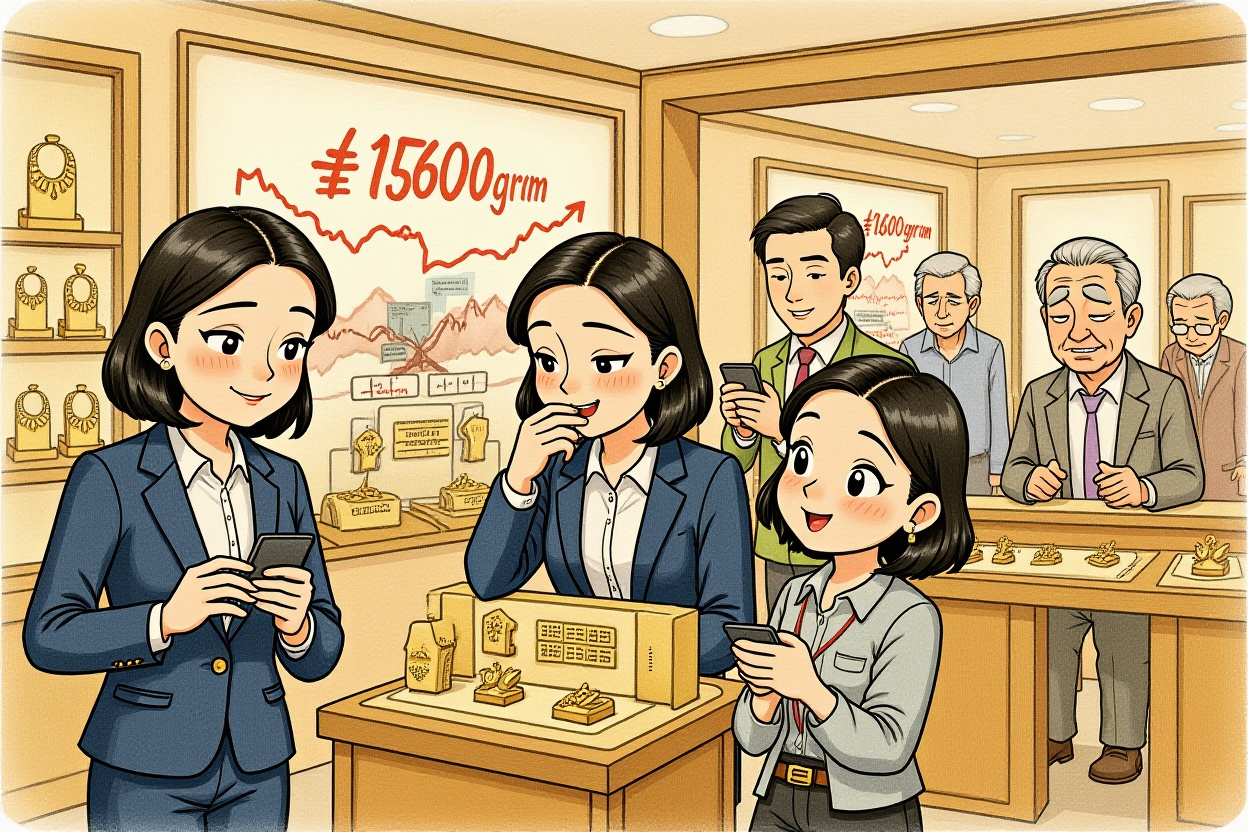
The recent surge in gold prices has prompted Chinese gold jewelry brands to adopt a nuanced approach: increasing displayed prices per gram while simultaneously rolling out discounts. This phenomenon, where raising prices while offering discounts becomes standard practice, is designed to mitigate consumer resistance and sustain sales volumes. On January 26, spot gold prices reached a record $5,109.54 per ounce, a daily jump of over $120, according to market data. In response, retailers like Chow Tai Fook (周大福) and Lao Feng Xiang (老凤祥) have adjusted their per-gram prices upward, yet customers often find that the final transaction cost is lower due to layered promotions.
The Mechanics of Discounting in Gold Shops
Upon visiting stores, customers are often greeted with prominently displayed high per-gram prices, which are not the final transaction amounts. Sales staff quickly inform buyers of the continuous price hikes and then introduce various discount schemes. Common forms include:
– Per-gram reductions: Discounts of 50 to 100 yuan per gram, known as “克减” (ke jian).
– Fee waivers: Specific days where craftsmanship fees are waived, such as weekly or monthly promotional dates.
– One-time offers: Membership points, vouchers, or coupons provided upon registration or by staff.
This layered discounting effectively lowers the out-of-pocket cost, making high prices more palatable. For instance, after discounts, prices may drop to around 1,400 yuan per gram, compared to the displayed 1,600 yuan. A consumer in Guangzhou noted, “The posted price seems steep, but after discounts, it feels more acceptable, though still painful compared to lower prices in the past.”
Consumer Psychology and Price Anchoring
Jiang Han (江瀚), senior researcher at Pangu Think Tank (盘古智库), explains that this strategy of raising prices while offering discounts is not mere trickery but a sophisticated use of price anchoring and mental accounting. By aligning displayed prices with soaring international gold rates, retailers set a high anchor that makes subsequent discounts feel like significant savings. This approach manages consumer price sensitivity and encourages purchases despite underlying cost increases. Jiang Han states, “It’s a buffer that allows retailers to pass on costs while maintaining sales, effectively converting non-price competition into flexible pricing tactics.” This psychological maneuver is crucial in a market where gold jewelry is often viewed as both an investment and a luxury item.
Impact of Soaring Gold Prices on the Chinese Market
The ripple effects of climbing gold prices are evident in shifting consumer behaviors and market trends. As jewelry prices rise, alternatives and exchange methods gain traction, reflecting broader economic adjustments. The practice of raising prices while offering discounts is just one part of a larger narrative where gold’s role evolves from a commodity to a financial asset, impacting retail and investment landscapes.
Shift in Consumer Behavior: Old Gold for New
With direct purchases becoming more expensive, consumers are increasingly turning to old gold exchanges. Many use existing gold jewelry to trade for new designs, though this often involves discounts on the old gold’s value. Brands rarely offer 1:1 exchanges; instead, old gold is typically devalued before being applied to new purchases. This trend is popular on social media platforms like Xiaohongshu (小红书), where guides on optimizing exchange deals are widely shared. A store clerk in Shenzhen mentioned, “If customers find new pieces too pricey, we recommend exchanging old gold, but it’s usually less cost-effective than buying outright.” This shift underscores how rising costs are altering consumption patterns.
Rise of Alternative Investments: Silver and Beyond
The search for “gold alternatives” is intensifying. Silver jewelry and bars are seeing heightened interest, and even products like “investment copper bars” have emerged in online discussions. Song Jiangzhen (宋蒋圳), director of the Market Research Center at Guangdong Southern Gold Market Institute (广东南方黄金市场研究院), notes that as gold jewelry prices escalate, consumers may pivot to more affordable precious metals, signaling a potential market divergence. He says, “If gold prices continue to climb, consumers might seek substitutes like silver or platinum, leading to a structural shift in demand.” Data from the Shanghai Gold Exchange (上海黄金交易所) shows increased trading volumes in silver contracts, hinting at this trend. For real-time updates on precious metal prices, investors can refer to authoritative sources like the World Gold Council website.
Analyzing the Divergence Between Jewelry Gold and International Gold Prices
While jewelry gold prices are currently synchronized with international benchmarks, experts anticipate possible future decoupling due to various factors. The strategy of raising prices while offering discounts may evolve if this divergence occurs, requiring retailers to adapt further.
Cost Transmission Mechanisms
Gold jewelry prices are heavily dependent on raw material costs, creating a strong cost transmission link with international gold prices. During rapid price increases, retail prices often rise quickly but fall slowly, maintaining a positive correlation. For example, when international gold hit $5,100 per ounce, domestic jewelry prices responded within days, as reported by the China Gold Association (中国黄金协会). However, this relationship may not hold indefinitely, especially if consumer demand weakens or if retailers face high inventory costs from earlier purchases at lower prices.
Future Scenarios of Price Decoupling
Jiang Han suggests that decoupling could occur in two scenarios: if international gold prices sharply correct, retailers might maintain high prices due to inventory costs, leading to lagged declines; or if consumer demand weakens, increased discounts could effectively lower transaction prices, disconnecting them from gold benchmarks. Additionally, as high-value-added products like ancient-method gold (古法黄金) or cultural IP gold gain share, jewelry’s commodity attributes strengthen, potentially reducing its correlation with raw gold prices over time. Song Jiangzhen adds, “Long-term, jewelry prices won’t fully detach from exchange quotes, but craftsmanship fees and brand value will play bigger roles, possibly creating a wedge.”
Expert Insights: Market Dynamics and Future Trends
In-depth analysis from market experts provides a forward-looking perspective on gold prices and retail strategies. Understanding these insights is crucial for investors assessing Chinese equity markets, particularly in consumer and retail sectors.
Perspectives from Industry Analysts
Song Jiangzhen emphasizes that the current gold rally is structurally different, driven by central bank acquisitions and low opportunity costs amid anticipated Federal Reserve rate cuts in 2026. He predicts sustained high international gold prices with short-term volatility, stating, “Gold’s role is shifting from an investment to a credit hedge, supported by macroeconomic factors like low real interest rates.” For jewelry, prices are unlikely to fully decouple from 交易所报价 (exchange quotes) and international rates, but craftsmanship fees will vary, and consumer market disparities will persist. Jiang Han concurs, noting that the tactic of raising prices while offering discounts helps retailers navigate this uncertainty by providing pricing flexibility.
Regulatory and Economic Factors
The broader economic context, including U.S. monetary policy and global inflation, plays a crucial role. With real interest rates near zero, gold’s appeal as a hedge increases, supporting continued demand. Retailers must adapt by focusing on product design and innovation to thrive in this evolving landscape. Regulatory bodies like the People’s Bank of China (中国人民银行) monitor gold reserves and market stability, influencing domestic trends. Investors should watch for policy announcements from the Federal Reserve and Chinese authorities, as these can impact gold prices and, consequently, retail strategies. For detailed economic indicators, resources like Bloomberg or Reuters offer comprehensive data.
Synthesis and Forward-Looking Guidance
The interplay between rising gold prices and strategic discounting in Chinese gold shops reveals a resilient retail sector adept at balancing cost pressures and consumer engagement. As international gold markets reach new peaks, retailers’ dual approach of raising prices while offering discounts serves as a buffer against demand shrinkage while preserving brand equity. Key takeaways include the importance of psychological pricing in luxury goods, the growing interest in alternative investments, and the potential for future price decoupling between jewelry and raw gold. For investors, this signals opportunities in companies that innovate in product design and customer experience, as well as in precious metal ETFs that track broader market trends.
To stay ahead in this dynamic environment, regularly monitor gold price fluctuations, consumer sentiment surveys, and retail sales data from sources like the National Bureau of Statistics of China (国家统计局). Consider diversifying portfolios with exposure to both traditional gold assets and emerging alternatives like silver, while keeping an eye on regulatory shifts that could affect market liquidity. By understanding the nuances of strategies like raising prices while offering discounts, you can make informed decisions that capitalize on China’s evolving gold market.