



Executive Summary
– The viral social media trend of extracting gold from electronic waste like SIM cards is driven by high gold prices but represents a niche, professional industry with razor-thin profit margins, typically around 5%.
– Legitimate electronic waste gold extraction in China requires stringent regulatory compliance, including environmental impact assessments (环评资质) and hazardous chemical handling permits (危化资质), barring casual individual participation.
– The process is capital-intensive and environmentally sensitive, with proper wastewater and exhaust gas treatment being mandatory to avoid severe pollution, as evidenced by the transformation of areas like Guiyu (贵屿镇).
– For investors, the real opportunity lies in the broader, formalized circular economy sector, where centralized recycling facilities use advanced technology to recover precious metals sustainably, rather than in speculative, small-scale extraction.
– Market participants should focus on regulated entities within China’s evolving e-waste management framework, as unlicensed operations face fines up to 500,000 yuan under the 废弃电器电子产品回收处理管理条例 (Regulations on the Administration of the Recovery and Disposal of Waste Electrical and Electronic Products).
The Viral Spark Igniting a Digital Gold Fever
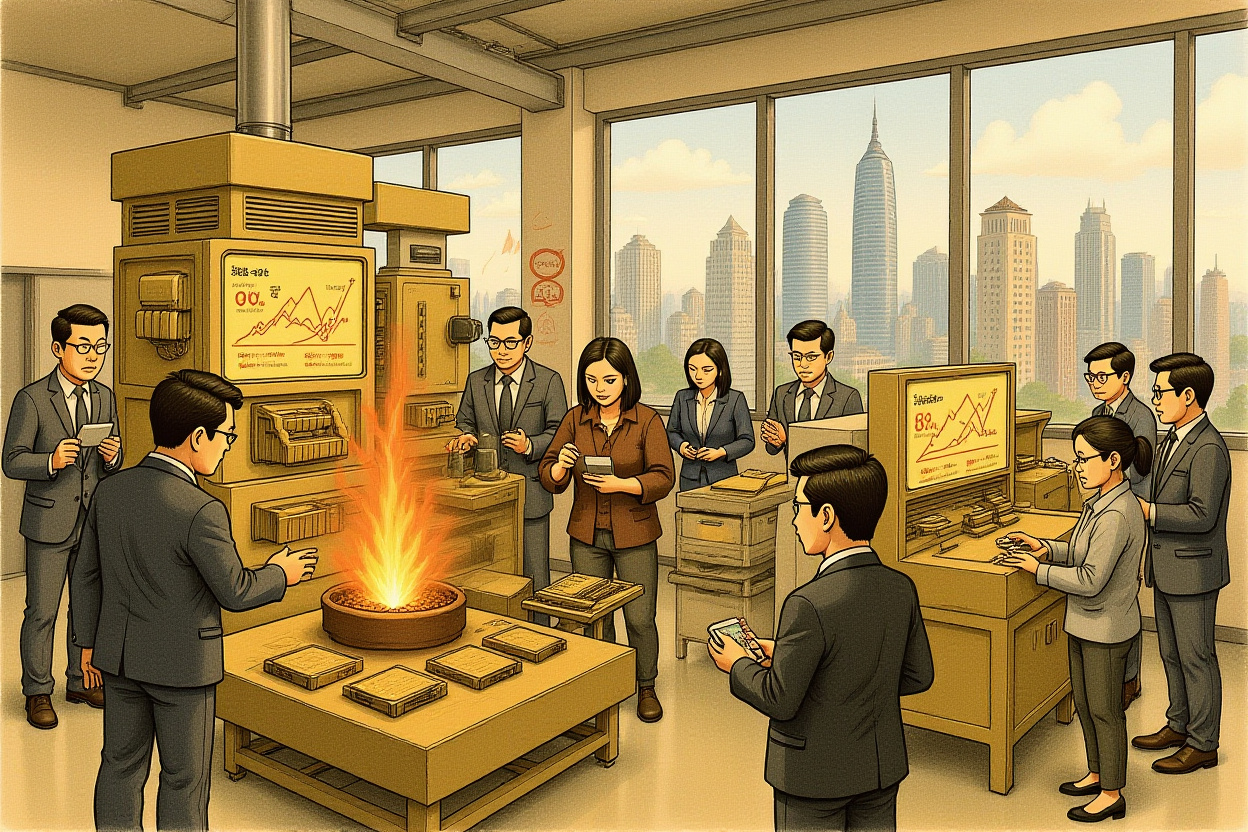
As global gold prices soar, a curious trend has captured the imagination of netizens and investors alike: the prospect of extracting precious metals from the electronic waste piling up in drawers and landfills. Videos showcasing the electronic waste gold extraction process from old SIM cards, circuit boards, and smartphone components have gone viral on Chinese social media platforms, amassing millions of views. This digital alchemy, often presented as a modern-day treasure hunt, taps into a potent mix of resource scarcity and get-rich-quick allure. However, beneath the captivating footage of golden nuggets emerging from chemical baths lies a complex industrial reality governed by economics, regulation, and environmental stewardship.
The phenomenon gained mainstream traction when a video from a user known as Hakka Alchemist – Qiao (客家炼金师-桥) claimed to have extracted 191.73 grams of gold from approximately 2 tons of SIM card waste, with an estimated value exceeding 200,000 yuan. This headline-grabbing feat prompted National Business Daily (每日经济新闻) to investigate, revealing a narrative far removed from viral simplicity. Qiao, a professional in precious metal scrap recovery, emphasized that his operation is a licensed processing factory, not a hobbyist’s side hustle. The electronic waste gold extraction process he described is a testament to the specialized, and often overlooked, backbone of China’s resource recovery industry.
Deconstructing the 191-Gram Gold Haul
In an interview, Qiao provided a detailed breakdown of his now-famous extraction. The raw material was not ordinary consumer SIM cards but a bulk collection of communication industry chip waste with gold-plated contacts, totaling around 2 tons including packaging. He clarified that a single consumer SIM card contains a minuscule amount of gold, often less than 0.02 grams, making individual collection utterly uneconomical. The real value lies in industrial-scale feedstocks. His electronic waste gold extraction procedure involves soaking, chemical displacement with zinc, and acid treatments—a process taking 5-6 hours for that batch. Crucially, he highlighted hidden costs like specialized wastewater treatment, which can run as high as 400 yuan per cubic meter. This case underscores that the visible output of gold is just the tip of an iceberg of logistical and operational expenses.
The Precarious Economics of Turning Trash into Treasure
The romantic notion of striking gold from garbage collides head-on with the hard numbers of industrial processing. When asked if electronic waste gold extraction is a lucrative business, Qiao was unequivocal: “We are a processing plant; there is no such thing as ‘huge profits.'” His operation purchases pre-dismantled gold-plated boards from dedicated recyclers, rather than handling whole devices. The profitability calculus is stark. Of the 191 grams extracted, approximately 95%—or 181.45 grams—covers the costs of raw materials, chemicals, labor, and compliance. This leaves a net profit of only about 10 grams of gold.
At current gold recovery prices of nearly 1,100 yuan per gram, the total haul was worth roughly 210,000 yuan, but the actual profit was only around 11,000 yuan. This translates to a profit margin of about 5%, a figure Qiao states is standard for the industry. “If the gold price drops slightly, you might not even make that difference,” he admitted, pointing to the volatility that adds significant risk. Operators often face immediate paper losses if gold prices fall between purchasing scrap and completing the refinement. This electronic waste gold extraction business model is therefore highly sensitive to commodity price swings, far from the stable, high-return venture some viral videos might imply.
Market Dynamics and Input Cost Pressures
The economics are further squeezed by rising input costs. As gold prices increase, so does the price of gold-bearing scrap, compressing margins for processors. Furthermore, the cost of compliance with environmental and safety regulations represents a fixed, non-negotiable overhead. For institutional investors analyzing this sector, understanding these margin structures is critical. The electronic waste gold extraction value chain is fragmented: collection and dismantling are often handled by informal networks, while refining is concentrated in licensed facilities. This separation means that scale and efficiency in the processing stage are key determinants of viability, not merely the volume of waste collected.
Navigating the Regulatory Minefield of E-Waste Processing
废弃电器电子产品回收处理管理条例 (Regulations on the Administration of the Recovery and Disposal of Waste Electrical and Electronic Products), enacted in 2009 and revised in 2019, explicitly mandates that any entity processing waste electrical and electronic products (WEEE) must obtain a formal treatment qualification. Operating without this license can result in orders to cease operations, confiscation of illegal gains, and fines ranging from 50,000 to 500,000 yuan. The regulations also prohibit the use of outdated, polluting technologies.Obtaining a license requires meeting rigorous conditions, including possessing appropriate processing facilities, safe disposal plans for non-recoverable components, suitable equipment, and employing qualified technical staff specializing in safety and environmental protection. This regulatory wall effectively prohibits individuals from engaging in electronic waste gold extraction using hazardous chemicals like acids and cyanide, which are common in recovery processes. The authorities’ focus is on channeling e-waste toward centralized, regulated facilities that can manage the environmental externalities.
The Environmental Imperative and Legacy of Pollution
The caution against amateur electronic waste gold extraction is not merely legal but profoundly environmental. Improper handling of e-waste releases toxic substances like lead, mercury, and dioxins into air, water, and soil. Comment sections on viral “alchemy” videos are often filled with concerns about “heavy pollution” and “high governance costs.” These concerns are historically grounded. Guiyu (贵屿镇) in Guangdong province, once infamous as the “world’s e-waste capital,” suffered devastating environmental degradation for years due to primitive backyard recycling operations. A 2014 report by National Business Daily (每日经济新闻) documented the area’s struggle with pollution during its initial transition toward a regulated industry.
Today, Guiyu serves as a case study in transformation. As reported by CCTV’s “朝闻天下” in 2025, the Guiyu Circular Economy Industrial Park now ensures centralized control, full traceability, and harmless treatment of electronic waste. From barcode-tracking upon entry to high-temperature smelting that extracts copper, gold, and silver with recovery rates exceeding 98%, the park exemplifies the shift from hazardous informality to a technology-driven circular economy. This evolution highlights that sustainable electronic waste gold extraction is possible, but only within a controlled, industrial setting with significant investment in abatement technology.
The Broader Landscape: China’s E-Waste Recycling Industry in Transition
Technological Advancements and Recovery EfficiencyInvestment Implications and Strategic ConsiderationsForward-Looking Market GuidanceSynthesizing the Golden Truth from Electronic ScrapThe journey from 2 tons of SIM cards to 191 grams of gold is a powerful metaphor for the complexities of modern resource recovery. While the electronic waste gold extraction craze on social media highlights a genuine economic activity, it reveals an industry defined by slim margins, significant regulatory hurdles, and critical environmental responsibilities. The real story is not one of individual prospectors getting rich quick but of a systemic shift in China toward a more structured, technologically advanced, and sustainable approach to managing its electronic waste stream.
For market participants, the actionable insight is to look beyond the viral veneer. Focus on the established players within the formal circular economy ecosystem, assess their technological edge and compliance records, and understand their exposure to commodity price risks. The electronic waste gold extraction phenomenon is a reminder that in China’s fast-evolving markets, true value often lies in the less glamorous, infrastructure-heavy segments that enable sustainability and efficiency. As the industry continues to mature, informed investment in this space could yield returns that are not only financial but also contributive to a more resource-efficient future. Conduct thorough research, prioritize regulatory compliance in your analysis, and consider engaging with sector reports from authoritative bodies like the China Association of Circular Economy to guide your decisions.