



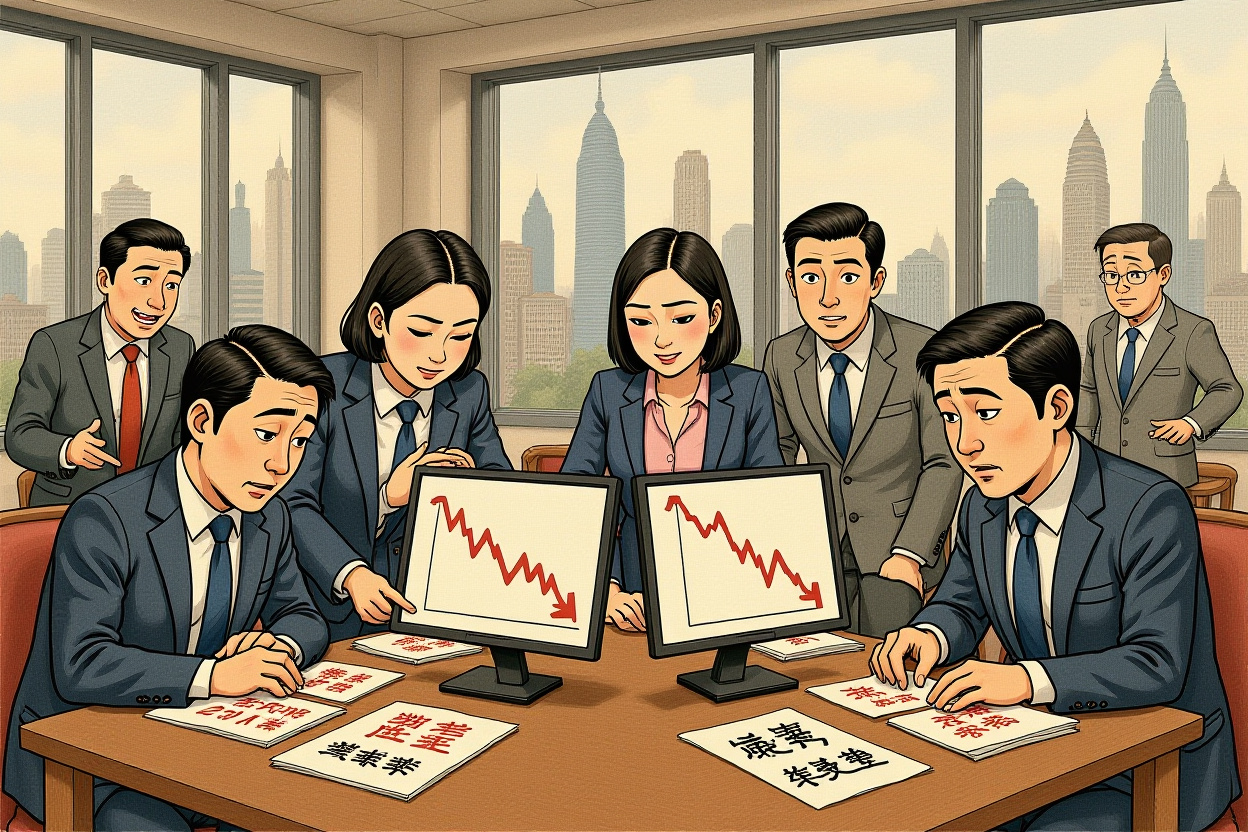
– Yonghui Superstores anticipates a net loss of 21.4 billion yuan for 2025, a 45.58% widening from 2024, driven by aggressive store adjustments and closures under its Pang Donglai-style reform. – The company’s transformation involved ‘deep adjustments’ to 315 stores and shuttering 381 outlets, incurring over 12 billion yuan in related losses from asset write-offs, revenue disruption, and one-time costs. – Key insiders, including Vice President Luo Wenxia (罗雯霞) and affiliates of Chairman Zhang Xuansong (张轩松), executed share sales during the critical reform period, signaling potential internal concerns. – Yonghui’s balance sheet remains strained with an 88.96% debt-to-asset ratio, a nearly 70% plunge in operating cash flow, and rising legal disputes exceeding 4.95 billion yuan. – The success of this Pang Donglai-inspired overhaul in restoring profitability and consumer trust is uncertain, with mixed early feedback on store upgrades and employee morale. The recent earnings warning from Yonghui Superstores (永辉超市), projecting a staggering 21.4 billion yuan net loss for 2025, has sent shockwaves through the Chinese retail sector and global investor circles. This deepening financial hemorrhage, a 45.58% expansion from the previous year’s 14.7 billion yuan loss, starkly illuminates the severe growing pains accompanying one of China’s supermarket giants as it embarks on a radical Pang Donglai-style reform. Amid a brutal landscape for traditional brick-and-mortar retail, Yonghui’s strategic pivot from scale expansion to quality growth represents a high-stakes gamble. The company’s massive investment in store renovations and closures, inspired by the cult-favorite retailer Pang Donglai (胖东来), comes at a tremendous short-term cost, raising urgent questions about liquidity, execution risk, and the ultimate viability of this transformation path for international stakeholders.
Yonghui’s Deepening Financial Quagmire: A Breakdown of the 2025 Losses
The preliminary financial estimates for 2025 paint a concerning picture for Yonghui Superstores. The projected net loss attributable to shareholders of 21.4 billion yuan and an even larger non-GAAP loss of 29.4 billion yuan confirm that the company remains entrenched in a challenging operational cycle. This continuation of losses from 2024 underscores that Yonghui’s strategic overhaul is not a quick fix but a protracted and costly process.
The Direct Impact of Store Network Reshaping
The core driver of the expanded loss is Yonghui’s aggressive physical footprint restructuring. In 2025, the company completed what it terms ‘deep adjustments’ on 315 existing stores while permanently closing 381 locations deemed misaligned with its new strategic direction. These moves, central to the Pang Donglai-style reform, triggered a cascade of one-time expenses and revenue losses. The company disclosed that asset write-offs and one-time setup costs related to store adjustments alone amounted to approximately 9.1 billion yuan. Furthermore, the loss of gross profit from stores temporarily closed for renovation is estimated at around 3 billion yuan. Combined, these two items from the adjustment initiative account for over half of the total projected net loss. The financial toll of closing 381 stores, while not fully quantified in the announcement, includes additional burdens like asset disposal losses, employee severance packages, and lease contract breach penalties.
Ancillary Factors: Supply Chain Pain and Asset Impairments
Yonghui’s transformation extends beyond the storefront. The company has embarked on a comprehensive supply chain reform, focusing on transparency, quality, and efficiency. However, this shift initially led to stock shortages and毛利率 (gross margin) pressure, adversely affecting revenue. While management asserts these issues are subsiding, the transitional friction contributed to the year’s poor performance. On the investment side, Yonghui recorded a 236 million yuan fair value loss on its holding in Advantage Solutions stock. Additionally, impairment tests on long-lived assets, primarily related to persistently loss-making stores, led to a provision of approximately 162 million yuan. As retail expert Zhang Weirong (张伟荣) noted, this significant loss represents the necessary ‘shock therapy’ for Yonghui to adapt to industry upheaval and seek long-term survival, fundamentally stemming from radical store closures and high-cost renovations.
The Pang Donglai-Style Reform: Anatomy of a Costly Transformation
Yonghui’s strategic blueprint is deeply influenced by the operational philosophy of Pang Donglai, a regional supermarket chain renowned for its exceptional customer service, employee welfare, and curated product selection. This Pang Donglai-style reform aims to overhaul Yonghui’s entire ecosystem, from product sourcing to in-store experience.
Origins and Scale of the Overhaul
The partnership began in May 2024, with Yonghui executives visiting Pang Donglai’s headquarters in Xuchang to study its methods. By June 2024, the first store retrofitted with Pang Donglai’s direct guidance opened. The initiative has since expanded rapidly, with Yonghui reporting over 300 stores nationwide having undergone some form of this Pang Donglai-inspired调改 (adjustment and reform) by the end of 2025. The changes are comprehensive, affecting product structure, quality, pricing, store layout, environment, service, and employee compensation. The ambition is clear: to transition from a traditional volume-driven retailer to a quality-focused destination. However, this Pang Donglai-style reform is proving to be a capital-intensive endeavor, with the previously noted multi-billion-yuan costs directly tied to its implementation.
Early Feedback and Operational Challenges
Initial consumer and employee reactions to the reformed stores have been mixed, highlighting the difficulties of replicating another brand’s ethos. Some customers praise improved service and ambiance, but others critique persistent high prices, unclear store layouts, and inconsistent ‘Pang Donglai’ character in the product mix. More tellingly, employee sentiments shared on social media reveal friction: many report increased workloads, constant training, and more overtime without commensurate pay raises or better leave policies, contradicting the employee-centric model Pang Donglai is famous for. This gap between ambition and on-the-ground execution poses a significant risk to the reform’s sustainability and cultural integration.
Insider Moves: Executive and Shareholder Divestment Amid the Turmoil
During this period of intense transformation and financial strain, actions by company insiders have drawn market scrutiny. The divestment by senior management and major shareholders often signals internal assessment of near-term prospects, adding another layer of complexity for investors evaluating the Pang Donglai-style reform.
Vice President Luo Wenxia’s Share Sale
In October 2025, Vice President Luo Wenxia (罗雯霞) disclosed a减持计划 (share reduction plan). By early November, she had sold 108,700 shares via集中竞价 (centralized bidding), completing the planned divestment. While the volume was small relative to total equity, the timing—amid the costly reform push—raised eyebrows.
Chairman Zhang Xuansong’s Affiliate Reduction
More substantially, in November 2025, Yonghui announced that Chairman Zhang Xuansong (张轩松) and his一致行动人 (persons acting in concert) planned to sell up to 90.75 million shares, representing 1% of total equity. The selling entity was specifically the Shanghai Xishirun Investment Management – Xishirun Herun No. 6 Private Securities Investment Fund, which held about 1.87% of Yonghui. By December 8, 2025, this减持计划 (reduction plan) was completed, with the fund selling all 90.75 million shares for a total consideration of 377 million yuan. Chairman Zhang Xuansong (张轩松) remains the company’s largest individual shareholder, but this move by his affiliated funds during a critical juncture has been interpreted by some analysts as a cautious hedging of exposure.
Balance Sheet Strains and Mounting Operational Risks
Beyond the headline loss, Yonghui’s financial health indicators present a worrying backdrop for its ambitious transformation. The company’s ability to fund continued reforms and weather operational setbacks is under severe pressure.
Elevated Debt and Deteriorating Liquidity
Yonghui’s资产负债率 (asset-liability ratio) has been alarmingly high for years, consistently above 87% since 2022. As of Q3 2025, it stood at 88.96%, indicating extreme financial leverage. Liquidity metrics are equally concerning: the current ratio was 0.63 and the quick ratio 0.32, both down year-on-year and signaling potential difficulty in meeting short-term obligations. Perhaps most critically, cash flow from operations plummeted to 1.14 billion yuan in the first nine months of 2025, a dramatic 69.8% drop from 3.78 billion yuan in the same period of 2024. This cash crunch severely limits financial flexibility for ongoing Pang Donglai-style reform investments.
Legal Disputes and Consumer Relations
Operational risks are compounding. In December 2025, Yonghui disclosed新增诉讼、仲裁 (newly added litigation and arbitration) involving approximately 495 million yuan, equivalent to 11.14% of its 2024 audited net asset value. Over 92% of these cases list Yonghui or its subsidiaries as the defendant, with the largest claims related to lease contract disputes. Furthermore, consumer complaint platforms like黑猫投诉 (Heimao Tousu) host over ten thousand complaints against Yonghui, citing issues from food safety to poor service—a direct challenge to the customer-centric promises of the Pang Donglai-style reform. These factors collectively increase operational uncertainty and potential future liabilities.
The Road Ahead: Navigating an Uncertain Future
The pivotal question for investors and market observers is whether Yonghui Superstores’ painful and expensive Pang Donglai-style reform will ultimately deliver a sustainable turnaround. The company’s path to profitability is fraught with challenges that extend beyond mere store renovations.
Assessing the Long-Term Viability of the Transformation
Success hinges on several factors: the ability to genuinely embed a quality-over-quantity culture, improve supply chain efficiency to protect margins, and successfully renegotiate its debt burden. The reform must not only attract customers but also do so at a profitable unit economic level. The mixed early feedback suggests that the cultural and operational shift is incomplete. For the Pang Donglai-style reform to be deemed successful, it must translate into sustained same-store sales growth, improved customer loyalty, and, ultimately, a return to net profitability. The company’s guidance suggests the worst of the supply chain disruption is over, but the proof will be in forthcoming quarterly sales data.
Market Sentiment and Strategic Imperatives
The market’s patience is being tested. Yonghui’s stock price, closing at 4.67 yuan per share on January 22, reflects significant skepticism. For international investors, the key metrics to monitor will be trends in operating cash flow, debt reduction progress, and comparable-store sales growth in reformed outlets. The company must also navigate the delicate balance of investing in its Pang Donglai-inspired future while managing immediate liquidity needs. Further asset sales or strategic financing may become necessary to shore up the balance sheet and fund the remaining transformation. Yonghui Superstores stands at a critical inflection point. Its aggressive, Pang Donglai-style reform represents a bold attempt to reinvent itself in a rapidly evolving retail landscape, but the 2025 results underscore the immense short-term financial sacrifice required. The widened losses, insider share sales, high leverage, and cash flow deterioration paint a picture of a company undergoing profound stress during transition. While the strategic direction towards quality retail may be sound, execution risk remains exceptionally high. The coming quarters will be crucial in determining whether this costly overhaul can stem the losses, win back consumer trust, and restore investor confidence. Stakeholders should closely watch for signs of operational stabilization, debt management progress, and tangible evidence that the Pang Donglai-inspired model is gaining traction where it matters most—at the cash register. The journey ahead for Yonghui is fraught with uncertainty, but it also represents a defining case study in corporate transformation within China’s challenging consumer market.