



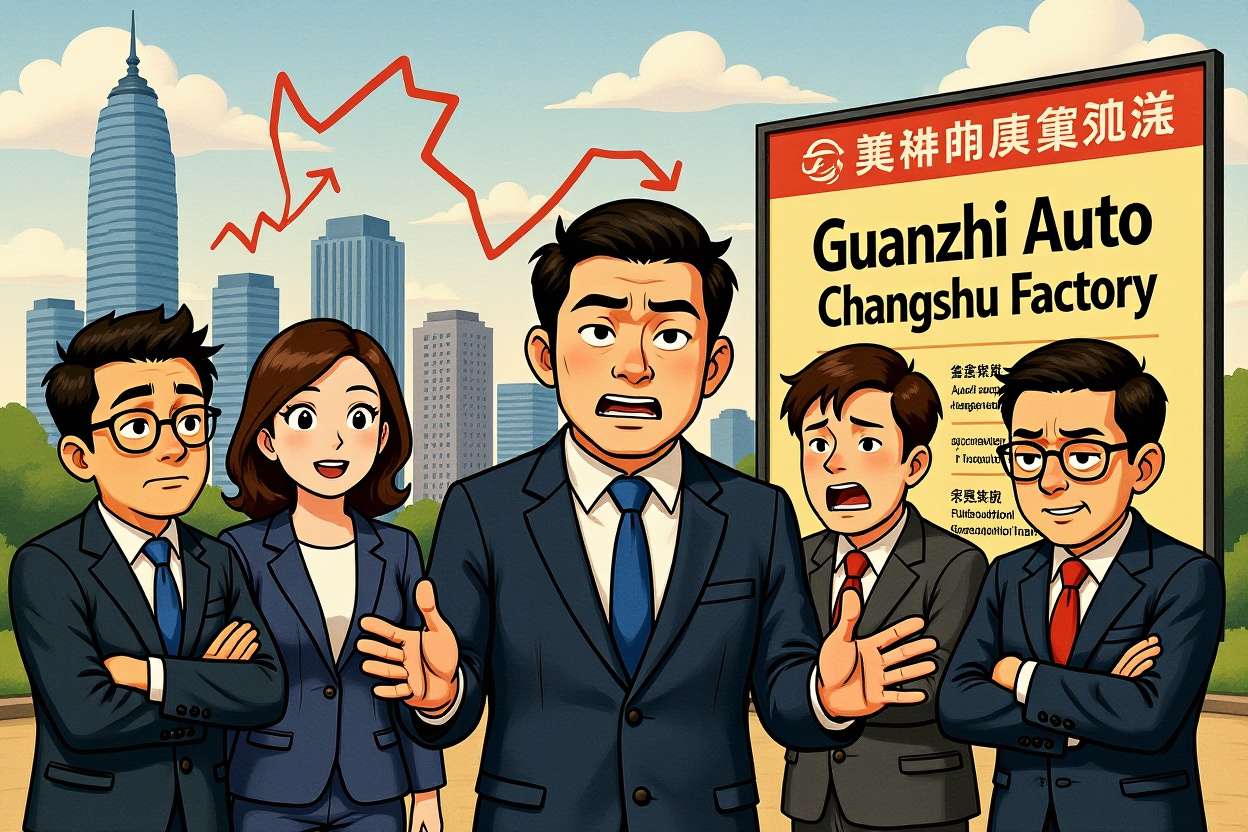
– The second auction for Guanzhi Automobile Co., Ltd. (观致汽车) Changshu factory on JD.com’s (京东) asset trading platform ended without a bidder on January 16, with over 60,000 online viewers, marking a critical failed second auction. – Yao Zhenhua (姚振华), Chairman of Baoneng Group (宝能集团) and controlling shareholder of Guanzhi Auto, released a real-name举报 (real-name report) video on January 14, alleging the core assets were severely undervalued, sparking controversy. – Officials from the Changshu Municipal Committee Propaganda Department (常熟市委宣传部) denied the allegations on January 15, stating they are untrue, highlighting a clash between corporate and government narratives. – This event underscores liquidity crises, asset valuation disputes, and corporate governance risks in China’s automotive and indebted corporate sectors. – For global investors, it serves as a case study in navigating regulatory risks, distressed asset opportunities, and market transparency in Chinese equities. The recent failed second auction of a key manufacturing asset has sent ripples through China’s investment community, highlighting persistent challenges in corporate restructuring and fair asset pricing. On January 16, the digital auction for the Changshu factory of struggling automaker Guanzhi Automobile Co., Ltd. (观致汽车) concluded without a buyer, marking a significant setback in asset liquidation efforts amid financial distress. This failed second auction is compounded by very public allegations from the company’s controller, Baoneng Group Chairman Yao Zhenhua (姚振华), who claims the process was marred by undervaluation. As authorities deny these charges, the situation presents a microcosm of broader issues facing China’s equity markets, where transparency, regulatory oversight, and accurate asset valuation are paramount for investor confidence. Understanding this failed second auction is crucial for anyone with exposure to Chinese industrial and automotive sectors, offering insights into risk management and investment strategies.
The Auction Failure: A Detailed Look at the JD.com Platform Event
The JD.com Asset and Capital Trading Platform (京东资产交易平台) served as the stage for this high-profile disposal attempt, where the Guanzhi Auto Changshu factory—a core production facility—was put up for a second auction after an initial failed attempt, drawing intense scrutiny.
Key Auction Parameters and Outcome Analysis
– Platform and Visibility: Hosted on JD.com’s specialized portal, a common venue for Chinese corporate asset sales, the auction attracted over 60,000 viewers, indicating high interest but no successful bids. – Asset Composition: The lot included land use rights, plant buildings, machinery, and equipment, essential for Guanzhi’s operations, with valuation disputes at the heart of the failed second auction. – Reserve Price Dynamics: While exact figures are not fully public, Yao Zhenhua’s protest suggests the reserve price was set below perceived market value, a point of contention that led to this failed second auction. – Historical Context: This is not an isolated case; similar failed auctions have occurred in China’s distressed asset market, reflecting broader economic headwinds and sector-specific challenges. This failed second auction reveals the cold reality of China’s secondary asset market, where even substantial industrial properties can struggle to find buyers, impacting creditor recoveries and investor confidence.
Yao Zhenhua’s Allegations and Government Response: A Clash of Narratives
The plot thickened when Yao Zhenhua (姚振华), a prominent figure in Chinese business circles, took the unusual step of a real-name举报 (real-name report), directly accusing authorities of undervaluing assets in this failed second auction.
Content of the Report and Official Denial
In a video statement, Yao Zhenhua argued that the undervaluation damages creditor and shareholder interests, including those of Baoneng Group (宝能集团). The very next day, a responsible person from the Changshu Municipal Committee Propaganda Department (常熟市委宣传部) issued a swift denial, stating ‘相关指控均不属实’ (the related accusations are all untrue). This he-said-they-said dynamic puts the failed second auction at the center of a credibility clash, raising questions about procedural fairness and transparency in Chinese asset sales.
Background on Yao Zhenhua and Baoneng Group’s Financial Struggles
– Baoneng Group’s Profile: Once an aggressive acquirer via its insurance arm, Baoneng has faced severe liquidity pressure since regulatory crackdowns on leverage in China’s financial and real estate sectors. – Guanzhi Auto Acquisition: Baoneng’s purchase of Guanzhi Auto was part of a broader foray into the automotive industry, which has since become a financial burden, leading to asset divestitures like this failed second auction. – Broader Distress: Baoneng has been selling various assets to manage debt, making each auction outcome critical; this failed second auction exacerbates its liquidity woes.
Implications for Guanzhi Auto and China’s Automotive Sector
Guanzhi Automobile Co., Ltd. (观致汽车) represents a case study in the struggles of domestic Chinese auto brands, especially those backed by non-traditional capital, with this failed second auction highlighting deeper sectoral issues.
Operational and Financial Strain at Guanzhi
– Production Halts: Reports indicate sporadic stops at Guanzhi plants, including Changshu, due to supply chain issues and funding gaps, making asset sales vital for survival. – Market Challenges: The brand has failed to gain share in China’s competitive passenger vehicle market, crowded with domestic and international players, contributing to this failed second auction. – Asset Liquidation as Last Resort: For distressed companies, selling physical assets is key for liquidity; the failed second auction blocks a crucial financial relief avenue.
Sector-Wide Challenges and Transformation
China’s automotive sector faces painful transitions, including overcapacity in traditional vehicles, intense competition, shifts to electric vehicles (EVs), and a tight credit environment. This failed second auction for a traditional factory asset must be viewed against this backdrop, signaling consolidation and distress that investors must monitor.
Regulatory and Legal Framework for Distressed Asset Sales in China
In China, disposing of assets from financially troubled companies involves multiple regulatory layers, with this failed second auction illustrating common pitfalls in valuation and oversight.
Role of Local Governments and Courts in Auctions
– Bankruptcy Procedures: Asset auctions often occur under court-supervised bankruptcy or debt restructuring, with local governments influencing outcomes for social stability. – Valuation Disputes: Independent appraisers are engaged, but methods like forced liquidation versus going concern value can lead to conflicts, as seen in this failed second auction. – Post-Auction Mechanisms: After a流拍 (failed auction), assets may be re-listed at lower prices or sold via negotiation, as expected following this failed second auction.
Investor Concerns on Transparency and Fairness
This failed second auction raises systemic questions for investors: Are valuations market-driven or administratively influenced? How are minority rights protected? What recourse do shareholders have? Addressing these is vital for market confidence.
Investment Insights: Risk Management and Opportunities in Chinese Distressed Assets
For institutional investors and fund managers, this failed second auction offers critical lessons for portfolio strategy and risk assessment in Chinese equities.
Key Risk Factors Highlighted by the Event
– Corporate Governance Risk: The public dispute signals potential governance red flags in Chinese corporate groups. – Liquidity Risk: Inability to monetize a substantial asset underscores deep liquidity crunches, as shown in this failed second auction. – Regulatory Risk: The swift government denial illustrates the sensitive interplay between business and official narratives in China. – Counterparty Risk: Assessing true asset value and clear title becomes paramount in distressed sales.
Potential Opportunities Amidst Distress
– Asset Valuation Plays: Failed auctions can present chances to acquire assets at depressed prices in subsequent rounds for vulture funds. – Sectoral Consolidation: The automotive sector’s turmoil may create M&A opportunities for stronger players. – Policy Monitoring: How authorities handle such disputes can signal broader shifts towards market-based resolutions. This failed second auction is a data point for calibrating these risks and opportunities, emphasizing due diligence.
Future Outlook: Next Steps and Market Signals
The immediate question is what happens after this failed second auction, with implications for Guanzhi, Baoneng, and broader Chinese markets.
Probable Scenarios for the Changshu Factory
– Third Auction at a Lower Price: The asset may be re-listed with a reduced reserve to attract bidders. – Private Negotiation Sale: Direct talks with interested parties could bypass public auction hurdles. – Debt-to-Asset Swap: Creditors might take ownership as part of restructuring. – Long-term Inactivity: The facility could remain idle, worsening industrial overcapacity.
Broader Implications for Chinese Equity Markets
This episode will be watched for signals on China’s corporate distress resolution mechanisms, balance between market forces and administration, and climate for private enterprises. For investors in Chinese equities, especially in leveraged sectors, the aftermath of this failed second auction warrants close attention to guide informed decisions. The failed second auction of Guanzhi Auto’s Changshu factory, coupled with Yao Zhenhua’s allegations and the official denial, encapsulates multifaceted challenges in today’s Chinese market. It highlights asset valuation transparency, corporate governance under duress, and the intricate role of local authorities. For the global investment community, this is more than a localized dispute; it is a reminder to conduct thorough due diligence on asset quality, legal standings, and political risk when engaging with Chinese corporate assets. As China manages economic transitions and debt resolutions, such events will likely recur. Investors are advised to monitor similar auction processes, regulatory statements, and financial health reports to identify both pitfalls and potential value. The call to action is clear: stay informed, scrutinize asset-backed investments critically, and consider broader sectoral trends that turn individual cases like this failed second auction into market-moving signals for strategic positioning in Chinese equities.