



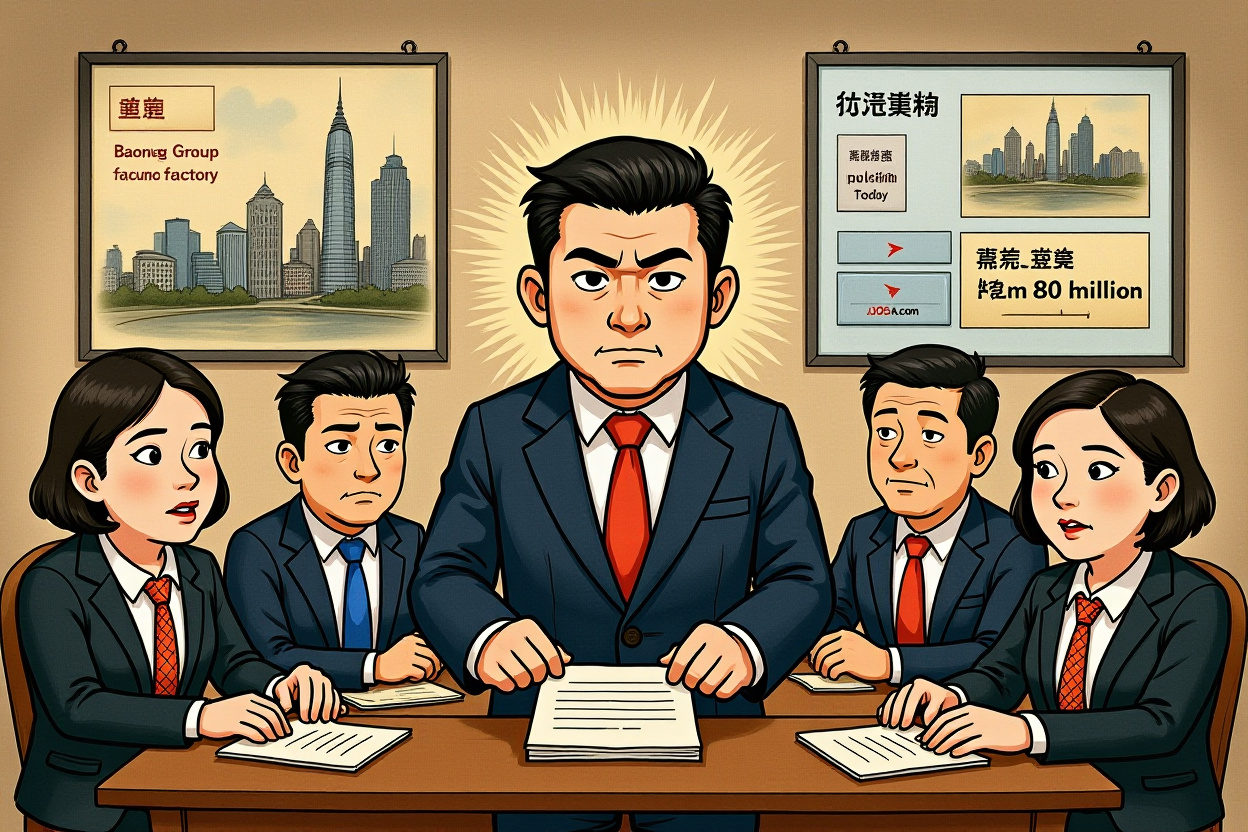
The stability of China’s business environment for private capital faces a critical public test. In an extraordinary and desperate move, Baoneng Group Chairman Yao Zhenghua (姚振华), the controlling shareholder of embattled automaker Qoros Auto (观致汽车), has filed a formal, public complaint with the nation’s highest courts. He accuses local officials and judicial authorities in Changshu, Jiangsu province, of colluding to systematically undervalue and seize Qoros’s core assets, threatening to wipe out RMB 26 billion in shareholder investment. This dramatic escalation represents Qoros Auto’s final gambit for survival, transforming a corporate debt crisis into a high-profile legal and political showdown with implications for investor confidence nationwide.
A Desperate Move in a High-Stakes Bankruptcy
The core allegations center on the planned judicial auction of Qoros Auto’s primary manufacturing assets in Changshu. Yao Zhenghua claims this process has been manipulated to benefit local interests at the expense of national creditors and the company’s revival prospects. The situation encapsulates the intense pressures within China’s consolidating electric vehicle sector, where failed ventures often leave behind valuable physical and intellectual assets.
– The Stakes: Yao claims Baoneng has invested a total of RMB 26 billion in Qoros since 2018. The auction of assets he values at RMB 80 billion for a starting bid of RMB 860 million would obliterate this investment.
– The Legal Front: Concurrently, a bankruptcy reorganization application for Qoros is pending with the Suzhou Intermediate People’s Court (苏州中级人民法院), supported by creditors holding over 60% of the company’s debt.
– The Broader Impact: The outcome will signal to international and domestic investors how China balances local government interests with national legal standards during corporate failures.
In a bombshell public letter, Baoneng Group Chairman Yao Zhenghua (姚振华) has thrown a legal grenade into the protracted collapse of Qoros Auto (观致汽车). Accusing local Communist Party officials and courts of a coordinated scheme to “eat the dead without spitting out the bones,” Yao’s实名举报 (real-name report) to the Supreme People’s Court (最高人民法院) and the Jiangsu High People’s Court (江苏省高级人民法院) is a last-ditch effort to halt the fire-sale auction of Qoros’s factory. Scheduled for January 15, 2026, on the JD.com judicial auction platform, the sale of land, plants, and equipment for a starting price of RMB 860 million is, in Yao’s view, the culmination of illegal acts designed to strip the company of its valuable assets before a proper bankruptcy reorganization can proceed. This public confrontation between a prominent private entrepreneur and local power structures is more than a corporate bankruptcy story; it is a litmus test for the rule of law and the protection of private property in China’s challenging economic climate. The fate of Qoros Auto now hinges on this final, desperate legal gambit.
From Acquisition Star to Bankruptcy Brink: The Qoros Story
Baoneng’s Ambitious Entry and Subsequent Struggles
Qoros Auto, originally a joint venture between Chery Automobile and Israel Corporation, was acquired by the property-to-finance conglomerate Baoneng Group in 2018. At the time, Baoneng, led by the ambitious Yao Zhenghua, was riding high from a series of successful market maneuvers and saw the automotive sector, particularly New Energy Vehicles (NEVs), as its next growth frontier. The acquisition was part of a massive capital deployment strategy.
Yao’s letter details a staggering total investment of approximately RMB 26 billion, broken down as follows:
– Equity purchase and acquisition costs: ~RMB 80 billion
– Interest on acquisition financing: ~RMB 27 billion
– Research & Development: ~RMB 81 billion
– Asset and equipment investment: RMB 18 billion
– Operational expenditures: ~RMB 27 billion
Despite this influx, Qoros failed to gain significant market share. The broader liquidity crisis that hit Baoneng in 2022 severely hampered its ability to continue funding Qoros’s losses, leading to production halts, supplier disputes, and mounting debt.
The Mounting Debt and the Path to Court
The Core of the Allegations: A System Undervaluing AssetsDisparity in Valuation: RMB 80 Billion vs. RMB 15 Billion
The most explosive charge in Yao Zhenghua’s complaint is the alleged gross undervaluation of Qoros’s Changshu factory assets. He claims that third-party assessments value the land, buildings, general machinery, and specialized vehicle production equipment at around RMB 80 billion. However, he alleges that the Changshu People’s Court (常熟市人民法院), in collusion with local officials, intentionally assessed these same assets at only RMB 15 billion.
This alleged undervaluation directly enabled the low auction price. The assets are scheduled for a second auction with a starting bid of just RMB 860 million—roughly 1% of Yao’s claimed value. He accuses Changshu Economic and Technological Development Zone Administrative Committee (常熟经济技术开发区管委会) of planning to “swallow” these high-quality assets at a low price through the auction, leaving only an empty shell for formal bankruptcy liquidation later. This, he argues, violates the fundamental principle of the Enterprise Bankruptcy Law (《企业破产法》), which aims to maximize creditor recovery and preserve viable productive capacity.