



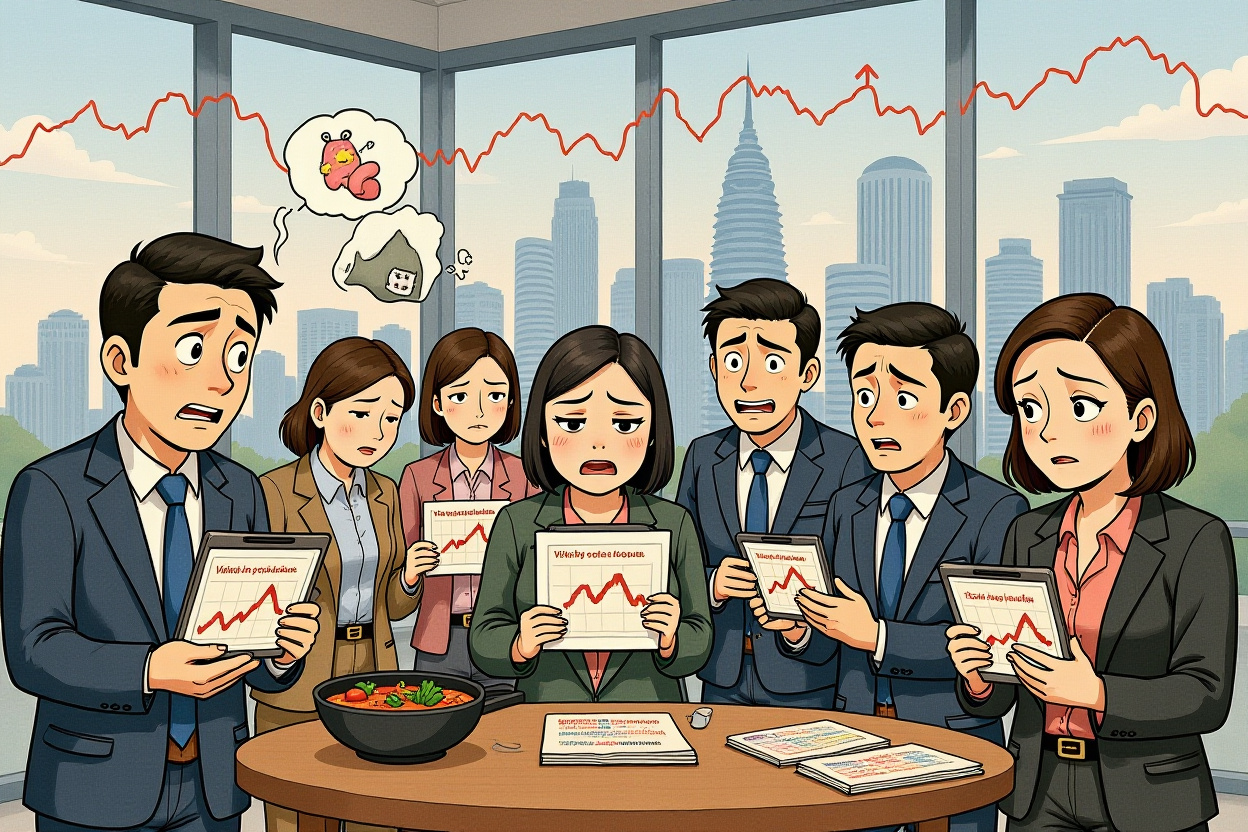
Executive Summary
Before diving into the details, here are the critical takeaways from this analysis of Haidilao’s current challenges:
– A recent viral video shows a toddler throwing a diaper into a Haidilao hotpot, sparking public outrage and adding to a series of food safety incidents that threaten brand trust.
– This Haidilao food safety crisis comes shortly after a high-profile “urination incident” in 2025, where two teenagers were fined 2.2 million yuan, underscoring persistent operational risks.
– Financially, Haidilao reported a 3.66% drop in revenue and a 13.72% decline in net profit for H1 2025, with the key turnover rate falling below the 4.0 per day “passing line” to 3.8, indicating deeper market pressures.
– The company is diversifying with multi-brand strategies and外卖 growth, but high costs and consumer skepticism pose hurdles to recovery, making this a pivotal moment for investors to reassess.
From Viral Video to Brand Crisis: The Diaper Incident Unfolds
Just as Haidilao seemed to be moving past a previous scandal, a new video has ignited fresh concerns over food safety at China’s premier hotpot chain. The footage, widely circulated online, depicts a young child tossing what appears to be a used diaper into a simmering hotpot at a Haidilao outlet. This incident, occurring on December 31, 2025, at the Haidilao Xuzhou Yunlong Wanda Plaza store, quickly escalated into a public relations nightmare, with the topic “Haidilao锅里被扔尿布门店已报警” (Haidilao Store Reports to Police After Diaper Thrown into Pot) trending on Weibo with over 50 million views.
The Haidilao food safety crisis is not an isolated event but part of a troubling pattern that erodes consumer confidence. In response, Haidilao’s customer service stated that the matter had been reported to the police, with all affected cookware discarded. This swift action mirrors past protocols, yet the recurrence of such issues highlights systemic vulnerabilities in managing dine-in environments, especially with young children. As one netizen commented, “This isn’t just about a diaper; it’s about whether we can trust the hygiene standards at a place we pay a premium for.”
Legal Repercussions and Regulatory Scrutiny
The diaper incident follows closely on the heels of a resolved legal case from 2025, often referred to as the “小便门” (urination gate). In that instance, two 17-year-olds, Tang and Wu, urinated into a hotpot at a Shanghai Haidilao branch and shared the video online. The Shanghai Huangpu District People’s Court ordered them and their parents to pay 2.2 million yuan in damages and issue public apologies, which were published in the People’s Court Daily on January 8, 2026. Guo Gang (郭刚), a lawyer from Sichuan Fangce Law Firm, noted that under China’s Civil Code, guardians of minors bear primary liability for such torts, but restaurants like Haidilao must also demonstrate reasonable safety measures to avoid supplementary责任.
This legal backdrop intensifies the current Haidilao food safety crisis, as regulators from the State Administration for Market Regulation (SAMR) are likely to increase inspections. Failure to uphold standards could result in fines, operational suspensions, or deeper brand damage. For investors, this underscores the importance of monitoring compliance risks in China’s 餐饮 (catering) sector, where public incidents can swiftly impact stock valuations and consumer sentiment.
A History of Lapses: Haidilao’s Recurring Food Safety Woes
Despite its reputation as the “火锅一哥” (hotpot big brother), Haidilao has faced multiple food safety scandals over the years, each chipping away at its carefully curated image of impeccable service. The current Haidilao food safety crisis is merely the latest in a series that dates back to 2017, when media exposes revealed rodent infestations and inadequate utensil cleaning at some stores. At the time, Haidilao issued public apologies and vowed improvements, but subsequent incidents suggest ongoing challenges in quality control across its vast network of over 1,000 restaurants globally.
Key past incidents include:
– 2020: Customers in Jinan found plastic pieces in乌鸡卷 (black chicken rolls), prompting recalls and investigations.
– 2021: A Shanghai branch of上海捞派餐饮管理有限公司 (Shanghai Laopai Catering Management Co., Ltd.) was fined 20,000 yuan for selling expired “捞派豆花” (Laopai tofu pudding), violating food labeling regulations.
– 2022: The苏州捞派餐饮有限公司徐州云龙分公司 (Suzhou Laopai Catering Co., Ltd. Xuzhou Yunlong Branch) faced a 5,000-yuan penalty for using lemons with excessive pesticide residues, though they were for decoration only.
– 2023: A Haidilao outlet in Zhangzhou reported issues with detergent residue on bowls, flagged by Fujian Provincial Market监督管理局 (Regulatory Bureau).
– 2025: A consumer in Sichuan alleged finding疑似淋巴肉 (suspected lymph meat) in a self-heating hotpot product sold online, though the case was later settled with a replacement offer.
Impact on Consumer Trust and Operational Footfall
The cumulative effect of these incidents is a gradual erosion of consumer trust, which directly translates to operational metrics. Following the diaper incident, a visit by Yangzi Evening News to the affected Xuzhou store on January 9, 2026, revealed a starkly empty dining area during peak hours, contrasting with the usual long queues. This visual evidence aligns with broader trends; on consumer complaint platforms like黑猫投诉 (Hei Mao Tousu), over 4,500 complaints related to Haidilao cite food safety and service issues. As Li Wei (李伟), a restaurant analyst at CICC China International Capital Corporation Limited (中金公司), observes, “Each scandal forces Haidilao to spend more on marketing and compensation, diverting resources from innovation and expansion. The Haidilao food safety crisis isn’t just a PR problem—it’s a bottom-line concern.”
For institutional investors, this pattern signals heightened reputational risk. In China’s competitive food service market, where brands like呷哺呷哺 (Xiabuxiabu) and巴奴毛肚火锅 (Banu Mao Du Hotpot) are gaining traction, repeated lapses could drive customers to alternatives, exacerbating financial pressures.
Financial Strain: Declining Revenue and Falling Turnover Rates
Beneath the surface of these scandals, Haidilao is grappling with significant financial headwinds. The company’s 2025 half-year report unveiled a 3.66% year-on-year decline in revenue to 20.703 billion yuan and a 13.72% drop in net profit attributable to shareholders to 1.759 billion yuan. This marks the first半年度营利双降 (semi-annual profit and revenue double decline) since 2022, pointing to deeper operational challenges beyond temporary disruptions. The Haidilao food safety crisis compounds these issues, as negative publicity likely deters potential diners, further straining performance.
A critical metric underscoring this struggle is the翻台率 (turnover rate), which measures how often tables are reused per day. Haidilao once set a “passing line” of 4.0 times per day for sustainable expansion, but in H1 2025, it fell to 3.8 times from 4.2 a year earlier. This decline reflects intensified competition and shifting consumer preferences, including a post-pandemic trend toward home dining and budget-consciousness. Despite a slight increase in客单价 (average customer spending) from 97.4 to 97.9 yuan, it wasn’t enough to offset the turnover slump, with restaurant operations contributing 89.8% of revenue, down from 95%.
Strategic Shifts: Multi-Brand Ventures and Cost Pressures
In response, Haidilao has embarked on a multi-brand strategy to diversify its revenue streams. Beyond its core hotpot business, it now operates 14 other餐饮品牌 (catering brands), such as焰请烤肉铺子 (Yanqing Barbecue Shop), which saw rapid expansion with 46 new outlets in H1 2025. Revenue from these other brands surged 227% to 597 million yuan, though they still represent only 2.9% of total revenue, indicating limited impact on overall growth. Additionally,外卖 (delivery) services grew nearly 60% to 928 million yuan, driven by product innovations and marketing pushes.
However, this growth comes at a cost. Other expenses rose 23.36% to 1.087 billion yuan, largely due to higher promotion and platform fees for delivery. As Zhang Yong (张勇), Haidilao’s founder, noted in a recent earnings call, “We are investing heavily in digital and new formats to stay relevant, but margins are under pressure from both safety incidents and market saturation.” For fund managers, this highlights the delicate balance between expansion and profitability in China’s 消费 (consumer) sector, where companies like阿里巴巴集团 (Alibaba Group) and美团 (Meituan) dominate delivery channels, increasing dependency and costs.
Regulatory and Market Implications for Chinese Equities
The ongoing Haidilao food safety crisis offers broader lessons for investors in Chinese equities, particularly in the consumer discretionary space. Regulatory bodies like the国家市场监督管理总局 (National Administration for Market Regulation) are tightening oversight, with recent amendments to the食品安全法 (Food Safety Law) imposing stricter penalties for violations. In 2025, SAMR announced enhanced inspections for chain restaurants, which could lead to more frequent fines or closures for non-compliant players. This regulatory environment means that companies like Haidilao must prioritize compliance to avoid disruptions, as seen in past cases where incidents triggered stock dips of up to 5% in single trading sessions.
Moreover, the incident reflects evolving consumer expectations in China’s 新消费 (new consumption) era. As middle-class diners become more health-conscious and vocal on social media, brands are held to higher accountability standards. A survey by胡润研究院 (Hurun Research Institute) in 2025 found that 70% of respondents consider food safety a top factor when choosing restaurants, above price or service. This shift necessitates continuous investment in training, technology, and transparency—areas where Haidilao has made strides but faces persistent gaps.
Expert Insights and Forward-Looking Analysis
Industry experts weigh in on the path forward. Wang Lin (王琳), a portfolio manager at a Hong Kong-based hedge fund, states, “Haidilao’s challenges are symptomatic of larger trends in China’s餐饮行业 (catering industry): overexpansion, margin compression, and rising operational risks. The Haidilao food safety crisis should prompt investors to scrutinize ESG factors more closely, as they increasingly correlate with financial performance.” She recommends monitoring metrics like customer retention rates and regulatory compliance scores alongside traditional financials.
From a market perspective, Haidilao’s stock—listed on the Hong Kong Stock Exchange under ticker 6862.HK—has seen volatility, with its market capitalization hovering around 77.98 billion HKD (approximately 70 billion yuan) as of January 9, 2026. While the company’s membership base exceeds 200 million, leveraging this for recovery will require robust crisis management. Outbound links to resources like the Hong Kong Exchange news releases or SAMR announcements can provide additional context for investors tracking regulatory developments.
Synthesis and Investment Guidance
In summary, Haidilao stands at a crossroads, grappling with a multifaceted Haidilao food safety crisis that intertwines with financial underperformance. The diaper incident, while perhaps minor in isolation, symbolizes deeper issues of brand trust and operational control. Key takeaways for sophisticated investors include the need to assess food safety protocols as a critical component of due diligence, especially for consumer-facing firms in China. The declining turnover rate and rising costs suggest that Haidilao’s recovery may hinge on successful execution of its multi-brand strategy and外卖 expansion, but this will require careful capital allocation and enhanced risk management.
Looking ahead, investors should watch for Q4 2025 earnings reports for signs of stabilization, any announcements from Haidilao regarding systemic safety upgrades, and regulatory actions from Chinese authorities. As global interest in Chinese equities remains high, particularly in sectors like consumer staples and discretionary, understanding these nuances can inform better portfolio decisions. Consider diversifying into peers with stronger safety records or exploring thematic funds focused on sustainable consumption in Asia.
For ongoing updates, subscribe to market analyses from reputable sources and engage with financial platforms that track real-time data on Chinese companies. The Haidilao food safety crisis is a reminder that in today’s interconnected markets, vigilance on non-financial risks is just as crucial as crunching the numbers.