



Executive Summary: Key Takeaways for Market Participants
– The Chinese automotive industry is undergoing a significant mindset shift, with most major manufacturers setting conservative, single-digit to low-double-digit growth targets for 2026, marking a departure from the era of hyperbolic ambition.
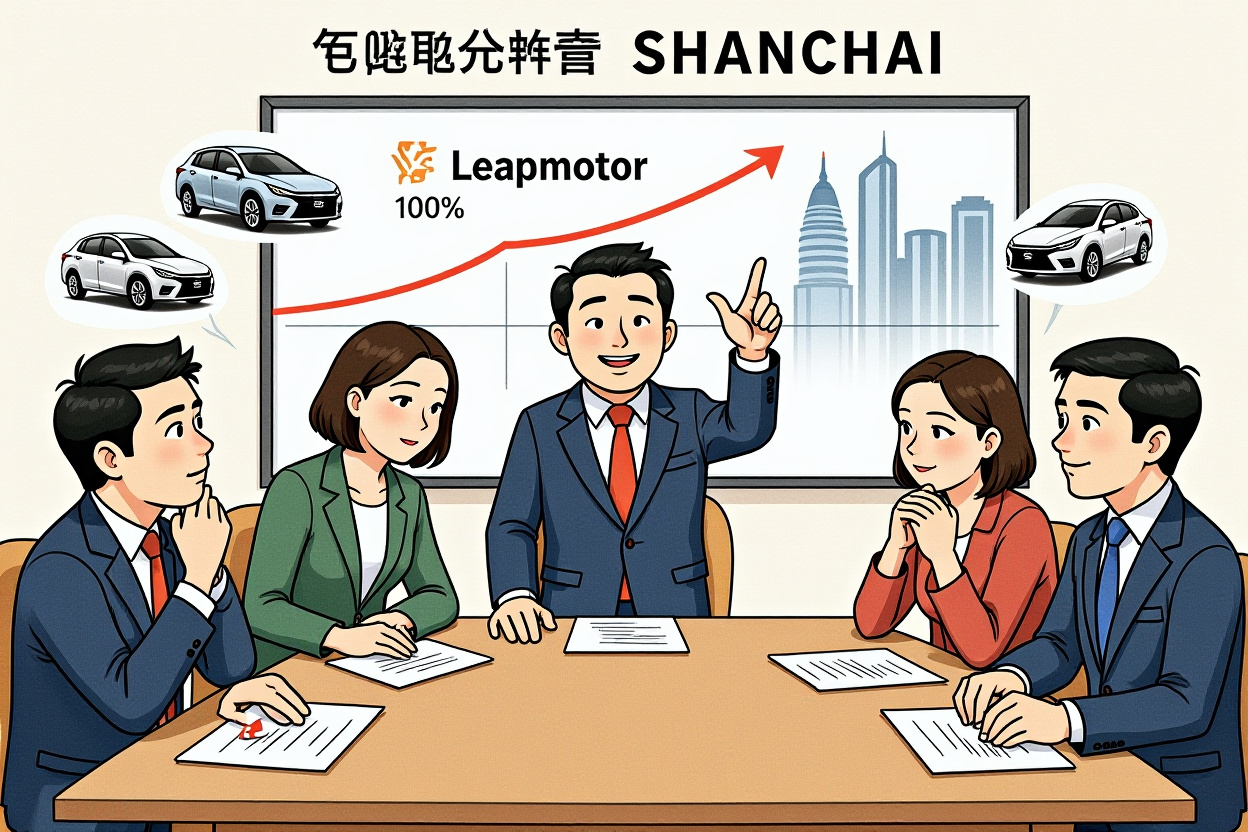
– Among seven analyzed automakers, only Leapmotor (零跑汽车) has set a sales target that aims to double its 2025 volume, highlighting a broader trend towards realistic sales targets grounded in market reality.
– Traditional powerhouses like Geely (吉利汽车) and Dongfeng (东风集团) are focusing on steady growth and enhancing New Energy Vehicle (NEV) penetration, reflecting strategic prioritization over pure volume expansion.
– Policy adjustments, including the extension of NEV purchase tax incentives and modified subsidy schemes, are key variables influencing this calibrated approach, forcing companies to build sustainable models rather than rely on state support.
– For investors, this shift signals a maturing market where financial discipline, profitability, and execution quality are becoming critical valuation metrics, replacing the previous growth-at-all-costs narrative.
The Great Rationalization: Why Chinese Carmakers Are Grounding Their Ambitions
Remember when Chinese auto executives routinely pledged to triple sales or capture impossible market shares? That era of what locals call ‘fang weixing’ (放卫星) – or launching satellites – appears to be over. The breakneck expansion of China’s car market, particularly in the electric vehicle segment, created a culture where audacious goals were the norm. However, as growth rates normalize and competition intensifies, a new ethos of prudence is taking hold. The data for 2026 sales targets offers a clear window into this psychological and strategic reset. The pursuit of realistic sales targets is now the benchmark for credible management teams. This transition from hype to humility carries profound implications for supply chains, capital allocation, and investor returns in the world’s largest automotive market.
From Boom to Bottom Line: The Maturation of a Mega-Market
The Chinese passenger vehicle market has evolved from a nascent opportunity into a complex, saturated battleground. Annual sales now oscillate around 25 million units, with NEVs accounting for over one-third of that volume. This scale makes double-digit percentage gains in absolute terms a Herculean task. Furthermore, the withdrawal of blanket subsidies and the implementation of more targeted policies, such as the continued but adjusted NEV purchase tax reduction, have removed the tailwinds that once propelled reckless expansion. Companies can no longer count on政策性红利 (policy dividends) to fuel growth; instead, they must compete on product strength, brand power, and operational efficiency. This environment naturally favors realistic sales targets over fantastical projections.
Decoding the 2026 Targets: A Company-by-Company Analysis
A review of publicly announced targets reveals a spectrum of strategies, from aggressive growth to consolidation. The move towards realistic sales targets is evident across the board, with only one notable exception proving the rule.
Leapmotor: The Lone Aggressor in a Sea of Caution
Leapmotor stands out by targeting 1 million unit sales in 2026, a 100% increase from its 2025 target of 500,000 units. This ambition is fueled by its strong 2025 performance and a rapidly expanding model lineup. However, even this target is considered ambitious by analysts, who note the company’s need to significantly expand production capacity and distribution networks. It represents a high-risk, high-reward strategy in a market where others are pulling back.
The Steady Giants: Geely, Dongfeng, and Chery
The established players are charting a more measured course. Geely Automobile Holdings Limited (吉利汽车), having exceeded its 2025 target, has set a 2026 goal of 3.45 million units, a 14% year-over-year increase. Crucially, its NEV target is 2.22 million units, aiming to lift NEV penetration from 55.8% to 64.3%. This highlights a strategic pivot within a realistic sales target framework: growing the core business while aggressively transitioning to electric.
Dongfeng Motor Corporation (东风集团) is targeting 3.25 million units for 2026. Based on estimated 2025 sales of 2.5 million units, this implies growth of approximately 30%. A key initiative is the consolidation of its Dongfeng eπ (奕派), Dongfeng Fengshen (风神), and Dongfeng Nano (纳米) brands into eπ Technology, with plans to launch six new models in 2026. This reorganization under a unified NEV-focused entity is a pragmatic response to market fragmentation.
Chery Automobile Co., Ltd. (奇瑞) announced a group target of 3.2 million vehicles for 2026, up 14.03% from 2025. The company, a leader in vehicle exports, stated it aims to outpace industry growth by 10 to 20 percentage points. This export-driven growth model provides a hedge against domestic saturation, allowing for more realistic sales targets at home while pursuing volume abroad.
The Restructured: Great Wall Motors’ Strategic Retreat
Great Wall Motors (长城汽车) offers a stark case study in recalibration. The company sold 1.324 million vehicles in 2025, far below the 4 million-unit target once set by its Chairman Wei Jianjun (魏建军). For its 2026 employee stock ownership plan, it has revised the sales考核目标 (assessment target) down from 2.49 million to 1.8 million units—a 36% increase from 2025 actuals. This public downward revision is a clear signal of the new emphasis on achievable, realistic sales targets over legacy ambition.
The New Energy Vehicle Crucible: Where Realism Meets Innovation
The NEV segment remains the core growth engine, but here too, expectations are being tempered. The industry’s focus is shifting from sheer volume to sustainable quality growth and profitability.
Nio and Xiaomi: Growth with Qualifications
Among newer players, Nio Inc. (蔚来汽车) has outlined a goal for 40-50% sales growth in 2026, which would translate to 456,000 to 489,000 units based on 2025 sales of 326,000. Founder and CEO William Li Bin (李斌) emphasized ‘提升增长质量’ (improving growth quality) and achieving full-year profitability. This dual focus on volume and margins epitomizes the sophisticated, realistic sales targets now in vogue.
Xiaomi Automobile (小米汽车), after a controversial entry into the market, is targeting over 30% growth for 2026. To achieve this, it announced the next-generation SU7 model for April 2026 launch, starting at a pre-sale price of 225,900 RMB. By enhancing standard features like assisted driving hardware and battery range, Xiaomi is competing on value—a more sustainable tactic than pure price wars. This product-led strategy supports a more realistic sales target.
The Policy Landscape: Navigating a New Normal
Government policy remains a decisive factor. The extension of the NEV purchase tax incentive, albeit in a modified form, provides stability but not a blank check. The ‘两新’ (Two New) subsidy政策 adjustments have made support more targeted towards advanced technology and infrastructure, such as battery swapping and high-end autonomy. Carmakers must now align their realistic sales targets with these nuanced policy directions, investing in R&D areas that qualify for support rather than chasing volume for its own sake.
Investment Implications: Reading the Signals in the Sales Guidance
For institutional investors and fund managers, this industry-wide shift towards realistic sales targets is a critical data point for portfolio construction and risk assessment.
Valuation Metrics in Flux: From Top-Line to Bottom-Line Focus
The market is increasingly penalizing companies that miss guidance and rewarding those who deliver consistent, predictable results. A track record of setting and hitting realistic sales targets is becoming a proxy for management credibility. Analysts will scrutinize cash flow generation, gross margins, and return on invested capital more closely than sheer delivery numbers. Companies like Geely, which consistently meet or exceed tempered expectations, may command a premium.
Sector Opportunities: Identifying Winners in a Prudent Era
The move to realistic sales targets creates distinct investment themes:
– Suppliers with exposure to premiumization and advanced technology (e.g., lidar, high-energy-density batteries) may see more stable demand as carmakers compete on features rather than just cost.
– Companies with strong export channels, like Chery and SAIC Motor (上汽集团), offer diversification away from the domestic cycle.
– Firms demonstrating a clear path to NEV profitability, such as BYD (比亚迪) which has not yet announced its 2026 target but is expected to maintain industry leadership, remain core holdings.
Investors should demand greater transparency on the assumptions behind these realistic sales targets, including breakdowns by model, region, and sales channel.
The Road to 2026: Strategic Priorities for a Consolidated Market
The collective embrace of realistic sales targets is not a sign of pessimism but of strategic maturity. It reflects several underlying industry priorities.
From Volume to Value: The Quality Growth Imperative
The end of ‘放卫星’ means the beginning of a focus on sustainable value creation. This includes:
– Enhancing brand equity to command higher price points and improve margins.
– Optimizing product portfolios to eliminate unprofitable models and double down on winners.
– Investing in software-defined vehicle capabilities and user ecosystems to create recurring revenue streams beyond the initial sale.
These strategies all support more realistic sales targets that are tied to profitability metrics.
Global Ambitions: Export Markets as a Growth Lever
With domestic growth slowing, international expansion becomes essential for volume aspirations. Companies are setting realistic sales targets that incorporate a significant contribution from overseas sales. Chery’s success in markets like Russia and Latin America, and BYD’s expansion in Europe and Southeast Asia, are blueprints. However, this requires navigating trade barriers, building localized supply chains, and adapting to different consumer preferences—complexities that further justify conservative overall targets.
Synthesizing the Shift: What Realistic Targets Mean for the Future
The analysis of 2026 sales targets reveals an Chinese auto industry at an inflection point. The rampant speculation and capacity overbuilds of the past are giving way to disciplined capital allocation and operational excellence. The widespread adoption of realistic sales targets is the most tangible evidence of this new era. For market participants, this signals reduced systemic risk and the potential for more stable, long-term returns. However, it also demands a more nuanced investment approach that looks beyond headline growth numbers.
Moving forward, stakeholders should monitor how these targets evolve through the year, especially in response to economic indicators and competitive moves. The call to action for investors is clear: prioritize companies with transparent, achievable plans that balance growth with financial health. Engage with management teams on their strategy for hitting these realistic sales targets through innovation and efficiency, not just market hope. In a maturing industry, the winners will be those who master the art of the achievable, turning prudent guidance into consistent performance.