



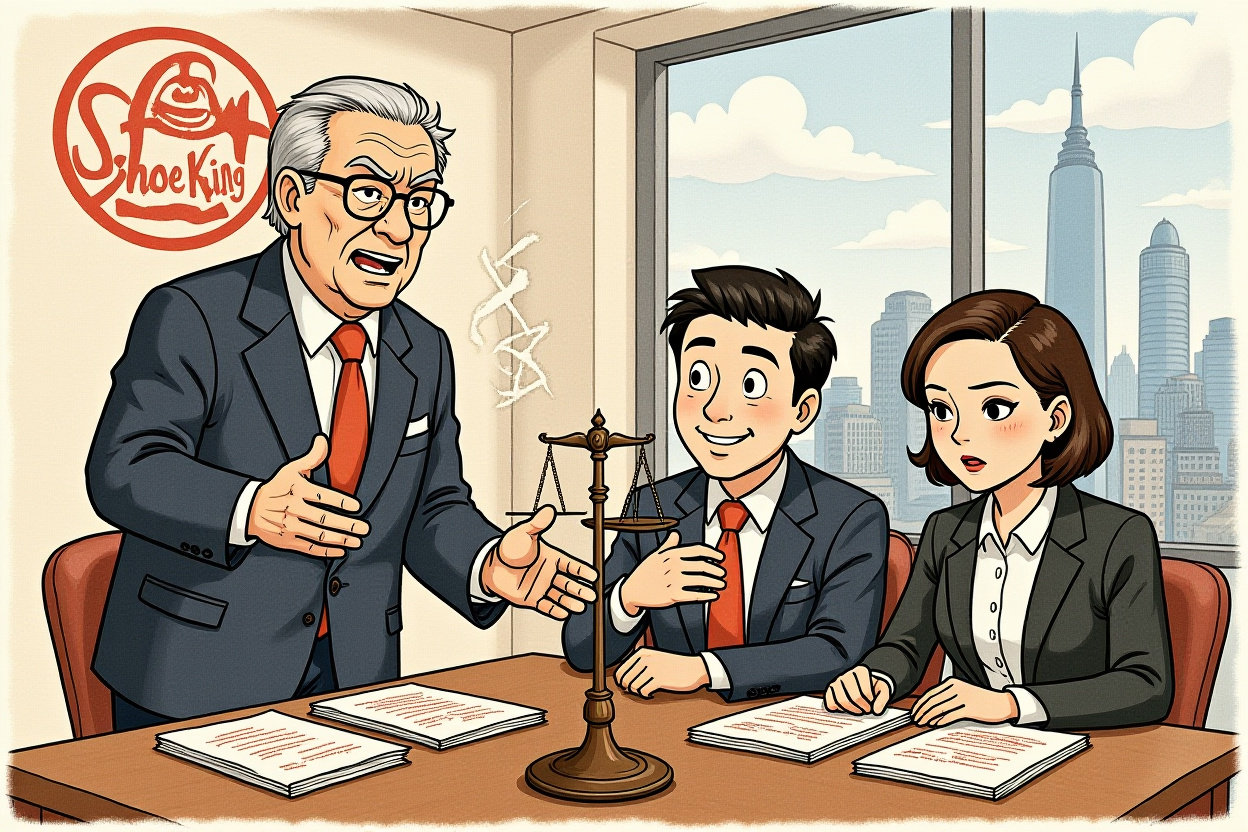
– The founder of Shuangxing Mingren Group (双星名人集团), Wang Hai (汪海), has publicly severed ties with his son and daughter-in-law, citing a succession crisis involving American identity as a key reason.
– Control of the century-old shoe brand is now in legal limbo, with股权 battles and governance failures exposing risks for investors in Chinese family-owned enterprises.
– This feud underscores the challenges of balancing family dynamics with corporate governance in China’s evolving equity markets, where succession planning is often fraught with conflict.
– The case offers critical lessons for institutional investors on due diligence and the importance of transparent succession strategies in Chinese companies.
In a dramatic start to 2026, the Chinese business world was rocked by a public family schism that lays bare the vulnerabilities of even the most storied enterprises. Wang Hai (汪海), the 84-year-old founder of the iconic Shuangxing Mingren Group (双星名人集团), issued a startling declaration: he is cutting all ties with his son, Wang Jun (汪军), and daughter-in-law, Xu Ying (徐英). At the heart of this rupture is a fierce succession crisis involving American identity, with Wang Hai asserting that the Chinese national brand must not be handed to someone with U.S. citizenship. This isn’t just a personal fallout; it’s a corporate governance earthquake with significant implications for investors in Chinese equities. As control of the once-dominant ‘Shoe King’ hangs in the balance, this saga serves as a cautionary tale about the perils of family infighting in an increasingly competitive market.
The Feud Erupts: A Public and Bitter Family Schism
The conflict at Shuangxing Mingren Group (双星名人集团) escalated from private disputes to a very public, acrimonious battle, culminating in Wang Hai’s (汪海) January 2026 statement disowning his son and daughter-in-law. This move marks a pivotal moment in a succession crisis involving American identity, where personal grievances have spilled directly into the corporate arena.
The Public Declaration and Key Allegations
Wang Hai’s (汪海) public letter listed 11 core grievances, but the most striking was the emphasis on nationality. He stated, “As a national brand that emerged from state-owned enterprise reform, it absolutely cannot be succeeded by someone with an American identity.” This highlights a deep-seated concern over foreign ties in a company built on patriotic branding. Other allegations include:
– Unauthorized transfers of company assets and property, including three apartments registered under Wang Hai’s name.
– A forceful takeover attempt involving the seizure of corporate seals, financial documents, and the freezing of salaries for his associates.
– Disrespect towards family, such as withholding funds for his mother’s care and pension.
This public airing of dirty laundry has stripped the family of all pretense, turning a private succession crisis into a very public spectacle.
Timeline of Escalation and Control Battles
The roots of this feud trace back to a 2022 capital increase that shifted control. Here’s a brief timeline:
– 2022: Xu Ying’s (徐英) controlled entity, Qingdao Xingmaida, injected capital to acquire a 56.96% stake, becoming the majority shareholder.
– 2024: Further capital increases raised Xingmaida’s stake to 69.48%, diluting Wang Hai’s (汪海) influence despite his titular roles.
– May 2025: The board voted to remove Wang Hai (汪海) as chairman and legal representative, appointing Xu Ying (徐英) in his place. Wang Hai contested this as invalid.
– December 2025: Accusations flew over control of company seals and documents, with both sides issuing public statements.
– January 2026: Wang Hai (汪海) made the final break, declaring the family relationship severed. This succession crisis involving American identity has now entered a legal phase, with no quick resolution in sight.
A Century-Old Legacy: The Rise and Reign of the ‘Shoe King’
To understand the stakes, one must appreciate the historical weight of Shuangxing Mingren Group (双星名人集团). Founded in 1921, it evolved from a state-owned shoe factory into a household name under Wang Hai’s (汪海) leadership, symbolizing Chinese industrial pride.
From State-Owned Enterprise to Family Empire
The company’s origins date back to the Qingdao Rubber Nine Factory, which Wang Hai (汪海) joined after his military service. His transformative leadership turned it into China’s largest and most profitable shoe manufacturer by the 1980s. Key milestones include:
– 1983: Establishment as a leading state-owned shoe group.
– 1996: Listing on the Shenzhen Stock Exchange (深圳证券交易所) as Qingdao Double Star.
– 2008: A corporate split where the tire business remained as Qingdao Double Star (青岛双星), a state-owned enterprise, while Wang Hai (汪海) took the footwear and apparel division private under Shuangxing Mingren Group (双星名人集团).
This history is crucial because the brand’s identity as a “national brand” (民族品牌) is central to the current succession crisis involving American identity.
Wang Hai’s Leadership and the Peak of Success
Market Realities: Stagnation in a Fiercely Competitive LandscapeWhile the family feuds, Shuangxing Mingren Group (双星名人集团) has been losing ground in the market. The succession crisis involving American identity unfolds against a backdrop of severe business challenges, making governance failures even more damaging.
Loss of Market Share to Domestic and International Rivals
Attempts at Reinvention and Persistent ChallengesThe company’s efforts to modernize have been hampered by the ongoing family conflict. With management distracted by infighting, strategic initiatives likely stall, further eroding market position. This situation illustrates how a succession crisis involving American identity can directly impact operational efficiency and competitive agility, deterring potential investors who seek stability in Chinese equities.
The Core Conflict: Succession, Nationality, and Corporate Control
At its heart, this feud is a multifaceted battle over who should lead a iconic Chinese brand. The succession crisis involving American identity is not merely about passports; it’s about control, legacy, and the very soul of the enterprise.
The American Identity Question in Succession Planning
Legal Battles Over Control and LegitimacyImplications for Investors and Chinese Family BusinessesThis saga offers critical insights for global investors and corporate executives. The succession crisis involving American identity at Shuangxing Mingren Group (双星名人集团) is a microcosm of larger trends in Chinese capitalism.
Governance Risks in Chinese Equities
Lessons on Succession Planning and Corporate StructureThe feud underscores the need for professionalized succession planning. Wang Hai’s (汪海) turn to advocating for a professional manager takeover, albeit contingent on legal victory, points to a potential solution. Best practices for family businesses in China include:
– Establishing clear, legal succession frameworks early, detached from emotional family ties.
– Considering dual-class share structures or trusts to separate ownership from management.
– Engaging independent directors and auditors to oversee transitions.
The succession crisis involving American identity serves as a stark reminder that without such structures, even百年企业 (century-old enterprises) can crumble from within.
As the dust settles on this very public family rupture, the future of Shuangxing Mingren Group (双星名人集团) remains uncertain. The succession crisis involving American identity has exposed deep fissures in what was once a symbol of Chinese industrial prowess. For investors, the key takeaway is clear: governance matters as much as growth in Chinese equities. Scrutinize family-controlled companies for hidden succession risks, and diversify portfolios to mitigate such idiosyncratic shocks. For business leaders, this is a call to action—formalize your succession plans today, before personal conflicts jeopardize your legacy. The ‘Shoe King’ saga may yet have more chapters, but its lessons on balancing family, nationality, and corporate control are already written for all to see.