



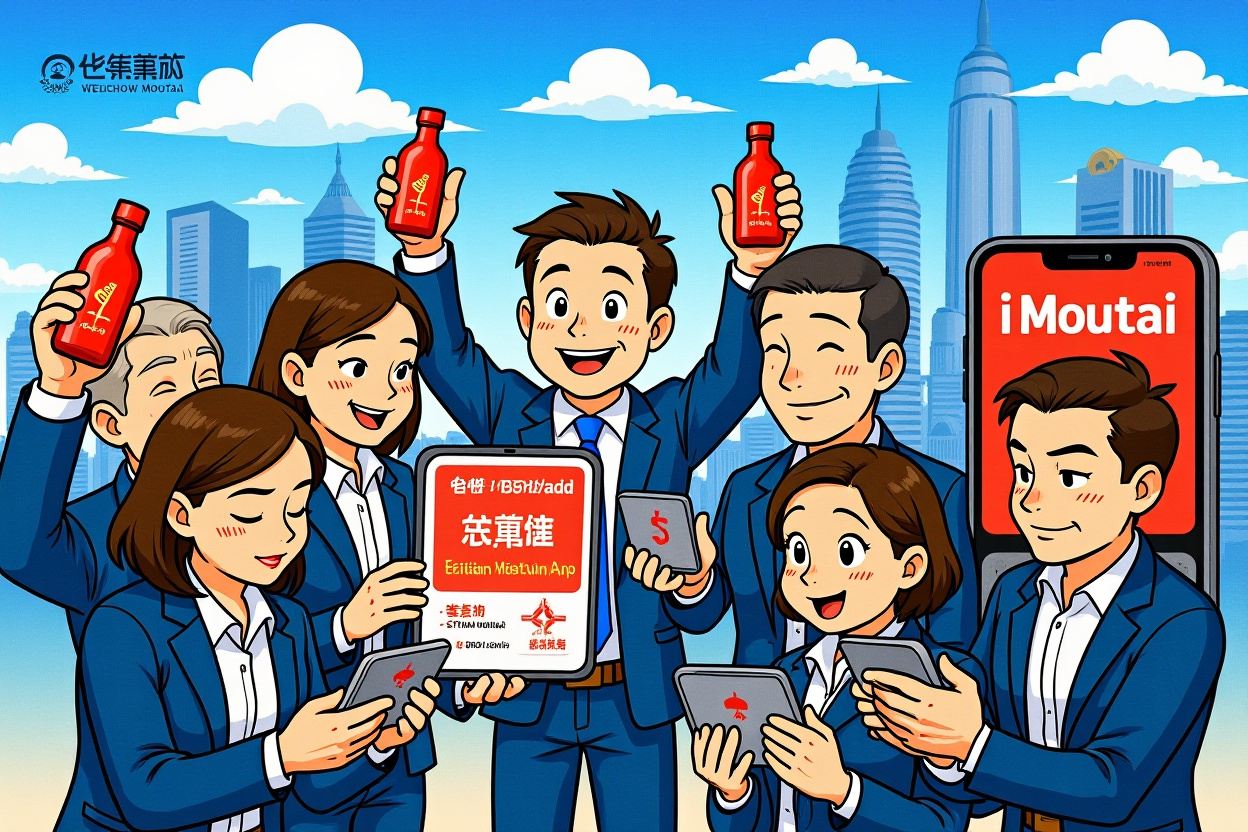
On the first morning of 2026, a seismic shift rippled through China’s consumer and capital markets. Kweichow Moutai Co., Ltd. (贵州茅台酒股份有限公司), the world’s most valuable spirits company, executed a long-anticipated strategic maneuver. Its proprietary e-commerce platform, i Moutai (i茅台), began direct sales of the company’s flagship product—the standard 500ml, 53% vol Feitian Moutai (飞天53%vol 500ml贵州茅台酒)—to consumers at the official guidance price of 1,499 RMB per bottle, with a strict daily purchase limit of 12 bottles per user. This move marks a decisive step in the company’s ongoing channel reform and represents a fundamental re-engineering of its legendary distribution system. For global investors monitoring China’s consumer giants, Moutai’s direct-to-consumer (D2C) pivot is more than a sales tactic; it is a calculated strategy to reclaim pricing power, capture margin, and secure long-term stability in an evolving market. The implications for its financials, the broader baijiu sector, and the intricate ecosystem of distributors and speculators that has surrounded the brand for decades are profound.
Executive Summary
- Core Action: Kweichow Moutai has commenced direct-to-consumer (D2C) sales of its core 500ml Feitian Moutai product on its “i Moutai” app at the state-mandated retail price of 1,499 RMB, imposing a 12-bottle daily limit per user.
- Strategic Rationale: This move aims to disrupt the rampant gray market, combat price speculation, recapture the significant margin spread between the wholesale and retail price, and enhance the company’s direct relationship with end-consumers.
- Financial Impact: By selling directly at 1,499 RMB versus the reported wholesale price of approximately 1,169 RMB, Moutai can capture an incremental 330 RMB per bottle in gross profit, potentially boosting both revenue and net margin.
- Market Disruption: The daily, limited-quantity release model through a verified digital channel directly challenges secondary market dealers and scalpers, potentially compressing the market premium and increasing price transparency.
- Long-Term Implications: This signifies a deepening of Moutai’s digital and D2C transformation, shifting power from traditional distributors to the company itself, with potential ripple effects across the entire premium baijiu industry’s channel structure.
Kweichow Moutai’s Daring Channel Reformation
The announcement from Kweichow Moutai (贵州茅台) on December 31, 2025, was crisp and consequential. Effective January 1, 2026, the revamped “i Moutai” app consolidated its previous sales channels into a unified “i Purchase” (i购) portal. At 9:00 AM, the 2026 vintage of the standard Feitian Moutai became available for direct purchase. The rules are clear: a strict per-user daily limit of 12 bottles, with daily allocations determined based on “preventing speculation, matching supply and demand, and maintaining market stability.” The offering is sold on a first-come, first-served basis until daily stock is depleted.
The i Moutai Platform: From Niche to Mainstream
Launched in 2022, i Moutai initially served as a channel for non-standard products, series wines, and limited editions, including the 100ml “mini” Feitian Moutai. It functioned as a brand engagement and premium product sales tool rather than a mainstream distribution artery. Its reported sales of approximately 200 billion RMB in 2024 and 126.92 billion RMB in the first three quarters of 2025 demonstrated its commercial heft even before this pivotal expansion. The inclusion of the core Feitian product transforms i Moutai from an auxiliary sales channel into a primary, company-controlled retail outlet for its most iconic asset. This evolution underscores Chairman Ding Xiongjun’s (丁雄军) stated commitment to modernizing Moutai’s go-to-market strategy and enhancing “market governance.” The platform’s verified user base and digital traceability are key weapons in combating the counterfeit products that plague the secondary market.
Decoding the Price Chain and Margin Capture
To understand the strategic genius behind this move, one must dissect Moutai’s notoriously complex price ladder. The company sells Feitian Moutai to its authorized Tier-1 distributors at an ex-factory price, which was raised in November 2023 from 969 RMB to 1,169 RMB per bottle. These distributors then sell to various sub-distributors and retailers, with the product ultimately reaching consumers at a market retail price that has consistently floated between 2,700 RMB and 3,000 RMB—nearly double the official guidance price. The 1,499 RMB price is the state-recommended retail price, traditionally seen only in limited quantities at Moutai’s own flagship stores or during promotional events, often requiring lucky draws or intense competition.
The 330 RMB Margin Opportunity
The arithmetic of the direct-to-consumer (D2C) pivot is compelling. By selling directly on i Moutai at 1,499 RMB, the company bypasses the distributor’s wholesale price of ~1,169 RMB. This creates a potential gross margin uplift of approximately 330 RMB per bottle sold through this channel. While not all of this translates directly to net profit (due to platform operational costs, logistics, and marketing), a significant portion will flow directly to Moutai’s bottom line. Analysts cited in the original report highlight that this差价 (price difference), which previously enriched the distribution chain and speculators, can now become “the company’s direct incremental revenue and profit.” This margin recapture is a central financial motivation for the strategy. Furthermore, the app also sells older vintages at a premium (e.g., 2,649 RMB for the 2019 vintage), allowing Moutai to benefit from the aging premium directly, rather than letting secondary markets capture all that value.
Consumer Impact and Secondary Market Shockwaves
For the genuine consumer—the individual who purchases Moutai for personal consumption, gifting, or family occasions—this policy is a game-changer. It offers a legitimate, guaranteed-authentic channel to purchase the coveted liquor at a rational price. This directly addresses long-standing pain points: exorbitant grey-market premiums and the persistent fear of counterfeit goods. The daily purchase limit of 12 bottles is strategically set. It is generous enough to satisfy genuine demand for weddings, banquets, or annual gifting, yet restrictive enough to deter large-scale hoarding by institutional scalpers or “黄牛” (huangniu, or ticket scalpers, a term used for those who hoard and resell hot commodities).
Confronting the Speculative Ecosystem
For years, the massive gap between the official guidance price and the street price has created a lucrative, if unstable, ecosystem of distributors, retailers, and speculators who profit from scarcity. This new direct-to-consumer (D2C) pivot applies direct pressure to this system. As a company-controlled channel consistently supplies genuine product at 1,499 RMB, it establishes a powerful psychological and practical price anchor. If consumers can reliably (if not always successfully) try to buy at 1,499 RMB daily, their willingness to pay 3,000 RMB at a local烟酒店 (tobacco and alcohol retail shop) diminishes. This could lead to a gradual but steady compression of the secondary market premium. Early reports suggest the wholesale or “一批价” (first-tier wholesale price) had already softened to around 1,560 RMB following the announcement, dangerously close to the new D2C retail price. This dynamic forces the entire distribution chain to re-evaluate its inventory and pricing strategies.
Strategic Imperatives and Future Challenges
Moutai’s move is not without significant risks and complex trade-offs. The company is walking a tightrope between asserting control and maintaining the stability of its traditional distribution network, which remains vital for geographic reach and logistics. The core strategic imperatives are clear: enhance pricing power, improve margin structure, strengthen brand protection, and gain invaluable consumer data through direct digital interaction.
Navigating the Distributor Relationship and Market Stability
The most delicate challenge lies in managing relations with the established distributor network. While the company has been gradually reducing its reliance on distributors by increasing direct sales比例 (proportion), these partners remain crucial. The key is for Moutai to position i Moutai not as a replacement, but as a complementary channel that expands the total market pie by bringing in new consumers and satisfying unmet genuine demand, thereby actually reducing speculative pressure that can destabilize the entire system. However, if the D2C channel grows too large and significantly erodes secondary market prices, Moutai may face pressure. As one analysis warns, if the market price “unavoidably falls below 1,499 RMB,” the company might be forced to employ “non-market measures to control volume and stabilize prices,” such as reducing supply through i Moutai or adjusting allocations to traditional channels. The success of this direct-to-consumer (D2C) pivot hinges on sophisticated supply management and dynamic allocation between channels.
The Digital Transformation of a Legacy Icon
This initiative is the most visible component of Moutai’s broader digital transformation. i Moutai is more than an app; it is a data hub, a membership platform, and a direct marketing channel. Every transaction provides data on consumer preferences, regional demand, and purchasing patterns. This data is gold for a company that has historically been several steps removed from the end-user. It allows for more precise production planning, targeted product development (e.g., the success of the 100ml bottle), and dynamic marketing. This digital foundation enables the very possibility of a controlled, fair, and transparent direct sales model for a hyper-scarce product.
Investment Implications and Sector Outlook
For investors, Moutai’s decisive action should be viewed positively in the medium to long term. It demonstrates proactive management addressing a key overhang—the “value leakage” to the gray market. The move is accretive to earnings and return on equity (ROE) by capturing more of the product’s economic value. It also de-risks the business model by reducing the brand’s perceived association with speculation and excess, potentially broadening its appeal to a more stable, consumption-driven base.
Ripple Effects Across the Baijiu Industry
As the industry leader, Moutai’s channel innovations set the tone for the entire premium baijiu sector. Competitors like Wuliangye (五粮液) and Luzhou Laojiao (泸州老窖) will closely watch the outcomes. Should Moutai succeed in stabilizing retail prices and boosting margins without damaging brand equity, it will likely accelerate similar D2C and digital initiatives across the industry. This could lead to a broad-based shift in power from distributors to manufacturers, improving sector-wide profitability and governance. However, it also raises the competitive bar, requiring significant investment in digital infrastructure and data analytics capabilities.
Kweichow Moutai’s New Year’s Day announcement is far more than a simple sales promotion. It is a strategically bold recalibration of its legendary business model. By leveraging its digital platform to sell the core Feitian Moutai directly at 1,499 RMB, the company is simultaneously attacking speculation, rewarding genuine consumers, reclaiming lost margin, and fortifying its brand for the digital age. The short-term effect may be volatility in secondary market prices and careful negotiation with the traditional distribution network. However, the long-term trajectory points towards a more resilient, profitable, and consumer-centric Moutai. For the market, this move underscores that even China’s most iconic traditional brands are not immune to the forces of digital disruption and are willing to undertake profound structural reform to secure their future. Investors should monitor the weekly sales data from i Moutai, the trend in secondary market prices, and management’s commentary on channel balance in upcoming earnings calls to gauge the unfolding success of this transformative direct-to-consumer (D2C) pivot.