



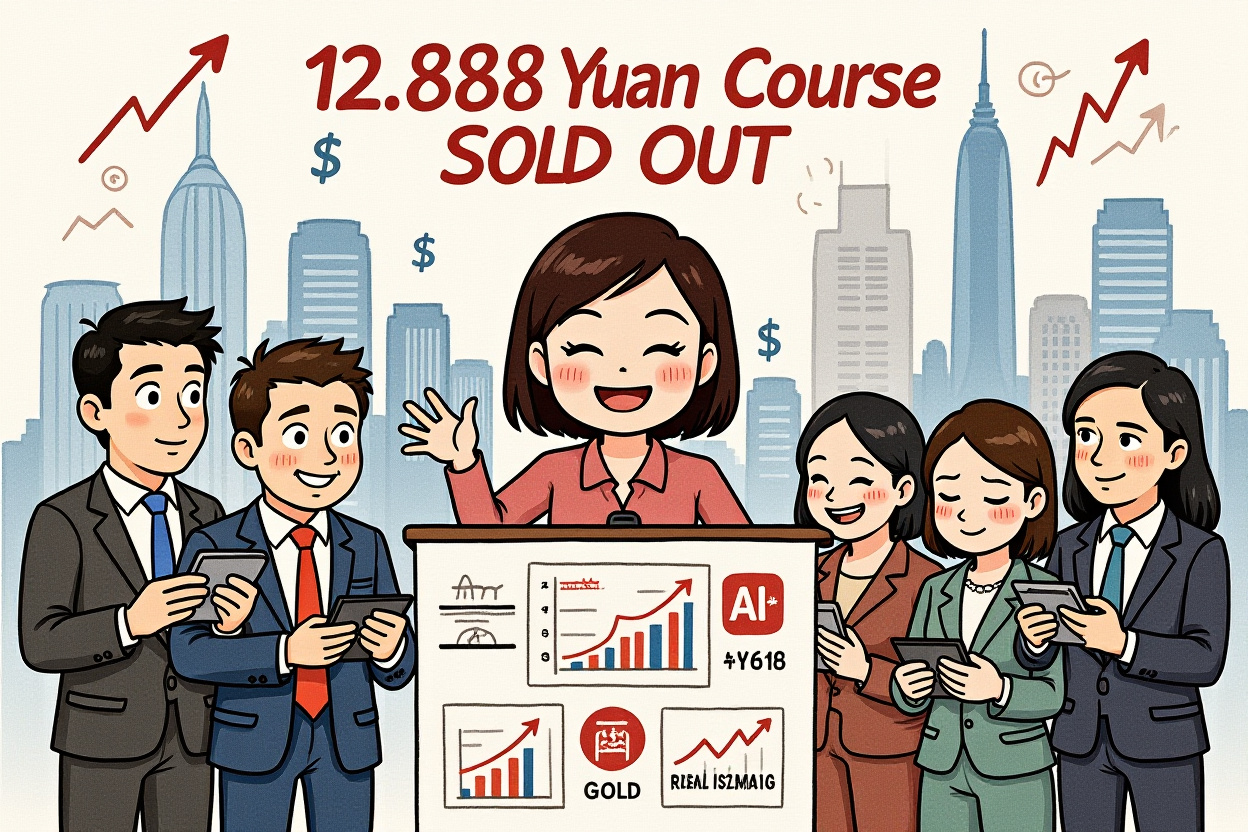
– The swift sell-out of Li Bei (李蓓)’s 12,888 yuan investment course highlights intense market demand for exclusive financial insights, even amidst performance debates and criticism from peers like former analyst Tan Jun (谭珺).
– The public clash between Li Bei and Tan Jun underscores the growing trend of financial professionals monetizing their expertise through知识付费 (knowledge payment) platforms, transforming personal brand into a viable revenue stream.
– Li Bei’s investment views on real estate, AI, and gold reveal a nuanced, evolving strategy that contrasts with market exuberance, offering lessons on independent analysis in volatile Chinese equities.
– The phenomenon reflects broader shifts in China’s asset management landscape, where social media amplifies个人品牌 (personal branding), but sustainable influence relies on verifiable track records and transparent communication.
– Regulatory and ethical questions loom as知识付费 (knowledge payment) models proliferate, demanding clearer standards to protect investors while fostering legitimate financial education.
The 12,888 Yuan Course Ignites a Firestorm
The Chinese investment community was abuzz in late December when prominent fund manager Li Bei (李蓓), founder of半夏投资 (Banxia Investment), announced a four-session course titled “From 0开始学投资 (From 0 to Learning Investment).” Priced at a staggering 12,888 yuan (approximately $1,800), the course promised to teach普通人 (ordinary people) the essentials of investing. Within days, all 200 slots were sold out, generating an estimated 2.58 million yuan in revenue. This event has become a focal point in the ongoing discussion about the financial knowledge payment trend sweeping through China’s professional circles.
Li Bei’s Course Launch and the Immediate Backlash
Through the半夏投资 (Banxia Investment) WeChat公众号 (public account), Li Bei positioned the course for高端人群 (high-net-worth individuals) like corporate executives, young idols, and专业投资人 (professional investors). She stated that all proceeds would be donated to charity, initially aimed at supporting university students, and clarified she would not operate paid knowledge星球 (Knowledge Planet) or WeChat groups. Despite these assurances, criticism emerged swiftly. Market commentators questioned the timing, noting that some of her managed products had underperformed the沪深300 (CSI 300 Index) over three years, suggesting the course was a new流量变现 (traffic monetization) path amid performance pressure.
Tan Jun’s Sequential Criticisms and Personal Motives
Former方正证券 (Founder Securities) analyst Tan Jun (谭珺), known for her earlier “全网第一个喊4000点 (first online call for 4,000 points)” prediction, launched a series of critiques on her personal公众号 (public account). On December 27, she argued that Li Bei’s stance of “看空AI、看多地产 (bearish on AI, bullish on real estate)” was逆趋势反逻辑 (against trend and logic), claiming AI is the biggest certainty for the next decade while real estate’s old logic has失效 (failed) due to人口、杠杆、收益率 (demographics, leverage, and yield issues). She later published a table contrasting their investment philosophies, emphasizing divergent views on core sectors.
In a subsequent post, Tan Jun escalated her accusations, likening Li Bei’s course model to爆雷理财产品 (defaulted wealth management products) from entities like祥源系 (Xiangyuan Group), suggesting a tendency for“精准收割保守富人” (precisely harvesting conservative wealthy individuals). Notably, Tan Jun simultaneously launched her own知识星球 (Knowledge Planet) at an annual fee less than one-tenth of Li Bei’s course price, leading to market speculation about蹭热度自我炒作 (riding the hype for self-promotion). She responded that her subscribers are mostly fund managers, but declined to name them.
Li Bei’s Investment Philosophy: A Closer Look at Key Views
Beyond the course controversy, Li Bei’s market perspectives have long influenced investor sentiment. Her views on real estate, AI, and gold offer a window into the strategic thinking driving China’s financial knowledge payment trend, where nuanced analysis commands premium prices.
On Real Estate: From Strategic Bullishness to Pragmatic Assessment
Li Bei initially identified a“十年一遇级别” (once-in-a-decade) opportunity in real estate, predicting 3-10x upside for some listed developers based on供给侧出清 (supply-side consolidation) similar to the coal sector in 2016, coupled with demand recovery. Recently, she adopted a more辩证性 (dialectical) view. She noted that as a pure消费品 (consumer good), housing’s居住属性 (residential attribute) is gaining value, but as an投资品 (investment product), current rental yields are unattractive. Citing examples, she highlighted that leading developers, benefiting from improved competitive landscapes, have seen profit margins stabilize above 10% on new projects.
On AI: Skepticism Amid Global Hype
Li Bei expresses caution toward the U.S. AI investment frenzy, questioning its可持续性 (sustainability) due to an投入与产出严重失衡 (severe imbalance between input and output). She forecasts that while AI investment growth will remain high in early 2024, supported by a potential rebound in the U.S. fiscal deficit, momentum may wane in the second half as AI spending slows and labor markets weaken. Admitting she is not a科技专家 (technology expert), she opts for indirect exposure via中证500 (CSI 500) index futures, which offer higher tech concentration with diversified risk.
On Gold: A Shift from Long-Term Holding to Profit-Taking
Her stance on gold has evolved markedly. Once a long-term bull viewing it as a硬通货 (hard currency) against全球财政货币化 (global fiscal monetization) and美元信用损耗 (U.S. dollar credit erosion), she now believes the best investment phase has passed. In an article titled “从小确幸到大牛市 (From Small Certainty to Big Bull Market),” she stated that inflation-adjusted real gold prices are in a high range and appear overvalued relative to core drivers like央行购金 (central bank gold purchases). She highlighted warning signs, such as sales by the菲律宾 (Philippines) and俄罗斯 (Russia) central banks, and revealed she has sold her gold assets.
The Surging Financial Knowledge Payment Trend in China
The clash between Li Bei and Tan Jun is emblematic of a broader movement where financial professionals leverage知识付费 (knowledge payment) platforms to monetize their expertise. This financial knowledge payment trend is reshaping how investment insights are disseminated and consumed in China’s digital age.
From Analysts to Influencers: The New Revenue Model
Former券商首席 (brokerage chiefs), fund managers, and analysts are increasingly turning to platforms like知识星球 (Knowledge Planet) to offer exclusive content. Figures like洪灏 (Hao Hong) and刘煜辉 (Liu Yuhui) have successfully monetized their followers, with洪灏 (Hao Hong)’s知识星球 (Knowledge Planet) reportedly generating毛收入 (gross income) surpassing many券商首席分析师 (chief analysts)’ annual salaries in just days. This model capitalizes on专业标签 (professional credentials) and行业影响力 (industry influence), selling实时解读 (real-time interpretation) and独家分析 (exclusive analysis) at premium prices.
Pricing, Ethics, and Regulatory Gray Areas
However, the rapid growth of this financial knowledge payment trend has exposed challenges.定价争议 (pricing disputes) arise, as seen with Li Bei’s 12,888 yuan course, questioning value for money.合规模糊 (regulatory ambiguities) persist regarding whether such activities constitute investment advisory, requiring licenses from the中国证监会 (China Securities Regulatory Commission, CSRC). Operational issues are also prevalent; the黑猫投诉平台 (Heimao Complaint Platform) shows dozens of 2025 complaints against知识星球 (Knowledge Planet), primarily over unmet service promises and refund difficulties. These factors highlight the need for clearer standards to protect consumers while fostering innovation.
Market Implications and Industry Perspectives
The sell-out of Li Bei’s course and the ensuing debate offer critical insights into the evolving dynamics of China’s asset management sector. The financial knowledge payment trend is not just a monetization tactic but a reflection of deeper shifts in investor behavior and professional credibility.
What the Sell-Out Reveals About Demand and Trust
A Beijing-based私募人士 (private fund professional) noted that the rapid sell-out amidst controversy reflects the生态逻辑 (ecological logic) of the asset management industry today. Public争论 (debates) enhance visibility, but converting attention into lasting号召力 (appeal) requires长期沉淀的、可验证的专业内容 (long-term, verifiable professional content). The event underscores how high-net-worth investors are willing to pay for perceived edge, even from figures with mixed performance records, indicating a trust基于个人品牌 (based on personal branding) over short-term results.
The Role of Social Media in Shaping Financial IP
This phenomenon serves as a缩影 (microcosm) of个人品牌 (personal brand) development in the社交媒体时代 (social media era). Outputting and colliding观点 (viewpoints) has become a way for practitioners to communicate with the market and build专业形象 (professional image). For institutional investors and fund managers globally, understanding this trend is essential to navigating Chinese equities, where influencer opinions can sway sentiment. The financial knowledge payment trend blurs lines between education, entertainment, and analysis, demanding discernment from sophisticated participants.
Synthesis and Forward Guidance for Investors
The controversy surrounding Li Bei’s course and Tan Jun’s criticisms illuminates key trends in China’s financial landscape. The financial knowledge payment trend is here to stay, driven by digitalization and demand for specialized insights. However, its sustainability hinges on transparency, ethical practices, and regulatory oversight.
For international investors and professionals, this episode offers actionable lessons. First, critically evaluate sources of financial advice, prioritizing those with verifiable track records over viral popularity. Second, recognize that personal branding in China’s markets can amplify both opportunities and risks—engage with content but maintain independent due diligence. Third, monitor regulatory developments from bodies like the中国证监会 (CSRC), which may introduce guidelines for知识付费 (knowledge payment) activities to protect market integrity.
Ultimately, the validity of investment views, whether from Li Bei, Tan Jun, or others, will be determined by时间和市场 (time and the market). As the financial knowledge payment trend evolves, stakeholders must balance innovation with investor protection, ensuring that China’s equity markets remain robust and trustworthy. Stay informed by following official announcements and diversified analysis to navigate this dynamic environment effectively.