



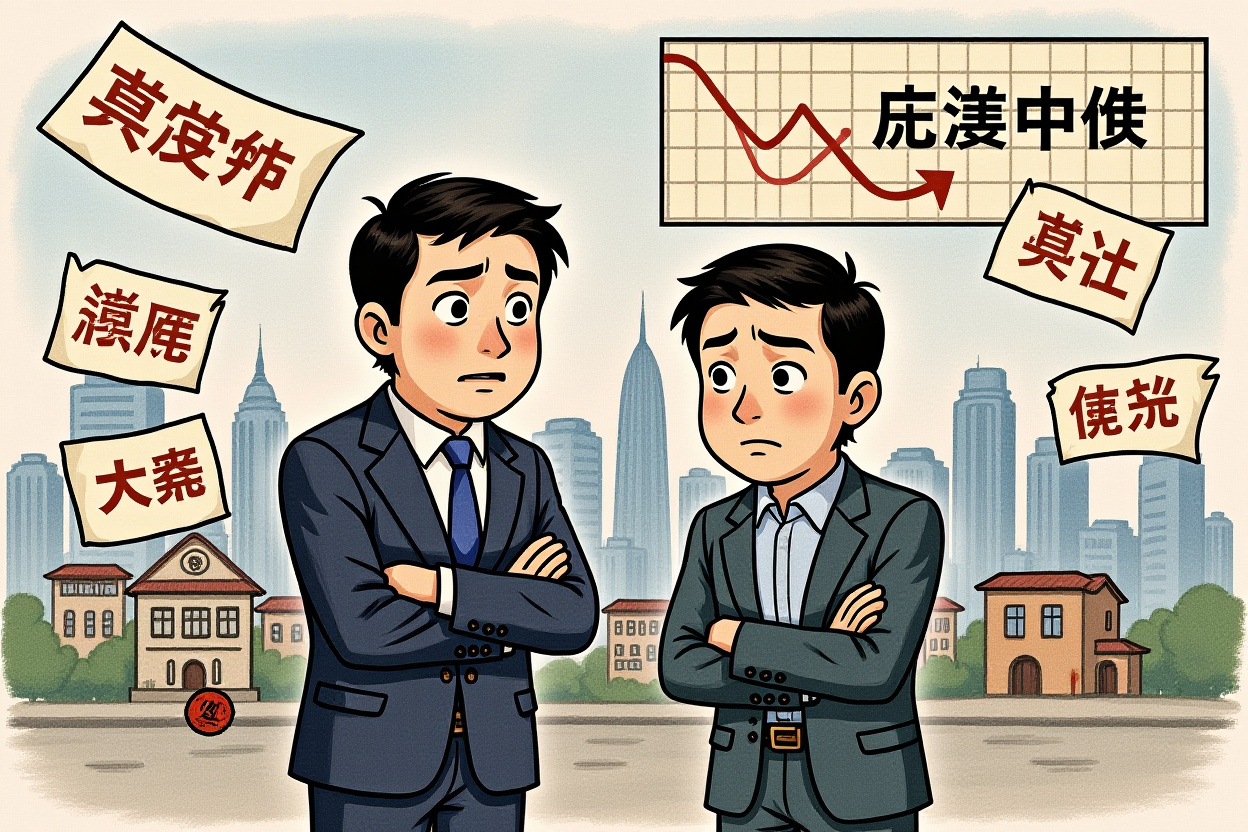
Executive Summary
– Wang Sicong’s (王思聪) investment vehicle, Pusi Capital (普思资本), is auctioning an 8% stake in Maiji Culture (麦戟文化) for just 107,500 yuan, reflecting severe liquidity strains.
– Wang Jianlin’s (王健林) Dalian Wanda Group Co., Ltd. (大连万达集团股份有限公司) faces over 81 billion yuan in enforced payments and is selling assets, including万达广场, to manage debt.
– The Wang family’s wealth has collapsed from 220 billion yuan in 2015 to 10 billion yuan in 2025, a staggering 95% decline, per the Hurun Rich List.
– Strategic pivots to a light-asset model and partnerships with tech giants like Tencent and JD.com aim to stabilize operations.
– These asset auctions of the Wang family underscore broader challenges in China’s equity markets, including regulatory tightening and economic headwinds.
Auction Waves Hit Wang Sicong’s Investment Portfolio
Recent judicial auctions have thrust Wang Sicong (王思聪), once dubbed China’s ‘celebrity investor,’ into the spotlight for all the wrong reasons. The asset auctions of the Wang family, starting with Wang Sicong’s holdings, reveal mounting pressures in sectors like entertainment and tech, where his investments were concentrated. This development is not merely a personal setback but a bellwether for the volatile landscape of Chinese private equity.
The Maiji Culture Stake: A Symbolic Fire Sale
The Dalian Intermediate People’s Court announced the auction of an 8% equity stake in Shanghai Maiji Culture Communication Co., Ltd. (上海麦戟文化传播有限公司), held by Beijing Pusi Investment Co., Ltd. (北京普思投资有限公司), Wang Sicong’s wholly-owned platform. With a starting bid of 107,500 yuan and a negative assessed value of -1.6662 million yuan, the sale highlights the distressed nature of the asset. Maiji Culture, focused on immersive interactive games, saw initial success with titles like The Invisible Guardian but has since faced operational turmoil, including layoffs, store closures, and multiple lawsuits. This asset auction of the Wang family member underscores how cooling trends in live-streaming, e-sports, and content creation have eroded value in once-hot segments.
Pusi Capital’s Broader Struggles and Legacy
Wang Jianlin’s Wanda Group: A Real Estate Titan Under DuressParallel to his son’s woes, Wang Jianlin (王健林), the 71-year-old patriarch, is grappling with his own crisis at Dalian Wanda Group Co., Ltd. (大连万达集团股份有限公司). The conglomerate, which spans real estate, culture, tourism, and finance, is now embroiled in a relentless series of asset disposals and legal enforcements. These asset auctions of the Wang family patriarch signify the profound challenges facing China’s property sector and highly leveraged business empires.
Mounting Legal and Financial Pressures
Tianyancha (天眼查) data reveals that Dalian Wanda Group Co., Ltd. (大连万达集团股份有限公司) currently has 12 enforced payment records totaling over 81 billion yuan, with 50 equity freeze notices. In December alone, two new enforcements added approximately 29.25 billion yuan to its liabilities. A stark example is the upcoming auction of a 70% stake in Shanghai Wanda Small Loan Co., Ltd. (上海万达小额贷款有限公司), part of Wanda’s financial arm, with a starting bid of 510 million yuan and an assessed value of 730 million yuan. These moves are part of a broader deleveraging effort, including the sale of more than 80万达广场 since 2023, with 48 packaged off in May 2024 across key cities like Beijing, Shanghai, and Guangzhou.
Strategic Shift to a Light-Asset Model
Wealth Evaporation: A Stunning Fall from GraceFactors Behind the Financial DeclineThe decline stems from multiple interlinked factors. Strategic missteps, such as overexpansion into capital-intensive sectors like overseas real estate, left Wanda vulnerable to policy shifts like China’s deleveraging campaign. Concurrently, the evaporation of equity value in listed entities, discounted asset sales to meet debt obligations, and sector-specific downturns impacting Wang Sicong’s (王思聪) investments have all contributed. The asset auctions of the Wang family are thus symptomatic of broader issues: high debt loads, regulatory crackdowns on property and entertainment, and the cyclical nature of venture capital returns in China’s evolving market.
Broader Implications for Chinese Equity Markets
Regulatory and Economic ContextLessons for Market ParticipantsFuture Outlook: Navigating the Path to RecoveryRecent Moves and Collaborative VenturesExpert Analysis and Market SentimentSynthesis and Forward GuidanceThe successive asset auctions of Wang Jianlin (王健林) and Wang Sicong (王思聪) encapsulate a dramatic reversal of fortune, driven by sectoral shifts, regulatory changes, and leverage risks. Their wealth evaporation, from 220 billion yuan to 10 billion yuan, serves as a stark reminder of the volatility in China’s high-stakes investment landscape. However, strategic adaptations—like Wanda’s pivot to asset-light operations and tech alliances—suggest a pathway to stabilization. For sophisticated market participants, this episode underscores the imperative of rigorous risk assessment, diversification, and agility in navigating Chinese equities. As the Wang family works to reclaim its footing, their journey will remain a critical barometer for the health of China’s private sector and the opportunities within its evolving capital markets. Investors are advised to stay informed on judicial auctions and corporate restructuring moves, as these could signal both pitfalls and prospects in the dynamic arena of Chinese equity investment.