



Executive Summary
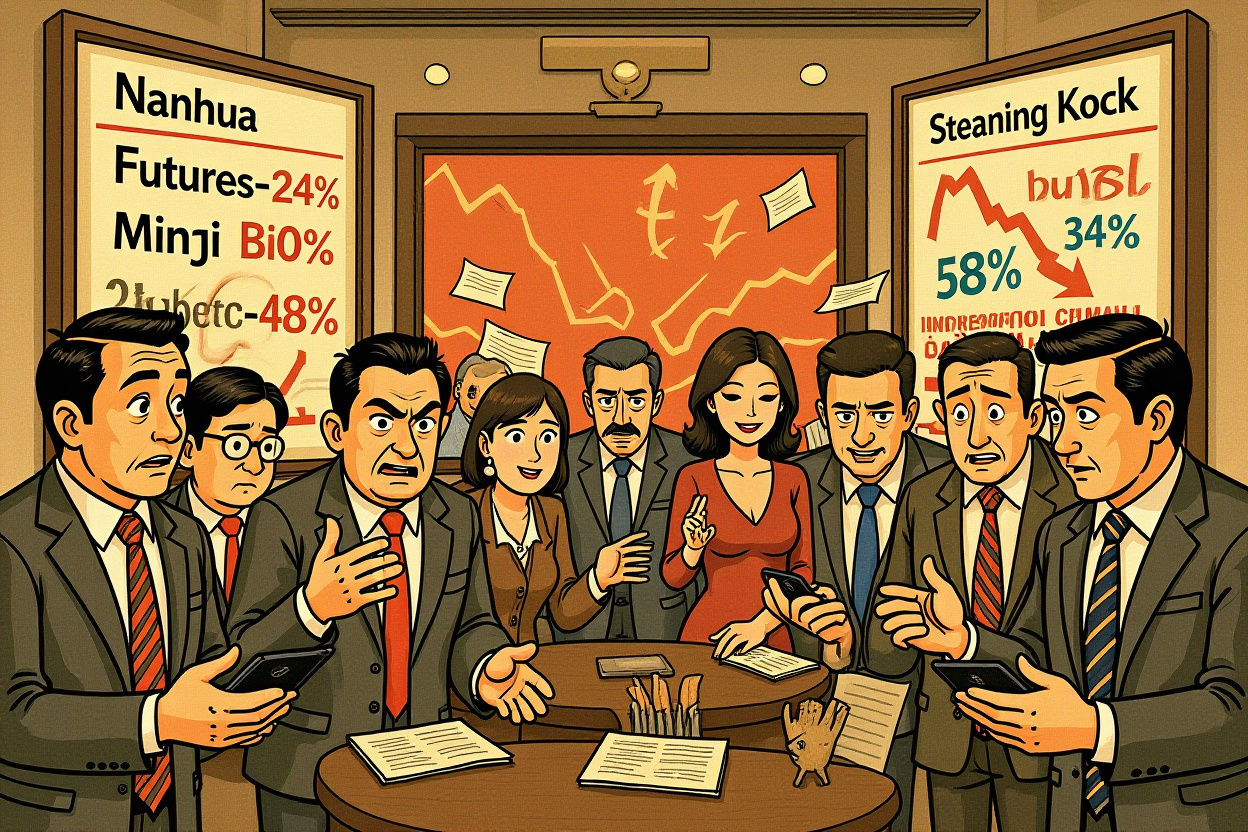
– All four companies that listed on the Hong Kong Stock Exchange on December 22, 2025, saw their shares fall below IPO prices, with drops ranging from 24% to nearly 50%.
– The Hong Kong IPO high break rate phenomenon has resurged sharply since November 2025, with a break rate approaching 50%, reversing a post-reform lull.
– Key factors include misaligned pricing between primary and secondary markets, overreliance on southbound capital, and structural issues in IPO valuation.
– Regulatory changes in August 2025 initially reduced break rates, but recent volatility highlights ongoing challenges in market sentiment and investor selectivity.
– Investors are advised to adopt more cautious due diligence, focusing on cash flow metrics and diversification away from hype-driven subscriptions.
A Sudden Market Shift: Four IPOs Break on Debut
The Hong Kong IPO market, often seen as a bellwether for Asian equity sentiment, delivered a stark warning on December 22, 2025. Four diverse companies—Nanhua Futures Co., Ltd. (南华期货股份), Mingji Hospital (明基医院), Huazi Biotech (华芢生物), and Impression Dahongpao (印象大红袍)—made their trading debuts, and all four saw their shares break below their initial public offering prices. This collective failure, with declines exceeding 24% and reaching nearly 50% for one issuer, marks a dramatic departure from the buoyant IPO climate earlier in the year and signals a clear resurgence of the Hong Kong IPO high break rate phenomenon.
Company Profiles and Performance Details
The four companies represented a cross-section of China’s economy. Nanhua Futures, an A+H share company, is a top-ten Chinese futures firm. Mingji Hospital is the largest private for-profit hospital group in East China. Huazi Biotech is a clinical-stage biopharma company focused on wound healing therapies. Impression Dahongpao is a state-owned cultural tourism service provider famous for its live performance in Fujian. Despite their varied sectors, their market reception was uniformly poor. This event forces a reevaluation of the “can’t-lose” narrative that had surrounded Hong Kong IPOs, particularly in the biotech sector.
Unexpected Trends in the Breakage
Three surprising elements emerged. First, the breakage of Huazi Biotech, an 18A company, defied the sector’s stellar performance in 2025 H2. Second, subscription data was tepid; Nanhua Futures’ public offer was only 1.91 times oversubscribed, with its international placement barely covered at 0.99 times. Third, three of the four companies priced at the bottom of their indicated range, a sign of weak investor demand. These factors collectively underscore the sudden cooling in the Hong Kong IPO high break rate phenomenon.
Analyzing the Resurgence of High Break Rates
Data reveals a worrying trend. After Hong Kong’s IPO pricing reform in August 2025 significantly reduced break rates to just 7.14% between August and October, the market has sharply reversed. Since November 2025, the break rate for new listings has jumped to 50% (14 out of 28 IPOs), dwarfing the full-year 2024 rate of 35.71% and the H1 2025 rate of 30.23%. This volatility indicates that the Hong Kong IPO high break rate phenomenon is not an anomaly but a systemic issue re-emerging under current market strains.
Subscription and Pricing Dynamics
The lukewarm subscription numbers, especially for Nanhua Futures and Mingji Hospital, point to a fundamental disconnect. The heavy reliance on southbound capital—mainland Chinese investments via stock connect schemes—has created a distorted pricing mechanism. Issuers and underwriters often anchor valuations to inflated A-share multiples or past highs, ignoring the cash-flow and dividend-focused mindset of traditional Hong Kong and international institutional investors. When short-term profit-taking occurs, the narrow buyer base cannot support the price, leading to breaks.
Market Sentiment and Structural Issues
Regulatory Context and the August 2025 Pricing ReformIn August 2025, Hong Kong Exchanges and Clearing Limited (香港交易所) implemented a significant IPO pricing mechanism reform, designed to give institutional investors more influence and reduce breaks. The reform initially succeeded; break rates plummeted as pricing became more aligned with secondary market expectations. However, the recent spike suggests that the reform alone cannot insulate the market from broader economic headwinds and inherent valuation gaps.
Post-Reform Volatility and Current Challenges
The current environment tests the reform’s resilience. As noted by market experts, the pipeline of deals accumulated during the hot market is now meeting a more risk-averse investor pool. The Hong Kong IPO high break rate phenomenon rears its head when primary market optimism clashes with secondary market pragmatism. Investors are now “picking tickets” more carefully, moving away from the blind subscription frenzy of earlier months.
Expert Insights: Decoding the Market Sentiment
Authoritative voices help contextualize the shift. Huang Lichong (黄立冲), President of Huisheng International Capital, provided critical analysis to Securities Times (证券时报). He identified the misalignment between primary market pricing and secondary market risk appetite as a key culprit. “The current Hong Kong IPO high break rate phenomenon stems from a pile-up of deals priced for a different market,” he explained. “Southbound capital now holds significant pricing power, but its focus can be fleeting.”
Broader Market Perspectives
Huang Lichong (黄立冲) outlined three persistent IPO pricing problems: valuation anchoring to A-shares, high cornerstone investor concentration shrinking free float, and insufficient flexibility to lower valuations during book-building. These insights underscore that solving the Hong Kong IPO high break rate phenomenon requires more than regulatory tweaks; it demands a cultural shift in how issuers value their companies for the Hong Kong market. For further reading on HKEX reforms, investors can refer to the official exchange announcements.
Implications for Institutional and Global Investors
The resurgence of breaks necessitates a strategic pivot. Institutional investors, fund managers, and corporate executives must enhance their due diligence, looking beyond sector hype to fundamentals like burn rates for biotechs or audience metrics for文旅 firms. The Hong Kong IPO high break rate phenomenon serves as a reminder that Hong Kong is not merely a proxy for mainland markets; it has its own distinct risk-return profile.
Strategies for Navigating New Listings
– Prioritize IPOs with realistic valuations, clear paths to profitability, and strong free-float proportions.
– Diversify away from over-reliance on southbound flow narratives and assess international investor appetite.
– Use tools like Wind data (万得) to track historical break rates and subscription trends for better timing.
– Engage more deeply during the book-building process to advocate for reasonable pricing.
Forward-Looking Market Guidance
Synthesizing the Hong Kong IPO Market OutlookThe simultaneous break of four IPOs is a potent market signal. It highlights the fragility of sentiment and the urgent need for disciplined pricing. While Hong Kong remains a vital gateway for Chinese companies seeking international capital, the resurgence of the Hong Kong IPO high break rate phenomenon demands respect. Investors must adapt by combining local market savvy with global risk assessment frameworks. The call to action is clear: move beyond the frenzy, conduct rigorous fundamental analysis, and position portfolios to withstand increased IPO volatility. By doing so, sophisticated investors can turn market dislocations into strategic opportunities.