



Executive Summary
On December 22nd, the Hong Kong stock market witnessed a rare and concerning event as all four new listings opened below their offer prices, with one setting a yearly record for the worst debut performance. This Hong Kong IPO market anomaly underscores mounting challenges in valuation, liquidity, and regulatory alignment. Key takeaways include:
- Four diverse companies—BenQ Medical Center, Huaren Bio-B, Nanhua Futures, and Impression Da Hong Pao—saw declines ranging from 24.17% to 49.46% on their first trading day.
- IPO break rates in Hong Kong have surged to 50% since November 2025, far exceeding the 2024 average of 35.71%, indicating deteriorating investor appetite.
- Underlying causes include IPO pricing misalignment with港股 (Hong Kong stock market) investor expectations, high cornerstone investor lock-ups, and internal liquidity pressures from new mainland mutual fund regulations.
- Despite record fundraising and high daily turnover in 2025, the market faces headwinds from over 300 companies queuing for listing, potentially straining capital flows.
- Expert analysis suggests that while risks exist, the Hong Kong IPO market anomaly may have limited overall impact, but investors must enhance due diligence and focus on cash-flow-based valuations.
The December 22nd Spectacle: A Market Rarity Unfolds
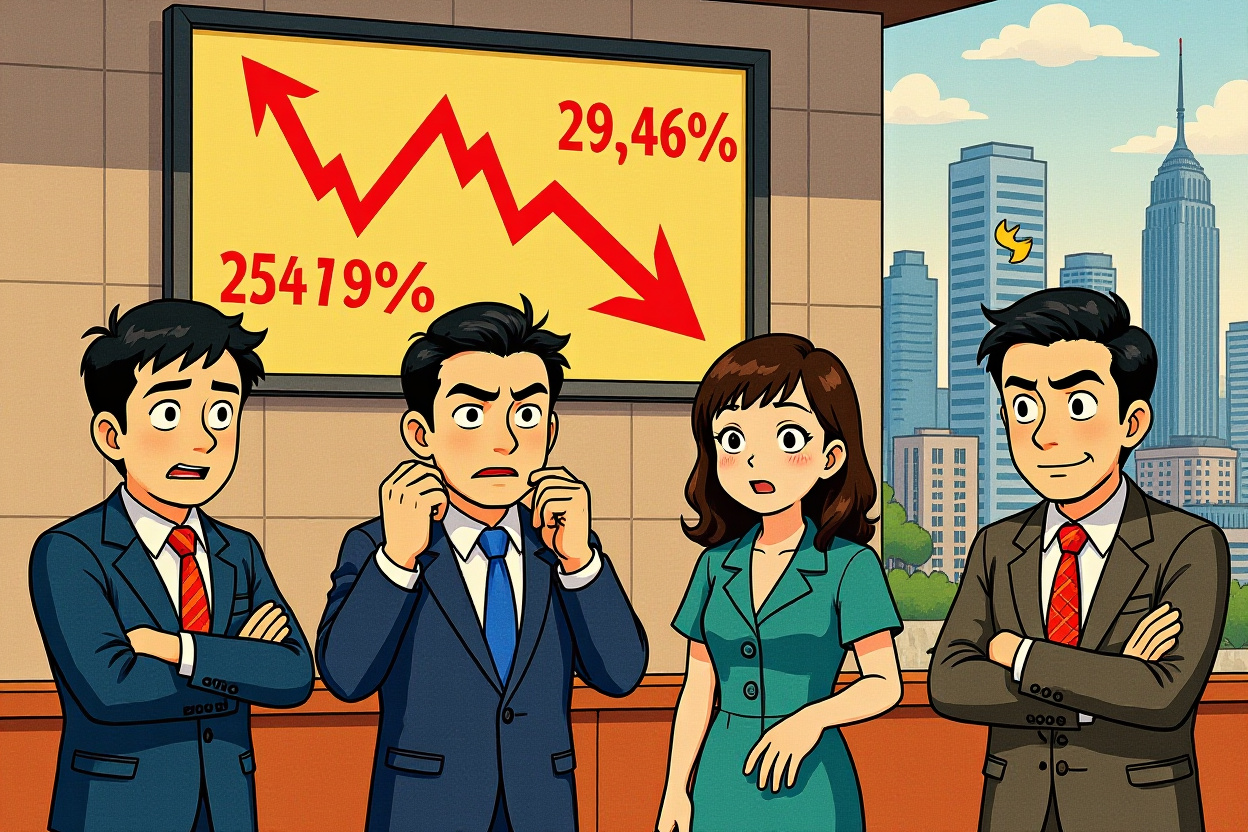
The gongs at Hong Kong Exchanges and Clearing Limited (香港交易所, HKEX) rang for four new listings simultaneously on December 22nd, but the celebratory mood quickly turned sour. In a departure from typical debut dynamics, every single one of the IPOs—BenQ Medical Center (02581.HK), Huaren Bio-B (02396.HK), Nanhua Futures (02691.HK), and Impression Da Hong Pao (02695.HK)—opened below their issue prices, marking a Hong Kong IPO market anomaly not seen in recent years. By the close, losses were severe: BenQ Medical Center plummeted 49.46%, Impression Da Hong Pao fell 35.28%, Huaren Bio-B dropped 29.32%, and Nanhua Futures declined 24.17%. According to Wind data, BenQ Medical Center’s crash surpassed the 47.67% drop of Conch Materials Technology (02560.HK) on January 9th, setting a new record for the worst first-day performance among Hong Kong新股 (new shares) in 2025.
This universal decline is particularly striking given Hong Kong’s status as a global fundraising hub. In 2025, HKEX reported that the city’s IPO market led the world in capital raised, with total funds hitting HKD 274.6 billion from 106 listings in the first 11 months, and average daily turnover soaring 43% year-over-year to HKD 230.7 billion. Yet, the December 22nd event reveals a disconnect between robust fundraising metrics and二级市场 (secondary market) reception, pointing to deeper fissures in investor confidence and pricing mechanisms.
Breaking Down the Numbers: A Record-Setting Debacle
The severity of the declines highlights how this Hong Kong IPO market anomaly stands out. BenQ Medical Center’s near-50% fall is unprecedented for a mainstream listing in recent memory, while the collective underperformance suggests systemic issues rather than company-specific woes. Wind data shows that historically,香港新股 (Hong Kong new shares) have experienced break rates, but rarely have all listings on a single day suffered such fate. This anomaly serves as a bellwether for shifting market sentiments, where investors are increasingly scrutinizing valuations and demanding tangible returns over growth narratives.
Profiling the Four Debutants: From Biotech to Tourism
To understand this Hong Kong IPO market anomaly, a closer look at the listing companies is essential. Their diverse sectors—healthcare, biotech, finance, and tourism—indicate that the issues are broad-based, not confined to a single industry.
Huaren Bio-B (华芢生物): A Pre-Revenue Biotech Gamble
Founded in 2012, Huaren Bio-B (华芢生物) is a China-based biopharmaceutical firm focused on protein therapeutics. Its financials reveal why investors balked: from 2023 to the nine months ending September 30, 2025, revenue was negligible—RMB 471,700 in 2023, RMB 261,100 in 2024, and zero in recent periods—with no product sales yet. Net losses accumulated to RMB 451.9 million over two years and nine months, driven largely by R&D and administrative expenses. In a market increasingly wary of cash-burning biotechs, this profile likely fueled the 29.32% drop, reflecting skepticism about future profitability.
Impression Da Hong Pao (印象大红袍): A State-Owned Tourism Bet
As a国有文旅服务企业 (state-owned cultural tourism service enterprise) based in武夷山 (Wuyishan), Fujian, Impression Da Hong Pao showed volatile performance. Revenue swung from RMB 63.0 million in 2022 to RMB 143.9 million in 2023, then dipped to RMB 137.2 million in 2024, with net profit fluctuating between losses and gains. For the six months ending June 30, 2025, it posted a net profit of RMB 6.8 million on revenue of RMB 55.9 million. While it generated positive operating cash flow, the 35.28% decline suggests investors questioned its growth sustainability amid China’s uneven tourism recovery.
Nanhua Futures (南华期货股份): An A-Listed Veteran’s H-Share Stumble
Nanhua Futures, a top-tier期货公司 (futures company) in China, had already listed on the Shanghai Stock Exchange (上海证券交易所, SSE) in August 2019 as the first futures firm on the A-share主板 (main board). Its H-share debut was meant to tap international capital, but the 24.17% fall marred the move. Financials showed steady revenue growth from RMB 954 million in 2022 to RMB 1.355 billion in 2024, with profits rising from RMB 246 million to RMB 458 million in the same period. However, operating cash flow turned negative in 2024 and 2025, at RMB -700 million and RMB -442 million respectively, possibly raising red flags about liquidity management in a volatile derivatives market.
BenQ Medical Center (明基医院): Taiwanese-Inspired Healthcare Model
BenQ Medical Center operates two private for-profit general hospitals in mainland China, leveraging Taiwanese hospital management expertise. Revenue grew from RMB 2,336.4 million in 2022 to RMB 2,659.0 million in 2024, but net profit fell 34.95% year-over-year in 2024 to RMB 108.9 million. Operating cash flow also declined, from RMB 333.2 million in 2022 to RMB 258.3 million in 2024. The 49.46% crash, the worst among the four, may reflect concerns over profit margins and regulatory risks in China’s healthcare sector, amplifying this Hong Kong IPO market anomaly.
The Broader Hong Kong IPO Landscape: A Trend of Rising Breaks
The December 22nd event is not an isolated incident but part of a worsening trend in Hong Kong’s新股 (new share) performance. Data from Wind indicates a steady climb in break rates, painting a grim picture for IPO investors.
- In 2024, 70 new listings saw 25 breaks, a 35.71% break rate, with 9 others gaining less than 1%.
- In the first half of 2025, 43 new listings had 13 breaks, a 30.23% break rate, plus 7 with minimal gains.
- Since November 2025, the break rate has jumped to 50%, with 14 out of 28 new listings falling below offer prices—a sharp increase that underscores the Hong Kong IPO market anomaly becoming more pronounced.
This deterioration aligns with broader market weakness in the fourth quarter. The恒生指数 (Hang Seng Index) has faced downward pressure, influenced by external factors like global interest rate shifts and internal liquidity constraints. The spike in breaks suggests that IPO pricing mechanisms are failing to adapt to changing investor expectations, where港股 (Hong Kong stock market) participants now prioritize cash flow discounts and dividend yields over lofty growth projections.
Quarterly Shifts: From Optimism to Caution
The fourth quarter of 2025 has seen a notable pivot. While HKEX celebrates record fundraising, the secondary market’s reception has cooled. Analysts attribute this to a confluence of factors: heightened geopolitical tensions, economic slowdown fears in China, and specific regulatory changes. The Hong Kong IPO market anomaly on December 22nd is a symptom of this broader caution, where even seemingly solid listings are met with skepticism.
Decoding the Causes: Pricing, Liquidity, and Regulatory Headwinds
Several interconnected factors drive this Hong Kong IPO market anomaly, offering lessons for issuers and investors alike.
IPO Pricing Disconnect: Valuation Anchors and Investor Expectations
According to a Securities Times (证券时报) report, industry experts cite three key pricing issues. First, IPO valuations often reference A-share peers or historical highs, but港股 (Hong Kong stock market) investors focus more on discounted cash flow models and dividend returns—a mismatch that leads to overvaluation. Second, high proportions of cornerstone and long-term placement shares with long lock-up periods reduce floating supply, making stocks susceptible to short-term speculative trading and volatility. Third, limited flexibility in offer price ranges means underwriters and issuers resist downward valuation adjustments, forcing secondary markets to correct via breaks when macro sentiment shifts. This pricing rigidity has exacerbated the Hong Kong IPO market anomaly, as seen on December 22nd.
Internal Liquidity Pressures: New Regulations and Market Demand
Zhang Xia (张夏), Chief Strategist at China Merchants Securities (招商证券), highlights two internal liquidity challenges affecting港股 (Hong Kong stock market) stability. First, new mainland mutual fund regulations require funds to align holdings closely with benchmarks. Since many funds previously overweighted Hong Kong stocks—with港股 (Hong Kong stock market) positions reaching 30% of eligible funds versus lower benchmarks—rebalancing could trigger net sales of Hong Kong equities and purchases of A-shares, pressuring prices. Second, the密集发行 (dense issuance) of Hong Kong IPOs strains capital supply; with over 300 companies in the listing queue, ongoing fundraising could drain liquidity and dampen sentiment. However, Zhang Xia cautions against overstating these risks, noting their overall impact may be limited, but they contribute to anomalies like the universal debut decline.
The Queue Effect: Over 300 Companies Awaiting Listing
HKEX’s success in attracting listings has a downside: a backlog of applicants seeking to go public. This pipeline, while a testament to Hong Kong’s appeal, creates uncertainty. If issuers push ahead without adjusting valuations, more breaks could follow, perpetuating the Hong Kong IPO market anomaly. Investors must monitor this queue, as it signals future supply shocks that could test market depth.
Market Voices: Expert Insights and Analyst Perspectives
To navigate this Hong Kong IPO market anomaly,听听 (listening to) expert opinions is crucial. Insights from analysts and regulators provide context for the December 22nd event and its implications.
Zhang Xia’s Balanced View: Acknowledging Risks Without Alarm
Zhang Xia (张夏) of China Merchants Securities offers a measured take. While he points to liquidity pressures from fund rebalancing and IPO supply, he advises against放大风险 (amplifying risks) excessively. He believes that港股 (Hong Kong stock market) fundamentals remain sound, with high daily turnover and global investor interest supporting long-term resilience. For investors, this suggests that the Hong Kong IPO market anomaly, though rare, may not signal a systemic crash, but rather a correction in pricing practices. His analysis, cited in media like Phoenix.com港股 (Hong Kong stock market) and Economic Daily (经济日报), underscores the need for冷静 (calm) assessment amid volatility.
Industry Consensus from Securities Times
The Securities Times report echoes these themes, emphasizing that破解 (solving) IPO break issues requires reforms in pricing transparency and investor communication. It calls for underwriters to adopt more flexible valuation approaches and for issuers to manage expectations better. As a trusted source in China’s financial media, its coverage adds credibility to the analysis of this Hong Kong IPO market anomaly.
Navigating the Anomaly: Strategies for Global Investors
For sophisticated professionals and institutional investors, the Hong Kong IPO market anomaly presents both risks and opportunities. Adapting strategies can help capitalize on this evolving landscape.
- Enhance Due Diligence: Scrutinize IPO prospectuses beyond top-line growth. Focus on cash flow generation, profit sustainability, and alignment with港股 (Hong Kong stock market) valuation metrics. For biotechs like Huaren Bio-B, assess R&D pipelines and burn rates critically.
- Monitor Regulatory Shifts: Stay updated on changes from the中国证券监督管理委员会 (China Securities Regulatory Commission, CSRC) and HKEX. The new mutual fund rules impacting liquidity are just one example; future policies could affect listing standards or trading rules.
- Diversify Timing: Given high break rates, consider staggering IPO investments or focusing on secondary market opportunities after initial volatility settles. The Hong Kong IPO market anomaly may create buying opportunities post-declines.
- Leverage Data Tools: Use platforms like Wind or Bloomberg to track break rates, valuation multiples, and market sentiment indicators. Real-time data can inform entry and exit points in a volatile environment.
- Engage with Underwriters: Pressure承销团队 (underwriting teams) for more realistic pricing. As an institutional investor, your feedback can influence offer structures and reduce the likelihood of breaks.
Looking ahead, Hong Kong’s role as a global listing hub remains intact, but the Hong Kong IPO market anomaly signals a maturation phase. Investors should expect continued volatility but also potential reforms from HKEX to address pricing issues. In the long term, companies with solid fundamentals and reasonable valuations will likely outperform, making selective participation key.
Synthesizing the Rare Event: Key Takeaways and Forward Guidance
The December 22nd universal IPO decline is a stark reminder of the complexities in Hong Kong’s equity markets. This Hong Kong IPO market anomaly highlights critical issues: IPO pricing missteps, liquidity constraints from regulatory changes, and a supply-demand imbalance from excessive listings. While the immediate fallout has been severe for the four debutants, the broader market implications are nuanced. HKEX’s record fundraising in 2025 shows underlying strength, but investor sentiment is clearly shifting toward greater scrutiny and lower risk tolerance.
For market participants, the path forward involves adaptability. Issuers must recalibrate valuations to港股 (Hong Kong stock market) realities, emphasizing cash flow and dividends over growth hype. Investors should maintain a disciplined approach, using breaks as potential entry points for fundamentally sound companies but avoiding overexposure to speculative listings. Regulators like HKEX and the CSRC may need to consider guidelines for IPO pricing flexibility and liquidity management to prevent future anomalies.
As a call to action, global investors are advised to stay informed through reliable sources, engage with market data, and participate in Hong Kong’s IPO market with a balanced perspective. This rare event is not a death knell but a corrective pulse—one that could lead to a healthier, more transparent market in the long run. Watch for upcoming listings and policy announcements, as they will shape whether this Hong Kong IPO market anomaly becomes a new normal or a fleeting aberration.