



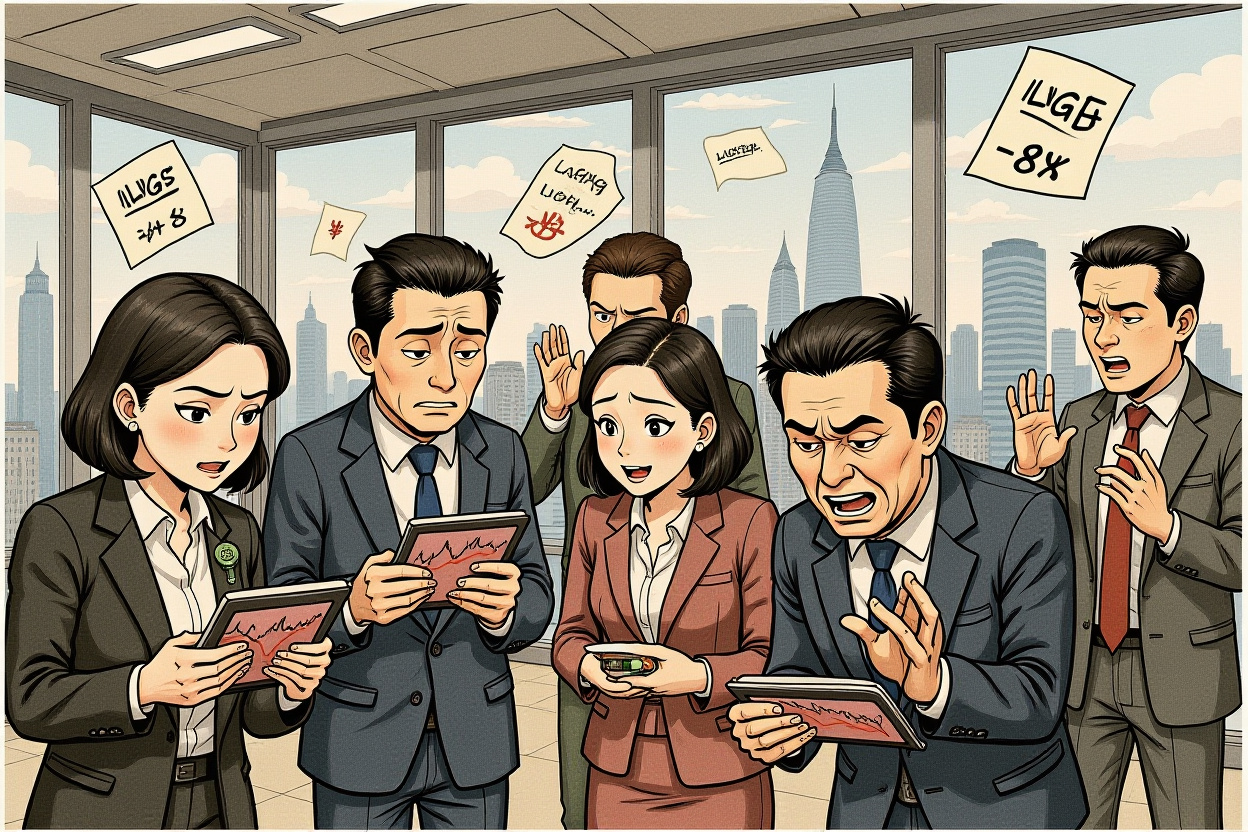
Executive Summary: Key Takeaways from the LG Energy Solution-Ford Fallout
– LG Energy Solution (LG新能源) saw its stock price plummet over 8% intraday on December 18, erasing approximately 8 trillion KRW (≈$6.1 billion) in market value after Ford Motor Company terminated a massive $6.5 billion (≈9.6 trillion KRW) electric vehicle battery supply contract.
– The cancellation, equivalent to 37.5% of LG Energy Solution’s 2023 revenue, stems from Ford’s strategic pivot away from pure electric vehicles toward hybrids and extended-range electric vehicles (EREVs), involving up to $19.5 billion in impairment charges.
– This major battery contract cancellation signals heightened uncertainty in the global EV transition, compounded by policy shifts including the European Union’s relaxation of its 2035 internal combustion engine phase-out and U.S. trade tensions.
– Investors and industry stakeholders must reassess battery supply chain dependencies, as OEMs like Ford recalibrate production plans, potentially affecting other suppliers and joint ventures, such as Ford’s exit from a U.S. battery JV with SK On (SK Innovation Co.).
– The event underscores the critical need for agility in the automotive sector, with implications for investment strategies in Chinese and global equity markets focused on EV and battery technologies.
The Shockwave: LG Energy Solution’s Intraday Plunge and Contract Termination
In a dramatic market move on December 18, shares of South Korean battery giant LG Energy Solution (LG新能源) nosedived more than 8% during trading hours, wiping out over 8 trillion KRW (approximately 380 billion RMB) in market capitalization in a single day. This sharp decline was directly triggered by the unexpected termination of a colossal battery supply agreement with Ford Motor Company, marking one of the most significant contract cancellations in the electric vehicle battery industry’s history.
Details of the Major Battery Contract Cancellation
LG Energy Solution disclosed in a regulatory filing on December 17 that Ford had notified the company of its decision to cancel orders worth approximately 9.6 trillion KRW (about $6.5 billion). This contract, announced in October 2023, comprised two long-term supply deals: a 6-year agreement (through 2032) for 75 GWh of batteries and a 5-year agreement (through 2030) for 34 GWh. The batteries were slated for production at LG Energy Solution’s Wrocław plant in Poland and intended for Ford’s European EV models. The cancellation specifically affects the portion scheduled from 2027 to 2032, with LG Energy Solution citing Ford’s decision to halt production of certain electric vehicle models as the cause. This major battery contract cancellation represents about 37.5% of LG Energy Solution’s total revenue for 2023, highlighting the profound financial and operational impact.
Immediate Market Reaction and Financial Implications
The market’s response was swift and severe. By 2:20 PM local time on December 18, LG Energy Solution’s stock had breached the 8% loss threshold, reflecting investor concerns over revenue stability and future growth prospects. The scale of this major battery contract cancellation raises questions about LG Energy Solution’s order book resilience and its exposure to customer concentration risk. Analysts note that such a large-scale termination is rare for long-term supply agreements in the capital-intensive battery sector, where contracts often underpin multi-year expansion plans. The event may prompt a reevaluation of valuation models for battery makers, incorporating higher risk premiums for contract volatility.
Ford’s Strategic Pivot: Reallocating Capital from EVs to Hybrids
Ford’s cancellation of the LG Energy Solution contract is part of a broader strategic realignment under CEO Jim Farley, who emphasized in a statement, ‘The operating environment has changed, and we are reallocating capital to higher-return growth areas.’ This shift includes a move away from pure battery-electric vehicles (BEVs) toward hybrid and extended-range electric vehicles (EREVs), alongside commercial vehicles, trucks, vans, and new battery energy storage businesses. The company plans to record impairment charges of up to $19.5 billion related to these adjustments, underscoring the magnitude of the pivot.
Ford’s EV Business Adjustments and Production Cuts
Broader Implications for Battery Suppliers and Joint VenturesGlobal Policy Shifts: EU and US Regulations Reshaping EV DemandThe LG Energy Solution-Ford fallout coincides with significant policy developments in key markets, adding layers of complexity to the EV transition. The European Union, after months of industry pressure, has proposed relaxing its 2035 ban on new internal combustion engine vehicles, allowing the sale of some petrol and diesel cars, plug-in hybrids, and extended-range vehicles if emissions are offset. EU Economic Commissioner Valdis Dombrovskis stated, ‘Europe’s car industry is at a crossroads. We need to act now to ensure it remains a key part of Europe’s industrial future, not just a heritage.’ This adjustment aligns EU policy more closely with the U.S., where the Trump administration is rolling back earlier fuel efficiency standards.
EU’s Revised Emission Targets and Industry Flexibility
Under the new EU proposal, tailpipe emissions must be cut by 90% by 2035, instead of the previous 100% reduction target. Automakers can continue selling internal combustion engine vehicles provided they compensate for extra emissions through low-carbon fuels, renewable energy, or green steel. This policy shift, detailed in an EU Commission announcement on December 16, is expected to slow EV adoption rates in Europe, reducing near-term battery demand forecasts. For battery manufacturers, this means a more gradual ramp-up, potentially affecting capacity utilization and investment timelines.
US Trade Tensions and Their Impact on Battery Supply Chains
Heightened trade tensions between the U.S. and China, along with incentives under the Inflation Reduction Act, are reshaping battery supply chains. Ford’s move may partly reflect efforts to localize production and comply with U.S. content requirements. For Chinese equity market participants, this underscores the importance of monitoring trade policies that could affect companies like CATL or EV makers exporting to the U.S. The major battery contract cancellation by a U.S. automaker highlights how geopolitical factors can abruptly alter business agreements, necessitating diversified market strategies.
Analysis: Ripple Effects in the Global Battery Supply Chain
The termination of such a significant agreement is not an isolated incident but a symptom of broader trends in the automotive industry. As EV demand growth moderates in some regions, automakers are reassessing their aggressive electrification timelines, leading to cascading effects on battery suppliers, raw material producers, and equipment manufacturers.
Vulnerabilities for Battery Makers and Mitigation Strategies
– Contract Dependency: Battery companies with a high concentration of revenue from few customers face heightened risk. LG Energy Solution’s experience illustrates the need for diversified client portfolios, including partnerships with Chinese automakers like NIO (蔚来) or XPeng (小鹏), which continue to expand EV production.
– Capacity Planning: The cancellation may force LG Energy Solution to idle some capacity at its Polish plant, affecting economies of scale. Other players, such as Samsung SDI (三星SDI) or Panasonic, could see similar pressures if automakers delay EV launches.
– Financial Resilience: Investors should scrutinize balance sheets for provisions against contract cancellations and assess liquidity buffers. The major battery contract cancellation event may lead to tighter financing conditions for battery projects, particularly in capital markets.
Opportunities for Adaptation and Innovation
Despite the challenges, this disruption presents opportunities. Battery makers can pivot toward emerging segments like energy storage systems (ESS), where Ford plans to expand. Additionally, advancements in battery technology, such as solid-state or sodium-ion batteries, could open new markets. Chinese companies, with strong government support and rapid innovation cycles, may capitalize on these shifts by offering more flexible or cost-effective solutions.
Expert Insights and Forward-Looking Market Guidance
Industry analysts emphasize that the LG Energy Solution-Ford saga is a wake-up call for the EV ecosystem. ‘This major battery contract cancellation reflects the growing pains of an industry in transition,’ notes a senior analyst at Goldman Sachs. ‘Automakers are balancing ambitious electrification goals with practical market realities, including consumer adoption rates and regulatory uncertainty.’
Quotes from Industry Leaders and Regulatory Bodies
– Jim Farley, Ford CEO: ‘We are reallocating capital to higher-return growth areas… including market-leading Ford commercial vehicles, pickups and vans, hybrid vehicles, and high-margin segments like new battery energy storage business.’
– Valdis Dombrovskis, EU Economic Commissioner: ‘We need immediate action to ensure [the car industry] continues to be a key part of Europe’s industrial future, not just a historical heritage.’
– LG Energy Solution Statement: ‘This is the termination of the electric vehicle battery supply contract between the company and Ford Motor Company announced on October 15, 2024… due to the counter-party’s decision to stop production of some electric vehicle models.’
Investment Implications for Chinese Equity Market Participants
For institutional investors and fund managers focused on Chinese equities, this event underscores several critical points:
– Monitor EV Sales Data: Track monthly EV sales in China and globally to gauge demand trends. Slower growth could impact battery suppliers listed in China, such as CATL (300750.SZ) or EVE Energy Co., Ltd. (亿纬锂能).
– Assess Policy Risks: Stay abreast of regulatory changes in the EU, U.S., and China that might affect subsidies, tariffs, or emission standards. The Chinese government’s support for NEVs (New Energy Vehicles) remains strong, but international headwinds could dampen export prospects.
– Diversify Exposure: Consider investments across the EV value chain, including lithium producers, battery recycling firms, and charging infrastructure, to mitigate risks from individual contract cancellations.
Synthesizing Key Findings and Strategic Next Steps
The major battery contract cancellation between Ford and LG Energy Solution is a pivotal moment for the electric vehicle industry, highlighting the fragility of long-term supply agreements amid shifting market dynamics. Key takeaways include the need for battery makers to diversify customer bases, automakers to adopt flexible production strategies, and investors to incorporate higher volatility assumptions into their models. As policy environments evolve in the EU and U.S., Chinese companies must navigate trade tensions while leveraging domestic growth in EV adoption.
Forward-looking guidance suggests that while the EV transition remains intact, its pace may be more measured. Market participants should prioritize due diligence on contract structures, engage with companies demonstrating adaptive capabilities, and monitor quarterly earnings for signs of supply chain stress. For those active in Chinese equity markets, this event reinforces the importance of holistic analysis that integrates global trends with local insights. Take action now: review your portfolio’s exposure to battery and EV stocks, consult updated research reports, and consider hedging strategies to manage downside risks in this uncertain landscape.