



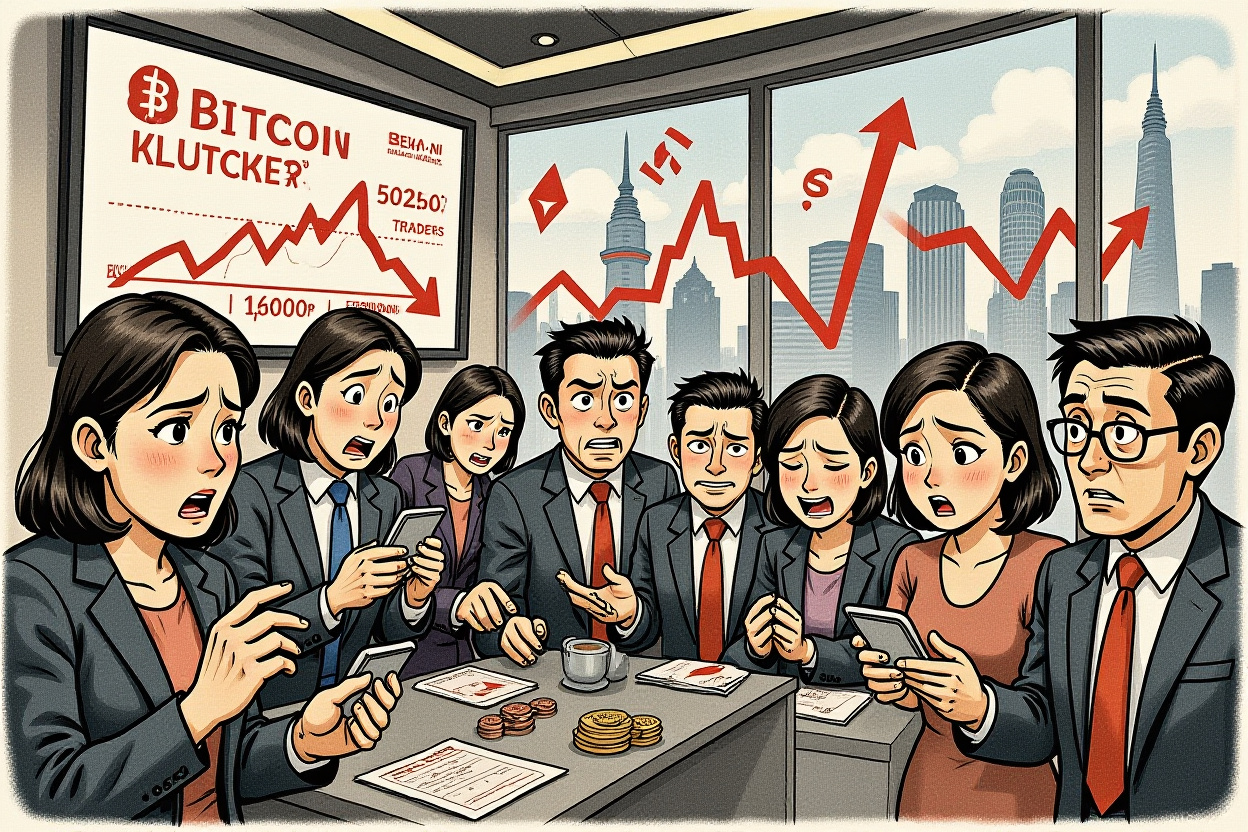
– Over $603 million in cryptocurrency derivatives were liquidated within 24 hours, directly impacting 184,600 traders globally.
– Bitcoin broke below the $86,000 support level, marking a decline of over 30% from its all-time high, with Ethereum, XRP, and other major altcoins seeing steeper losses.
– The downturn is synchronized with weakness in U.S. technology stocks, highlighting a broad decline in risk appetite among investors.
– All eyes are on imminent U.S. Consumer Price Index (CPI) data and an expected interest rate hike from the Bank of Japan, which could dictate near-term market direction.
– Market analysts describe the current sell-off as a ‘grind lower’ driven by thin liquidity and position adjustments, rather than a classic liquidation cascade, making a swift reversal less likely.
A wave of forced selling has swept through digital asset markets, culminating in one of the most significant cryptocurrency market liquidation events in recent months. In a stark reminder of the sector’s volatility, Bitcoin tumbled below $86,000, erasing gains and triggering over $600 million in derivatives liquidations. This move underscores a critical phase where cryptocurrency prices are no longer dancing to their own tune but are increasingly tethered to traditional market sentiment and impending central bank policy shifts.
Anatomy of a Liquidation Crisis
The scale of the recent sell-off is captured in cold, hard data. According to Coinglass, a cryptocurrency derivatives data tracker, the market witnessed a total of $603 million in liquidations over a 24-hour period. This cryptocurrency market liquidation event directly affected 184,600 individual traders, a number that paints a picture of widespread distress among retail and leveraged participants.
Breaking Down the Liquidation Data
A closer look at the Coinglass figures reveals the asymmetric nature of the pain. The vast majority of liquidated positions were bullish bets that went wrong:
– Long (Buy) Position Liquidations: $505 million
– Short (Sell) Position Liquidations: $98 million
This skew indicates that the market downturn caught a large number of optimistic traders off guard. The single largest liquidation order occurred on the Binance exchange for a Bitcoin perpetual swap (BTCUSDT), valued at approximately $11.58 million. Such events exacerbate downward momentum as forced selling begets more selling in a market with already thinning liquidity.
Cryptocurrency Price Action: A Broad-Based Retreat
Leading the decline was Bitcoin (BTC), which fell over 4% to trade around $85,800. This breach below $86,000 is technically significant, representing the first time in two weeks the asset has traded at that level. More concerning for bulls is that Bitcoin’s price is now down more than 30% from the historic peak of nearly $126,000 set just two months ago.
Altcoins and Related Equities Suffer Deeper Losses
The weakness was not contained to Bitcoin. Major alternative cryptocurrencies (altcoins) experienced even sharper declines:
– Ethereum (ETH): -6.15%, trading near $2,932
– XRP: -6%
– Cardano (ADA): -5%
– Solana (SOL): -4%
– BNB: -4%
The contagion spread to publicly traded companies with crypto exposure. In U.S. after-hours trading, stocks like Bit Mining Ltd. (BTCM), Riot Platforms (RIOT), and Marathon Digital Holdings (MARA) fell between 7% and 10%. MicroStrategy (微策投资), a corporate holder of Bitcoin, dropped over 8%, while the leading exchange Coinbase Global Inc. (COIN) declined more than 6%.
The Macro Culprit: Shadowed by Traditional Markets
A key narrative emerging from this downturn is the re-establishment of a strong correlation between cryptocurrencies and U.S. equity markets, particularly technology stocks. Analysts point out that the digital asset space is once again following the lead of Nasdaq, which has been under pressure due to concerns over the sustainability of massive capital expenditures in the artificial intelligence sector.
AI Euphoria Fades, Risk Appetite Shrinks
Stocks of AI giants like Intel, Oracle, and Broadcom have been adjusting lower, reflecting investor caution. This sentiment was echoed by a senior executive at hedge fund giant Bridgewater Associates, who stated on Monday, December 15, that the current AI investment boom is entering a ‘risk-laden’ phase. The pullback in these former market darlings has sapped overall risk appetite, which has cascaded into more speculative assets like cryptocurrencies. FalconX senior derivatives trader Bohan Jiang noted, ‘Bitcoin and the crypto market as a whole are still following U.S. stocks lower. The process of U.S. stocks gapping higher and then selling off during Monday’s U.S. session was corroborated by Bitcoin’s synchronous decline.’
Pivotal Data and Central Bank Decisions Loom
The immediate future of risk assets, including cryptocurrencies, hinges on upcoming economic releases and central bank communications. Investors are parsing every data point for clues on the path of interest rates, which directly influence liquidity conditions and investment flows.
The U.S. Inflation Imperative
In the United States, the Bureau of Labor Statistics is set to release the November Consumer Price Index (CPI) report on December 18. This inflation gauge is paramount as it directly shapes the Federal Reserve’s perceived urgency in its battle against rising prices. Even a minor surprise in the CPI data can trigger sharp volatility across stocks, bonds, and crypto markets. Following the Fed’s December 10 rate cut and its signal of caution regarding further easing, the market is keen to see if hot inflation or employment data will keep expectations for 2026 rate cuts alive. Speeches from Federal Reserve Governors like Christopher Waller and others will be scrutinized for any shift in tone.
The Bank of Japan’s Historic Shift
Simultaneously, macro-sensitive investors are laser-focused on the Bank of Japan (日本銀行). There is a universal market expectation that the BOJ’s policy board will conclude its two-day meeting by raising its benchmark policy rate by 0.25 percentage points to 0.75%. This would mark the first hike under Governor Kazuo Ueda (植田和男) and is notable for being the first time all 50 economists surveyed in a Bloomberg poll unanimously predicted a BOJ rate action.
While Japanese borrowing costs would remain low by global standards, the move signals a tightening of policy that could have ripple effects. Of particular concern is the potential impact on yen carry trades—a significant source of liquidity for global risk assets, including cryptocurrencies. BOJ reports showing strong wage growth and a quarterly Tankan survey indicating large manufacturers’ confidence at a four-year high have bolstered the case for a hike. Chief Cabinet Secretary Minoru Kihara (木原稔) stated that specific monetary policy measures should be left to the BOJ’s discretion.
Expert Insights: A Market in Transition
Market observers note that this downturn has a different character from previous sharp sell-offs. According to Chris Newhouse, research lead at decentralized finance research firm Ergonia, the current move is ‘driven more by spot and derivatives position adjustments rather than a large-scale forced liquidation chain reaction.’
The ‘Grind Lower’ Phenomenon
Newhouse, cited in a Bloomberg report, explained that the relatively moderate liquidation data suggests highly leveraged positions have largely been washed out. What the market faces now is a ‘milder but potentially more persistent’ selling pressure. In the absence of a typical liquidation climax that often attracts bottom-fishing capital, the market exhibits a ‘grind lower’ characteristic—slowly declining in a thin liquidity environment, which makes a reversal more difficult to achieve. This analysis aligns with the view that the cryptocurrency market liquidation dynamic has shifted, presenting a new set of challenges for traders.
Strategic Takeaways for Global Investors
The recent events underscore several critical lessons for market participants engaged in Chinese equity markets and global risk assets.
Risk Management is Paramount
In periods of heightened correlation and event risk, leverage becomes exceptionally dangerous. The liquidation of over $500 million in long positions is a stark warning. Investors should:
– Re-evaluate position sizes and leverage ratios across all risk asset portfolios.
– Implement or tighten stop-loss orders to manage downside in volatile conditions.
– Diversify away from highly correlated assets to avoid concentrated exposure.
Monitor Intermarket Relationships Closely
The re-established link between crypto and U.S. tech stocks means that analysis of Chinese equities cannot occur in a vacuum. Factors impacting Nasdaq—like AI capex concerns or Fed policy—now have direct implications for cryptocurrency sentiment, which can affect broader risk appetite in Asian markets.
The convergence of technical breakdowns, fragile liquidity, and looming central bank decisions has created a treacherous environment for cryptocurrency and risk asset investors. The massive cryptocurrency market liquidation event is a symptom of a broader contraction in risk tolerance, driven by recalibrations in both U.S. equity markets and global monetary policy expectations. For sophisticated investors, the path forward requires disciplined risk management, a keen eye on the U.S. CPI print and the Bank of Japan’s communicated stance, and patience. The market may be in a ‘grind lower’ phase, but such periods often set the stage for the next major opportunity. Stay informed, stay hedged, and be prepared to act when the data provides clearer directional signals.