



Executive Summary
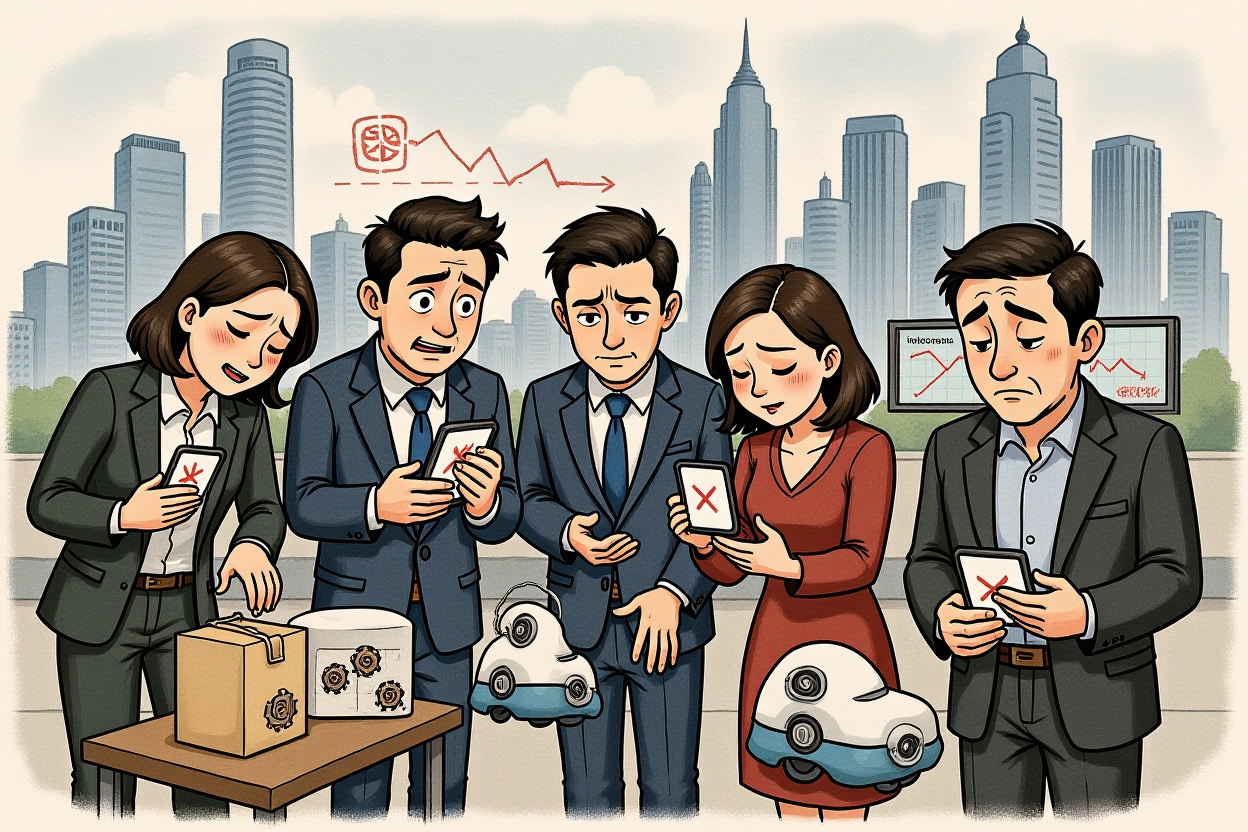
This investigation into MOVA, a premium smart home cleaning brand, reveals critical allegations of deceptive practices and product failures, posing significant reputational and financial risks.
– MOVA, marketing itself as a luxury solution for China’s middle class, faces a swelling tide of consumer complaints on platforms like the Black Cat Complaint Platform, exceeding 300 entries.
– The core of the crisis centers on an alleged “check-in for cashback” scheme where consumers report MOVA reneging on promises of full refunds after completing arduous daily social media promotion tasks.
– Product quality is a major concern, with numerous reports of frequent malfunctions in robotic vacuums and floor washers, coupled with an ineffective and frustrating after-sales service loop.
– The brand’s parent company, Universe Walker Technology (Suzhou) Co., Ltd. (宇宙行者科技(苏州)有限公司), shows signs of rapid, aggressive expansion and frequent personnel changes, raising questions about operational stability and long-term commitment.
– For investors and market observers, the MOVA case serves as a critical study in the risks of growth-at-all-costs strategies in China’s competitive consumer tech sector and the fragility of brand trust built primarily on marketing.
The Allure and the Alarm: MOVA’s Precarious Position in China’s Premium Home Tech Market
In China’s bustling smart home appliance market, a new contender emerged with the promise of effortless sophistication. MOVA, with its sleek designs and claims of “90°C hot water spray washing, 0 hair tangling, 0 odor” powered by “bionic dual robotic arms,” positioned itself not just as a cleaner, but as a “luxury top-tier configuration for elite living.” It aimed squarely at the aspirations of China’s burgeoning middle class, selling a vision of pristine, technology-enabled domesticity. Yet, beneath this carefully crafted image of premium quality lies what critics are calling a “refined trap,” ensnaring consumers with attractive promises that allegedly dissolve upon closer inspection. This growing disconnect between marketing narrative and user experience has plunged the brand into a severe trust crisis, offering a cautionary tale for the entire sector.
The scale of discontent is quantifiable. On the influential Black Cat Complaint Platform (黑猫投诉平台), a major consumer rights portal in China, search results for “MOVA” yield over 300 complaints at the time of writing. These are not minor grievances; they cluster intensely around two primary issues: alleged deceptive marketing practices and fundamental product quality defects. For a brand that claims its products are “hot-selling in over 30 countries” and have “won widespread praise,” this volume of public complaints represents a direct and damaging contradiction. The situation raises urgent questions about the sustainability of its business model and the veracity of its consumer-facing claims.
Deconstructing the Marketing Mirage: The Alleged “Check-In for Cashback” Scheme
At the heart of the initial consumer attraction—and subsequent disillusionment—lies a promotional strategy that has backfired spectacularly. MOVA heavily promoted a “check-in for cashback” or “打卡返现” activity, primarily for products like its electric toothbrushes and robotic vacuums. The proposition was seductively simple: purchase the product, use it daily for 90 or even 100 days, check in via the companion app, and simultaneously publish promotional content on social media platforms like Xiaohongshu (小红书). Upon completion, the company promised a full refund, effectively offering a high-value product for free in exchange for sustained social proof.
Broken Promises and Shifting Goalposts
Numerous consumer reports detail a consistent pattern of alleged breach of contract. Individuals who diligently completed the months-long process found themselves facing a wall of excuses when seeking their promised refund. Common tactics reported include:
– Retroactive Rejection: After consumers received initial approval from customer service agents, they were later told their submission “failed audit” without clear, prior criteria.
– Rule Changes Post-Completion: One user reported that their Xiaohongshu content was pre-approved by a客服 (customer service representative). However, after 100 days of打卡 (check-ins), the company rejected the claim, stating the content did not meet “Xiaohongshu requirements,” subsequently offering only a return and refund—a far less valuable outcome for the consumer who had invested significant time in promotion.
– Blaming Technical Glitches: Consumers allege that failures in MOVA’s own app, which prevented successful check-in recording, were used as grounds to declare the task incomplete, with the company refusing to acknowledge its technical liability.
This campaign, rather than generating authentic goodwill, has spawned widespread allegations of bad faith. It represents a sophisticated yet deeply flawed user acquisition strategy that has converted early adopters into vocal critics, actively damaging the brand’s reputation across social media. For investors, this is a red flag indicating potential customer acquisition costs (CAC) built on unsustainable incentives and a governance model where marketing promises are not aligned with backend fulfillment capabilities.
Product Failures and Service Shortfalls: When the “Smart” Solution Creates Dumb Problems
If the marketing issues represent a “soft” reputational injury, the alleged product quality problems strike at the hard core of MOVA’s value proposition. Consumer complaints paint a picture of products that fail to deliver basic reliability, fundamentally undermining their premium price point and high-tech claims.
A Cycle of Malfunctions and Ineffective Repairs
The complaints are specific and severe. One user reported purchasing a MOVA floor washer in March 2025 via Douyin’s (抖音) official mall, only to have it malfunction repeatedly. After being sent back for repair more than three times, the core issue persisted. Astonishingly, the user claimed the “repair” often constituted merely replacing a squeegee blade, with technicians unable to perform comprehensive diagnostics. This led the consumer to predict inevitable future failures and demand a full refund.
Another case involved a P-model robotic vacuum that was problematic from receipt. After initial issues like missing accessories, the device suffered from lagging, navigation failures, and an inability to cross low thresholds. Two factory repairs failed to resolve the issues, trapping the user in a nightmare loop of an unusable product that couldn’t be fixed nor easily returned. Widespread user吐槽 (complaints/comments) also cite excessively loud noise, easily malodorous mop pads, and poor obstacle navigation—a far cry from the advertised “efficient and intelligent” experience.
The After-Sales Abyss
Compounding the product issues is what consumers describe as a completely inadequate customer service and售后 (after-sales) system. The prevailing feedback characterizes MOVA’s客服 as “non-responsive” and “problem-avoidant.” When faced with complaints, the alleged standard operating procedure is to either敷衍了事 (perfunctorily handle the matter) or use company “rules” as a shield, deflecting responsibility onto the consumer or an opaque “audit system.” This creates a perceived “dead loop” for维权 (rights protection), where the path to resolution is systematically blocked. The company’s lack of responsiveness to media inquiries, as noted by Phoenix Network Finance’s *Company Research Institute* (凤凰网财经《公司研究院》), further erodes confidence in its accountability mechanisms.
Corporate Strategy and Market Implications: Reading Between the Lines
Understanding the backdrop of MOVA’s parent company is crucial for a complete analysis. Tianyancha (天眼查) corporate records show that Universe Walker Technology (Suzhou) Co., Ltd., the entity behind the MOVA brand, was founded in 2024. Despite being in operation for just over a year, it has embarked on an aggressive expansion campaign.
Rapid Expansion Amidst Operational Turmoil
Since July of this year, the company has密集 (densely/intensively) established new investments in cities across China including Fuzhou, Putian, Hui’an, Shanghai, and Shenzhen. Simultaneously, its投资人及核心人员 (investors and core personnel) have undergone frequent changes. This pattern of rapid geographical scaling coupled with internal instability is a classic hallmark of a startup prioritizing explosive growth over solidified operational foundations. It raises legitimate questions about whether the company’s infrastructure—including quality control, supply chain management, and customer service—can keep pace with its commercial ambitions. The disconnect between the grand narrative of “building a high-end intelligent full ecosystem” and the ground-level reality of consumer complaints suggests these foundations may be critically weak.
The Broader “Refined Trap” in Consumer Tech
The MOVA case is not an isolated incident but rather a symptom of a potential “refined trap” prevalent in certain segments of China’s consumer technology market. This trap involves:
– Heavy reliance on aspirational, lifestyle-focused marketing that creates an emotional purchase trigger for the middle class.
– Use of aggressive, sometimes gamified, user acquisition tactics (like cashback-for-promotion) that prioritize short-term sales volume and social buzz over sustainable customer satisfaction.
– Potential under-investment in core product R&D, rigorous quality testing, and robust after-sales service infrastructure to support the premium brand promise.
– A focus on rapid scaling and capital moves, which can distract from the fundamental need to deliver a reliable product experience.
For the market, this episode serves as a stark reminder that in the fiercely competitive smart home arena, brand equity built on perception alone is incredibly fragile. A single wave of collective consumer backlash, amplified by social media and complaint platforms, can rapidly unravel years of marketing investment.
Key Takeaways and Strategic Guidance for Stakeholders
The unfolding situation around MOVA offers critical, actionable insights for different market participants. It highlights the very real dangers of the “refined trap” that can ensnare both unwary consumers and over-optimistic investors.
For Consumers and Households: The lesson is one of heightened due diligence. When encountering seemingly irresistible offers like “full refund upon task completion,” extreme caution is warranted. Scrutinize the terms and conditions, search for independent user reviews beyond brand-controlled channels, and be wary of brands with a very short operational history making grand claims. Prioritize products from companies with established track records for quality and service, even if the initial price point is higher. The true cost of a product includes its longevity and the support behind it.
For Investors and Analysts: The MOVA case study underscores several non-negotiable checks for any investment in consumer-facing tech, especially in China:
– Look beyond the marketing spend. Analyze investment in R&D, quality control systems, and after-sales service networks as a percentage of revenue.
– Be skeptical of companies growing at a blistering pace while showing internal instability (frequent exec changes) and operational overreach. Sustainable scaling requires a solid foundation.
– Understand that in the age of social media, brand reputation can be destroyed faster than it is built. A company’s crisis management and customer responsiveness are now core competencies.
For the Industry and Regulators: This situation may prompt closer scrutiny of “check-in for cashback” and similar promotional models to ensure they are not inherently deceptive. It reinforces the need for strong consumer protection frameworks that empower individuals against corporate stonewalling. For other brands, it is a powerful reminder that long-term success is built on product excellence and trust, not just marketing narratives. Avoiding one’s own version of the “refined trap” requires aligning every corporate action—from manufacturing to marketing to service—with the premium brand promise made to the customer. The market is ultimately efficient at punishing those who fail this basic test.