



Executive Summary
– A series of food safety incidents, including live rodents in packaging, has severely damaged Sam’s Club’s reputation for quality in China.
– Members report visible downgrades in product standards, particularly in the key Member’s Mark private label, alongside a shift toward mainstream brands.
– Dissatisfaction is driving a membership exodus, with social media buzz around “Sam’s Club alternatives” and declining renewal rates.
– Internal pressures, including aggressive sales KPIs and cost-cutting under new management, are straining operations amid rapid expansion.
– Sam’s Club stands at a crossroads, balancing growth targets from parent Walmart with the need to restore member trust to sustain its business model.
A Rat in the Packaging: The Incident That Cracked Consumer Trust
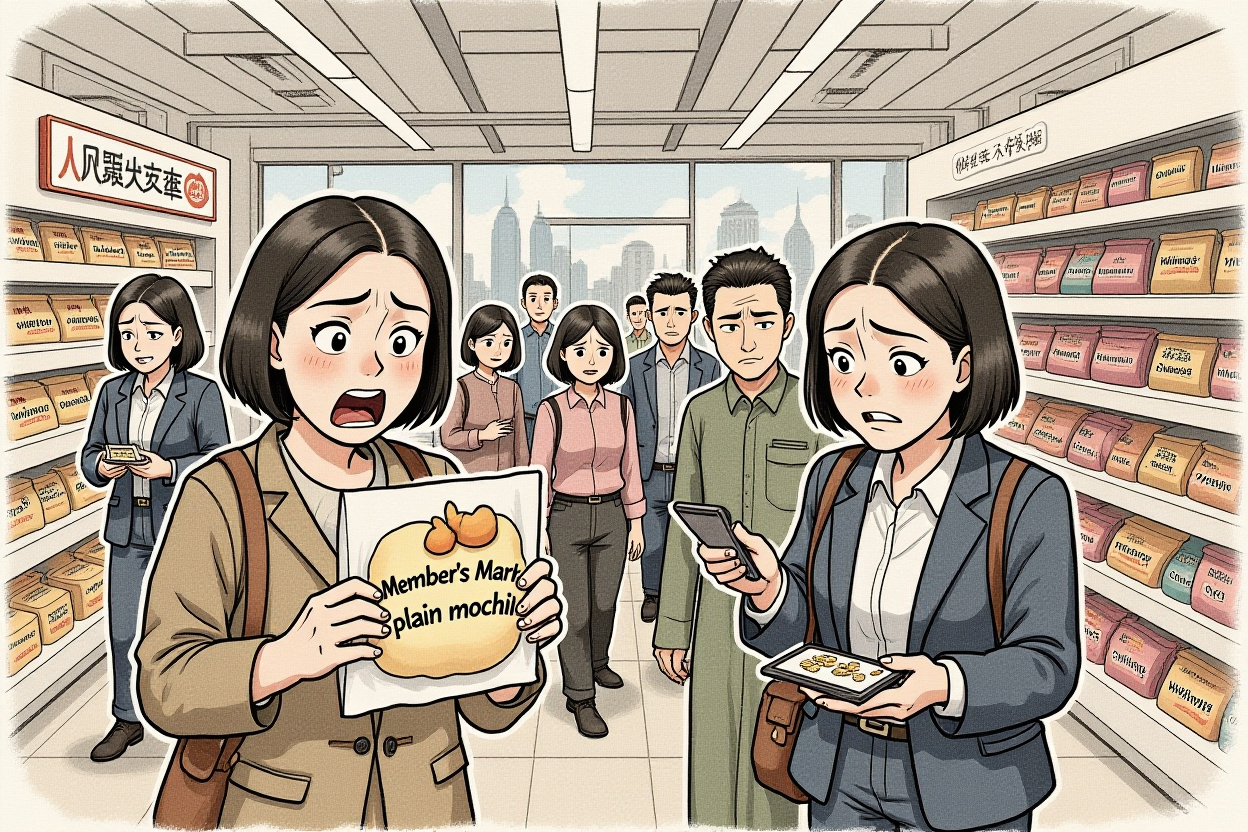
On December 1st, news of a live mouse discovered inside a package of Member’s Mark plain mochi ripped open a seam in the loyalty of Beijing customer Wang Pan (王盼), who had held a Sam’s Club membership for five consecutive years. “I will not renew my card next year,” Wang Pan admitted. Her sentiment is far from isolated. Throughout this year, discussions around “Sam’s Club is no longer worth it” and “Sam’s Club alternatives” have been gaining sustained heat on Chinese social media platforms. This incident is not merely a public relations mishap; it symbolizes a deeper crisis of confidence in a brand once synonymous with stringent curation and reliable quality.
The complaint platform Hei Mao Tou Su (黑猫投诉) shows that grievances against 山姆会员商店 (Sam’s Club) have surpassed 13,000 entries, with issues heavily concentrated on food safety and false advertising. For international investors monitoring consumer trends and corporate governance in China’s retail sector, this raises red flags about the sustainability of Sam’s Club’s growth story. The core question becomes stark: why has Sam’s Club, which built its reputation on exacting standards, arrived at this precarious point?
The Live Mouse Scandal and the Flawed Response
On December 9th, a consumer in Shenzhen shared their routine order receipt. They had used the Sam’s App “极速达” (Express Delivery) service on the evening of December 8th to purchase items including fresh milk, orange juice, and a 24-pack of Member’s Mark plain mochi. However, within the delivered silver insulated bag, alongside the chilled goods, was a live mouse. Photos posted showed irregular dents and missing pieces on some mochi, with marks疑似被啃食过的痕迹 (suspected to be from gnawing).
That night, 山姆会员商店 (Sam’s Club) responded to China News Network reporters, stating they had coordinated with a professional pest control company to complete a full-chain inspection. Their preliminary judgment pointed to偶然侵入导致 (accidental intrusion from pests around the pickup point), and they claimed to have communicated with the consumer to resolve the issue and apologized. However, this conclusion, which attributed the cause to “external,偶然因素” (external,偶然因素), failed to quell public skepticism. For many members, it highlighted a reactive rather than proactive approach to quality control, directly challenging the premise that a Sam’s Club membership is still worth it.
A Pattern of Penalties and Product Downgrades
This incident caps off over a year of frequent lapses in product quality and safety at Sam’s Club in China. The most recent penalty came from Shanghai. The上海市市场监督管理局 (Shanghai Municipal Administration for Market Regulation) website shows that 山姆(上海)超市有限公司 (Sam’s (Shanghai) Supermarket Co., Ltd.) was fined and confiscated gains totaling approximately 8,000 yuan and 11,000 yuan respectively for selling不合格 (non-compliant) FILA skateboards and Lenzing Tencel children’s three-piece sets.More jarring for members has been the “肉眼可见的降级” (visibly apparent downgrade) of the自有品牌 (private label) Member’s Mark. In July, members noted that the quality grade of MM organic soybeans had dropped from Grade 1 to Grade 3, while the price remained unchanged. According to Jiu Pai News, Sam’s Club customer service confirmed that “这个品质确实是有下降” (the quality has indeed declined). This erosion of the private label, a critical pillar of differentiation and margin for warehouse clubs, fundamentally undermines the value proposition for paying members.
The Dilution of a Premium Proposition: Sam’s Club’s Shifting Strategy
Parallel to quality issues, Sam’s Club’s product selection logic is facing质疑 (scrutiny) for becoming increasingly “大众化” (mainstream). Over the past year, brands commonly found in traditional supermarkets—like 好丽友 (Orion), 溜溜梅 (Liuliumei), and 卫龙 (Weilong)—have steadily appeared on Sam’s Club shelves. In July, Sam’s Club trended on social media for delisting well-regarded items like sun cakes and rice pudding while introducing products like Orion pies, leading to member criticism of “选品标准下降” (declining selection standards).The presentation of some introduced brands has also sparked controversy. For instance, Panpan’s “French Mini Puffs” displayed no clear brand name on the price tag or front packaging, only stating “法式小泡芙” (French Mini Puffs), with the “PANPAN” logo printed discreetly on the side. Similarly, some 洽洽瓜子 (ChaCheer sunflower seed) products used the “ChaCheer” name, and some 卫龙 (Weilong) product images lacked its iconic logo, with branding only noted in the detail page. Sam’s Club explained that some products were “独家定制” (exclusively customized) or “专供款” (special supply versions), stating they had incorporated consumer feedback into future selection strategies. However, this opaque branding blurs the line between unique finds and commoditized goods, making it harder for members to justify the annual fee if Sam’s Club is no longer worth it for exclusive, high-quality offerings.
The Weakening of the Member’s Mark Mojo
The Member’s Mark brand was designed to be a hallmark of quality and value. Its perceived decline is a central reason behind the growing sentiment that Sam’s Club is no longer worth it. Beyond the soybean example, members report changes in formulation, sourcing, and consistency across categories from snacks to household goods. This shift coincides with internal data reported by Chinese media: the proportion of the商品结构 (product mix) represented by the自有品牌 (private label) MM has reportedly fallen from 68% in 2023 to 43% currently. This strategic pivot away from its core differentiator toward more third-party brands risks alienating the membership base that paid for a curated, premium experience.The Membership Exodus: Why Customers Are Walking Away
For Wang Pan (王盼), the decision not to renew was also driven by a more direct reason—her personal “favorites list” had vanished. Products like MM multigrain cheese bread, BARISTA Rules cold brew black coffee饮料, and MRDONNY Chilean pitted prunes, which she used to repurchase repeatedly, have all disappeared from Sam’s Club shelves. “难道大家都不喜欢吗?” (Doesn’t anyone else like the things I like?) she wondered, highlighting a disconnect between individual member preferences and centralized assortment decisions.Lin Kai (林凯) from Hebei also chose not to renew. The time and effort of driving to and from the Beijing Sam’s Club was secondary; what gave her pause was the increasing frequency of “踩雷” (disappointing purchases). Additionally, the large-volume packaging often led to waste and extra expense for her family of three. Another member, Yuan Yuan (媛媛), expressed disappointment with declining quality, citing极速达 (express delivery) beef where only the top layer was acceptable, with underlying layers being too fatty to eat, and客服 (customer service) dismissing it as normal. Newly listed云南妮娜皇后葡萄 (Yunnan Queen Nina grapes) were described as sour and astringent.
“其实从今年年初以后,我就很少再用山姆了” (Actually, since the beginning of this year, I have rarely used Sam’s Club), she recalled. The app she once browsed regularly saw declining open rates, and the offline store faded from her weekend options due to distance and experience. “My Sam’s Club card expired in September and I did not renew it.”
The Social Media Buzz and the Search for Alternatives
On social platforms, the discourse around “山姆不再值得” (Sam’s Club is no longer worth it) and “山姆平替” (Sam’s Club alternatives) remains持续不退 (persistently high). Veteran Sam’s Club purchasing agent Hua Hua (花花) observes that Sam’s Club feels “越来越本土化,有点像传统商超” (increasingly localized, somewhat like a traditional supermarket). At the stores she frequents, the once-regular Saturday crowds have noticeably diminished. Entering December, the往年 (previous years’) scene of bustling代购 (purchasing agents) and packed parking lots has been replaced by visible quiet this year. This cooling interest signals a tangible impact on foot traffic and, by extension, potential basket size and frequency.Internal Strain: KPIs, New Management, and Strategic Pivots
While member enthusiasm wanes, in-store sales pushes have intensified. Many members interviewed by China News Network noted that this year, the推销 (promotion) to upgrade to the 680-yuan annual fee “卓越卡” (Superior Membership) has been异常猛烈 (exceptionally aggressive), with staff persisting with recommendations from entry to checkout despite multiple rejections.The伏笔 (foreshadowing) for these shifts was laid early in 2025. Following a change in Sam’s Club China management, the new代理总裁 (acting president) Jane Ewing initiated a strategic turn focused on “加速规模扩张、强化数据驱动、压降成本提升效率” (accelerating scale expansion, strengthening data-driven operations, and reducing costs to improve efficiency).
The Human Cost of Aggressive Sales Targets
Behind this change lies a top-down,层层加码 (escalating)激进销售管理体系 (aggressive sales management system). Internal employees reveal that selling membership cards has become the core KPI for front-line store staff. Employees are assigned clear Superior Membership sales targets, and those who fail to meet them face being named in meetings and writing检讨 (self-criticism reports). Xiao Huang (小黄), who worked part-time at Sam’s Club during the summer, said that for selling only 3 cards, he was required by his supervisor to engage in self-criticism within a work group. The推销流程 (sales process) has become more stringent: promotions must be coordinated with China Minsheng Bank credit card推广人员 (promotion personnel), aiming to solicit every checking-out customer; to prevent cancellations, new card members must complete two online消费 (transactions); and staff receive approximately 30 yuan in commission per successfully推广 (promoted) card. This pressure-cooker environment may boost short-term metrics but risks degrading customer experience and employee morale, further eroding the brand’s value.Cost-Cutting and Supply Chain Compression
Supporting the rapid expansion is a “里子” (substance) of降本增效 (cost reduction and efficiency improvement). According to reports from Renwu magazine, compared to a few years ago, Sam’s Club’s供应商审核周期 (supplier audit cycle) has been compressed from 90 days to 45 days, and冷库抽检频次 (cold storage inspection frequency) has been halved. The proportion of进口商品 (imported goods) has decreased, with 2024 domestic beef procurement volume increasing 40% year-on-year. Operationally, the供应链 (supply chain) has been unified, streamlining regional differentiation teams. The新品开发周期 (new product development cycle) has been compressed from 12-18 months to 3-6 months, with some baked goods even shortened to 90 days. While these measures may improve margins, they potentially compromise the rigorous quality control and unique product development that defined the Sam’s Club appeal, making members question if the membership is still worth it.At a Crossroads: Expansion, Financials, and Future Viability
In the view of中国食品产业分析师 (China food industry analyst) Zhu Danpeng (朱丹蓬), the frequent issues with Sam’s Club’s product selection are directly related to its high-speed expansion in recent years. In 2015, after nearly two decades in China, Sam’s Club had only 12 stores nationwide. By 2025, its expansion pace reached an unprecedented level. As of the end of November, with the opening of the Beijing Changping store, Sam’s Club had added 9 new stores this year, bringing the national total to 61.Financial Performance and Parental Expectations
Underpinning this rapid expansion is Sam’s Club China’s impressive financial performance. Its parent company, Walmart Inc.’s, financial reports show that in the third quarter of this year, net sales in China increased 21.8% year-on-year, with e-commerce sales surging 32%, contributing to over half of the sales. Walmart’s首席财务官 (CFO) explicitly stated that the primary driver of this growth was the outstanding performance of Sam’s Club in China. This success fuels further growth expectations from资本市场 (capital markets) and corporate leadership, creating a cycle that demands continuous scale.However, the tension between growth and quality is becoming untenable. The current Sam’s Club stands at a critical十字路口 (crossroads). On one side are the持续期待 (sustained expectations) for growth speed and profitability from investors and the集团内部 (group internally). On the other side are the nearly 9 million付费会员 (paid members) conducting a renewed审视 (examination) of what “值得” (worth it) means. When Sam’s Club accelerates its pace, it is forced to confront a more difficult question: what will it take to续上 (renew) the next membership card?
Expert Analysis and Market Implications
Analysts like Zhu Danp蓬 (朱丹蓬) suggest that the breakneck expansion has strained oversight mechanisms and diluted the focus on core competencies. For institutional investors tracking中国零售股 (Chinese retail stocks), this case study highlights the risks when retail models prioritize store count and top-line growth over customer loyalty and operational excellence. The situation at Sam’s Club serves as a cautionary tale for other membership-based and premium retail ventures in China’s competitive market. Monitoring key performance indicators like member renewal rates, net promoter scores, and the frequency of quality-related incidents will be crucial for assessing the company’s long-term health.Synthesizing the Crisis and Paths Forward
The convergence of food safety scandals, product downgrades, aggressive sales tactics, and strategic cost-cutting has created a perfect storm for Sam’s Club in China. The recurring theme from members is a perceived decline in value, crystallized in the phrase “Sam’s Club is no longer worth it.” This sentiment, if left unaddressed, threatens the very foundation of its membership model.For current and prospective members, the decision hinges on a careful evaluation of whether the remaining unique products, convenience, and pricing still justify the annual fee amidst rising alternatives. For investors and corporate executives, the situation demands a reassessment of growth strategy. Can Sam’s Club recalibrate to prioritize member trust and product excellence without sacrificing expansion goals? Potential paths include reinvesting in quality control, transparent communication about product changes, re-empowering regional teams for localized curation, and realigning employee incentives toward customer satisfaction rather than just card sales.
The call to action is clear: Sam’s Club must decisively prove that its membership is still worth it. This requires more than apologies for incidents; it necessitates a demonstrable recommitment to the quality and curation that built its brand. Stakeholders should closely watch the company’s upcoming communications, quarterly reports for any shifts in member metrics, and its response to competitor moves in China’s dynamic warehouse club and premium retail space. The next renewal cycle will be a critical test of whether Sam’s Club can navigate this crisis and restore its value proposition for China’s discerning consumers.