



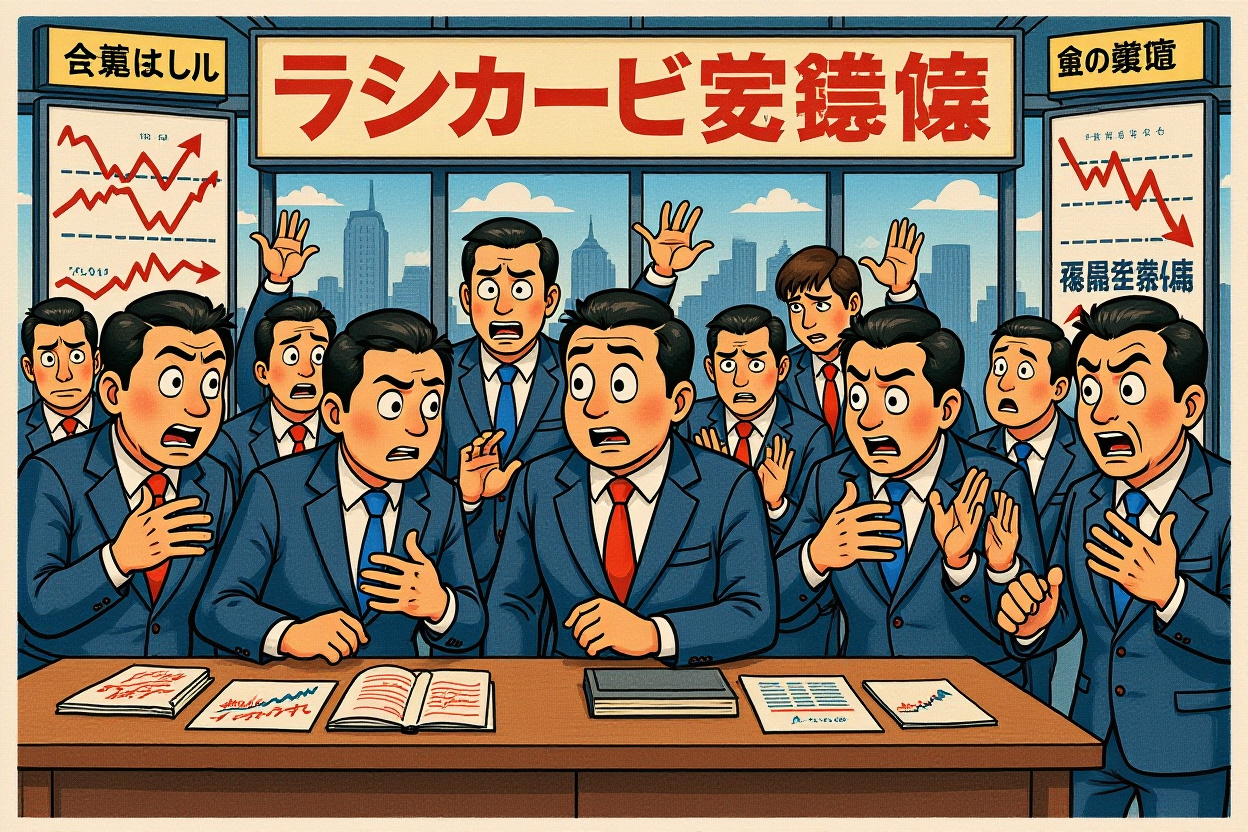
Japan’s financial market turmoil intensifies as stocks and the yen plummet, driven by Sanae Takaichi’s controversial policies, with far-reaching consequences for investors and regional stability. – Japan’s stock market fell 3% with broad-based declines across major companies like SoftBank and Tokyo Electron. – The yen depreciated sharply, hitting multi-decade lows against currencies like the euro, signaling capital flight. – Sanae Takaichi’s actions are fueling three key risks: economic retaliation from China, constitutional revisions, and diplomatic isolation. – Long-term implications include slowed GDP growth and heightened volatility for international investors. Japan’s financial markets are reeling from an unprecedented double blow, as equities and the currency nosedive in response to political upheaval. On November 18, the Nikkei index plummeted 3%, while the yen faced its steepest decline in years, eroding investor confidence globally. This Japan’s financial market turmoil stems directly from policies advocated by Sanae Takaichi (高市早苗), whose aggressive stance on geopolitical issues and domestic reforms has triggered capital flight and raised alarms among institutional players. For professionals tracking Asian equities, understanding the drivers and ramifications of this crisis is critical to navigating volatile conditions and safeguarding portfolios against further downside.
The Immediate Market Reaction
Japan’s financial market turmoil manifested in a synchronized collapse of stocks and the yen, reflecting deep-seated investor anxieties. Data from November 18 showed the Nikkei 225 shedding 3% by midday, with losses spread evenly across sectors from technology to consumer goods. This broad-based decline underscores how Sanae Takaichi’s policies are perceived as systemic risks rather than isolated concerns.
Equity Market Plunge
Major Japanese corporations bore the brunt of the sell-off, highlighting the pervasive nature of this Japan’s financial market turmoil. – SoftBank Group (软银集团) saw shares drop over 4% as foreign investors reduced exposure. – Tokyo Electron (东京电子) and Shiseido (资生堂) fell by similar margins, indicating no sector was immune. – Trading volumes spiked 25% above average, signaling panic selling rather than routine profit-taking. This均衡崩盘, or balanced crash, suggests that investors are pricing in prolonged uncertainty, with even blue-chip stocks failing to provide safe havens.
Currency Depreciation and Capital Flight
The yen’s sharp depreciation compounded equity losses, with the currency weakening to levels not seen in decades. – The euro-yen pair breached 180, a threshold untouched since 1999, reflecting a 5% intraday drop. – Analysts at Nomura Research Institute (野村综合研究所) attribute this to accelerated capital outflows, as international funds divest yen-denominated assets. – Bank of Japan (日本银行) interventions proved insufficient to stem the slide, pointing to fundamental loss of faith in Japan’s economic management. This Japan’s financial market turmoil is a clear vote of no confidence, with currency markets acting as a barometer for broader geopolitical fears.
Root Causes of the Turmoil
Sanae Takaichi’s ascent has introduced volatility into Japan’s financial landscape, with her rhetoric and policy proposals directly fueling the sell-off. Her comments on challenging regional norms and revising post-war agreements have left investors scrambling to reassess Japan’s risk profile.
Controversial Statements and Their Impact
Takaichi’s calls to rethink Japan’s Three Non-Nuclear Principles (无核三原则) and expand military capabilities sparked immediate backlash. – The principles, enshrined in law since 1971, prohibit possessing, manufacturing, or introducing nuclear weapons. – Governors from Okinawa (琉球) and Nagasaki (长崎) publicly condemned the move, citing historical trauma and regional stability concerns. – Markets reacted within hours, as the proposals raised the specter of international sanctions and trade disruptions. This Japan’s financial market turmoil illustrates how political missteps can translate into immediate economic pain, with investor sentiment turning sharply negative.
The Three Pitfalls: Economic and Geopolitical Risks
Sanae Takaichi’s agenda has pushed Japan toward three critical vulnerabilities, each capable of derailing economic recovery and alienating key partners. These pitfalls explain why Japan’s financial market turmoil has escalated so rapidly, with long-term consequences for growth and stability.
Provoking China and Potential Retaliation
Takaichi’s challenges to China’s red lines, particularly regarding Taiwan, invite retaliatory measures that could cripple Japan’s economy. – China is Japan’s largest trading partner, with bilateral trade exceeding $300 billion annually. – A reduction in Chinese tourists and students could cost Japan over 100 billion yuan in lost revenue, according to Nomura Research Institute (野村综合研究所). – Broader sanctions on exports like electronics, apparel, or rare earths would amplify losses, potentially halving Japan’s GDP growth momentum. This Japan’s financial market turmoil is partly a preemptive reaction to such risks, as investors brace for a contraction in cross-border economic activity.
Constitutional Revisions and Military Ambitions
Efforts to revise Japan’s pacifist constitution and boost defense spending have stirred domestic and international opposition. – Takaichi’s proposals include doubling military budgets and restoring pre-war military structures, echoing wartime-era policies. – The Three Non-Nuclear Principles (无核三原则) face unprecedented scrutiny, raising proliferation concerns among neighbors. – Public protests in Okinawa (琉球) and Nagasaki (长崎) highlight grassroots resistance, with local leaders warning of heightened conflict risks. This Japan’s financial market turmoil reflects fears that militarization could isolate Japan diplomatically and trigger arms races, undermining regional cooperation.
Diplomatic Fallout with Neighbors
Takaichi’s stance has strained relations with China, Russia, North Korea, and South Korea, creating a ring of diplomatic isolation. – South Korea’s National Assembly Speaker Woo Won-shik (禹元植) accused Japan of becoming a war-prone state. – Russia openly criticized Takaichi for sacrificing Japanese interests to align with U.S. strategies. – North Korea labeled Japan a millennium-old adversary, closing off dialogue channels. This Japan’s financial market turmoil is exacerbated by the perception that Japan is losing allies, making it a less attractive investment destination.
Investor Response: Flight to Safety
The ongoing Japan’s financial market turmoil has prompted a swift reallocation of capital, with institutional investors leading the exit. – Foreign holdings of Japanese equities fell by $15 billion in the week following Takaichi’s remarks. – Bond yields crept higher as risk premiums expanded, reflecting concerns over fiscal sustainability. – Hedge funds increased short positions on the yen, betting on further depreciation amid policy uncertainty. This Japan’s financial market turmoil is not just a temporary correction but a structural shift, as global portfolios reduce exposure to Japanese assets.
Future Outlook: Navigating the Turmoil
The path forward for Japan’s economy hinges on whether Sanae Takaichi moderates her approach or doubles down on contentious policies. Current trends suggest that Japan’s financial market turmoil could persist, with several scenarios likely.
Economic Projections and Reforms
Without course correction, Japan faces: – A 0.5–1.0% reduction in annual GDP growth, per estimates from the International Monetary Fund. – Potential credit rating downgrades if public debt, already over 260% of GDP, balloons further. – Increased reliance on Bank of Japan (日本银行) stimulus, which may weaken the yen and fuel inflation. This Japan’s financial market turmoil underscores the need for policy coherence to restore investor trust and stabilize markets.
Regional and Global Implications
Japan’s instability ripples across Asia, affecting: – Supply chains, as Japanese firms like Toyota (丰田) and Sony (索尼) face higher costs and trade barriers. – Currency markets, with the yen’s weakness pressuring competitors like the South Korean won and Chinese yuan. – Security dynamics, as neighbors bolster defenses against a more assertive Japan. This Japan’s financial market turmoil is a reminder that political missteps can have cascading economic effects, requiring vigilant risk management. Japan’s financial market turmoil, ignited by Sanae Takaichi’s polarizing policies, presents a clear warning for investors and policymakers alike. The simultaneous stock and currency declines, coupled with capital flight, signal a loss of confidence that could take years to rebuild. To mitigate risks, market participants should diversify exposures, monitor geopolitical developments closely, and advocate for stability-oriented leadership. For Japan, reversing this downturn demands pragmatic diplomacy and economic reforms—or risk enduring isolation and stagnation. As the situation evolves, staying informed through reliable sources like the Bank of Japan (日本银行) and international financial institutions will be key to making sound decisions in this volatile environment.