



Executive Summary
Key insights and market implications from the growing trend of second-hand luxury car purchases in China.
- Second-hand luxury car prices have fallen over 16% year-over-year, with models like Porsche and Mercedes available at significant discounts, making them accessible to younger buyers.
- Buyers aged 18-35 now represent 47% of the market, up from 23% in 2019, driven by affordability and the allure of premium brands.
- Electric luxury cars, such as the Xiaomi SU7 Ultra, experience extreme price volatility, depreciating rapidly due to market舆论 and brand instability.
- High maintenance, insurance, and operational costs pose challenges, leading to concerns about affordability beyond the initial purchase.
- Industry experts predict continued price pressure and market shifts, advising caution and thorough research for potential investors and buyers.
The Rising Trend of Second-Hand Luxury Cars Among Young Chinese Consumers
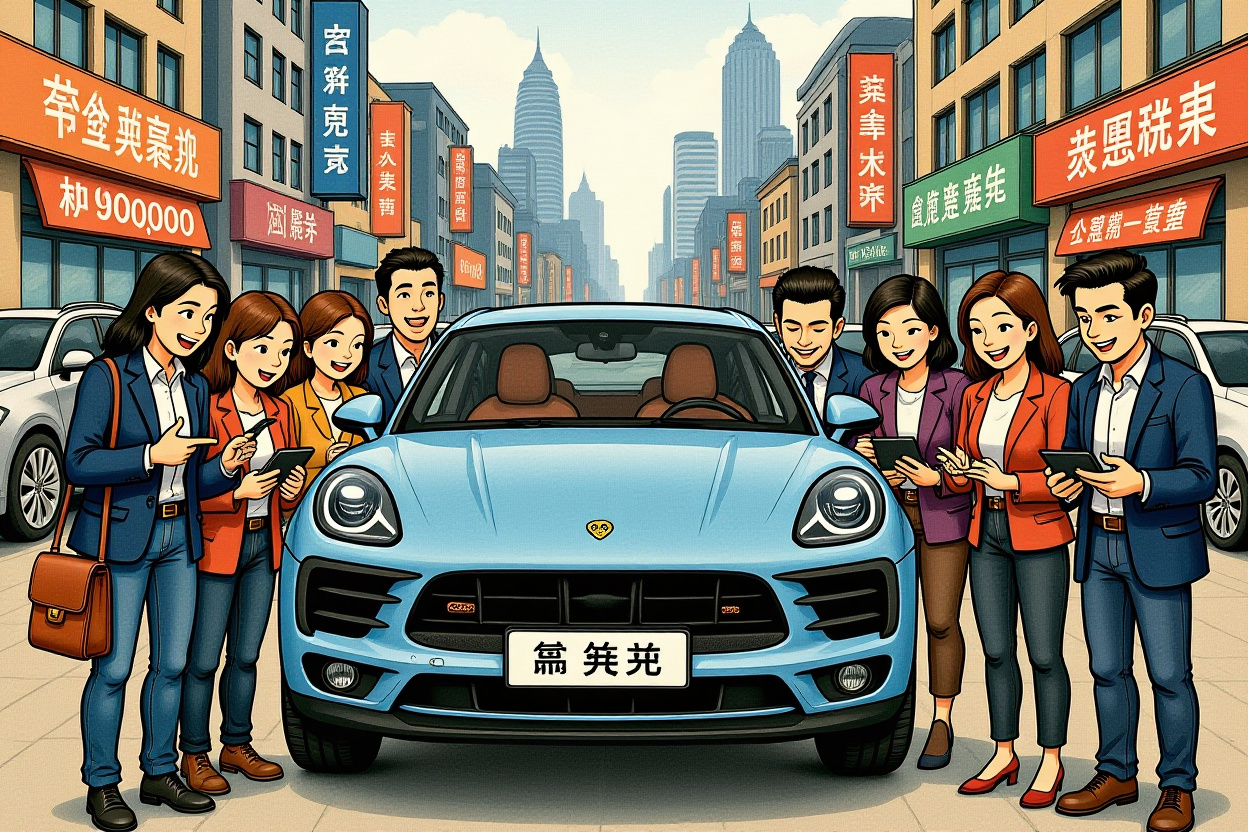
In Shanghai’s Jiading district, a live streamer promotes a pre-2020 Mercedes C-Class for around 100,000 RMB, highlighting the irresistible appeal of second-hand luxury cars in today’s market. This scene is increasingly common across China, as young professionals and millennials seize opportunities to own premium vehicles at a fraction of their original cost. The second-hand luxury car market is witnessing a seismic shift, with prices dropping dramatically and demographics evolving rapidly. According to data from Auto Home Research Institute (汽车之家研究院), the average transaction price for second-hand luxury cars fell by over 16% in the first nine months of this year compared to the same period last year, outpacing declines in domestic and joint-venture brands. This trend is not just about affordability; it reflects broader economic factors, including intensified competition in the new car market and changing consumer preferences. As more young buyers enter this space, the dynamics of China’s automotive sector are being reshaped, offering both opportunities and risks for investors and enthusiasts alike.
The allure of second-hand luxury cars extends beyond mere cost savings. For many, it represents a chance to experience high-end brands without the hefty price tag of new models. Social media and online platforms have amplified this trend, with influencers and dealers using live streaming to reach a wider audience. However, this boom comes with caveats, including concerns over maintenance costs and market volatility. As we delve deeper into this phenomenon, it’s clear that the second-hand luxury car market is more than a passing fad; it’s a reflection of China’s evolving consumer economy and the growing sophistication of its buyers.
Market Data and Demographic Shifts
Recent statistics underscore the rapid growth in young buyers targeting second-hand luxury cars. Public data reveals that the proportion of buyers born in the 1990s has surged from 23% in 2019 to 47% in 2024, indicating a generational shift in purchasing behavior. This demographic is particularly drawn to brands like Porsche, Mercedes-Benz (奔驰), and BMW (宝马), which offer prestige and performance at discounted rates. The China Automobile Dealers Association (中国汽车流通协会) and Jing Zhen Gu (精真估) report that in October 2025, Porsche maintained the highest resale value among luxury brands, with a three-year retention rate of 66.2%, followed by Lexus (雷克萨斯) at 60.4%. However, overall resale values for luxury brands have declined, reflecting broader market pressures. For instance, brands like Audi (奥迪), Tesla (特斯拉), and Infiniti (英菲尼迪) saw three-year retention rates drop below 50%, with Infiniti at just 36.5%. This data highlights the volatile nature of the second-hand luxury car market, where factors like new car promotions and economic conditions directly influence二手 vehicle pricing.
Young consumers are leveraging online tools such as Dongchedi (懂车帝) to compare prices and ensure they get the best deals, forcing dealers to adopt transparent pricing strategies. This accessibility has democratized luxury car ownership, but it also means that profit margins for dealers are thinning. In a competitive landscape, popular models may only yield profits of 20,000 to 30,000 RMB per vehicle, after accounting for costs like parking fees, capital expenses, and refurbishments. As one二手车商, Liu Yan (刘炎), noted, the market has become so cutthroat that even a slight price premium can deter sales, emphasizing the need for agility and market awareness in this sector.
Deep Discounts on Premium Brands: A Closer Look at Specific Models
The phrase second-hand luxury cars has become synonymous with unprecedented bargains, as models from top-tier brands see resale values plummet. For example, a 2018 Porsche Macan with 40,000 to 60,000 kilometers on the odometer now sells for under 190,000 RMB, less than 30% of its original price. Similarly, a three-year-old Porsche Panamera can be had at a 40% discount, while a five-year-old Porsche 718 often goes for half its initial cost. These steep discounts are not limited to Porsche; brands like Mercedes-Benz and BMW are also affected. In Beijing’s二手车交易市场, a 2022 BMW X7 with only 10,000 kilometers sells for around 700,000 RMB, down from a guide price of 1 million RMB, and a 2023 Panamera with 60,000 kilometers is available for approximately 700,000 RMB, a 50% drop from its new car landing price. Even ultra-luxury models like the 2018 Mercedes-Maybach S-Class, which originally cost over 2.13 million RMB including taxes, now fetch about 770,000 RMB after 110,000 kilometers of use.
This trend is driven by several factors, including aggressive discounting in the new car market and a surplus of inventory. Dealers like Zhang Jin (张晋) in Beijing report that owners are reluctant to sell due to significant financial losses; for instance, a nearly new Porsche Cayenne that originally cost 1.2 million RMB to purchase and register now sells for 800,000 RMB, resulting in a loss of over 300,000 RMB for the seller. The prevalence of such scenarios has created a buyer’s market, where second-hand luxury cars offer exceptional value but also reflect the broader economic pressures facing the automotive industry.
Case Study: Porsche and Other High-End Brands
Porsche remains a standout in the second-hand luxury car segment due to its relatively high resale value, but even it is not immune to market forces. According to Lin Wen (林文), a二手车商 in Shanghai, Porsche is the most resilient brand, whereas more exclusive marques like Bentley (宾利), Rolls-Royce (劳斯莱斯), and Maserati (玛莎拉蒂) suffer steeper depreciation. This is partly because classic models retain value better due to established market recognition, but overall, no brand is entirely safe from depreciation in the current climate. The China Automobile Dealers Association’s October 2025 report confirms this, showing that aside from Land Rover (路虎) and Lexus, all luxury brands experienced declines in resale value. For example, a Maserati Levante from 2018 with 70,000 kilometers now sells for under 270,000 RMB, a 75% discount from its original price. These examples illustrate how the second-hand luxury car market is redefining affordability, but they also underscore the risks for sellers and the importance of timing in transactions.
The Volatility of Second-Hand Electric Luxury Cars
While traditional second-hand luxury cars face depreciation, the electric vehicle (EV) segment introduces an additional layer of unpredictability. Dealers often avoid second-hand electric luxury cars due to their erratic pricing, which can change weekly based on market舆论 and brand perception. A prime example is the Xiaomi SU7 Ultra, Xiaomi’s (小米) top-tier model launched in late February 2025 with a starting price of 529,900 RMB. In Shanghai’s Jiading二手车交易市场, a nearly new SU7 Ultra from March 2025 with under 10,000 kilometers was priced at 398,000 RMB in mid-November, down 151,000 RMB from its original cost. Just five days later, it dropped another 13,000 RMB to 385,000 RMB. Similarly, another SU7 Ultra from April 2025 saw its price fall by 189,000 RMB within days. These rapid declines highlight the fragility of brand loyalty in the EV space, where models can become overnight sensations or fall out of favor just as quickly.
Zhou Yi (周毅), a salesperson in Shanghai, explained that新能源 vehicles are particularly susceptible to舆论 shifts, leading to a see-saw effect on prices. Unlike traditional luxury cars, which benefit from decades of brand equity, electric models from newer entrants like Xiaomi face heightened scrutiny. This volatility is compounded by factors such as battery degradation, complex repairs, and concerns over brand sustainability, making second-hand electric luxury cars a high-risk proposition for both buyers and dealers.
Comparative Analysis of EV and Traditional Luxury Depreciation
Data from the China Automobile Dealers Association and Jing Zhen Gu reveals that second-hand electric luxury cars depreciate faster than their traditional counterparts. In the one-year age bracket, the Xiaomi SU7 has a resale value of 85.1%, the highest among pure electric models, followed by the AITO M9 (问界M9) at 80.4%. However, models like the Zeekr 7X (极氪7X), Porsche Macan Electric (保时捷Macan纯电动), and Avatr 12 (阿维塔12) have resale values below 70%, meaning they lose nearly a third of their value immediately after purchase. For three-year-old EVs, the situation worsens: the Tesla Model 3 (特斯拉Model 3) retains 52.5% of its value, the Porsche Taycan (保时捷Taycan) holds 51.8%, and others like the Zeekr 001 (极氪001) and Nio ET7 (蔚来ET7) drop to around 44%. This stark contrast with traditional luxury cars, where brands like Porsche and Lexus maintain higher resale rates, underscores the unique challenges in the EV market. As the adoption of electric vehicles grows, understanding these depreciation patterns is crucial for investors targeting second-hand luxury cars.
Challenges and Risks: Beyond the Purchase Price
Owning a second-hand luxury car is not just about the initial savings; it involves ongoing costs that can outweigh the benefits. Many buyers, especially younger ones on tighter budgets, face the reality of high maintenance, insurance, and fuel expenses. Lang Xuehong (郎学红), Vice Secretary-General of the China Automobile Dealers Association, notes that while new car prices have decreased, ownership costs remain high. For example, insurance premiums are often calculated based on the original purchase price, leading to disproportionately high fees for older luxury vehicles. Additionally, repairs at authorized dealers (4S stores) can be exorbitant due to expensive genuine parts, pushing some owners toward independent repair shops. This has spurred the growth of specialized maintenance chains focused on luxury cars, offering more affordable alternatives but also raising concerns about quality and reliability.
The market is also rife with pitfalls, such as odometer tampering, concealed accident histories, and worn-out components that require costly fixes. For instance, repairing a engine issue in a second-hand luxury car can cost tens of thousands of RMB, negating the initial savings. As the second-hand luxury car market expands, buyers must weigh these risks carefully, conducting thorough inspections and considering extended warranties to mitigate potential financial shocks.
Expert Insights on Affordability and Market Dynamics
Industry leaders like Lang Xuehong (郎学红) emphasize that the current price drops in second-hand luxury cars reflect broader trends in the automotive sector, including overpricing by manufacturers and intense competition. She points out that the disparity between new and used car values has created a性价比-driven market, but warns that maintenance and insurance costs have not kept pace with price reductions. This disconnect can lead to buyer remorse, particularly among those lured by low upfront costs. Moreover, the rise of online platforms has increased transparency, but it has also intensified pressure on dealers to maintain slim margins. For investors, this environment demands a cautious approach, focusing on models with stable resale values and reliable after-sales support. As the market for second-hand luxury cars evolves, staying informed through resources like the China Automobile Dealers Association can help navigate these complexities.
Strategic Implications for Investors and the Future Outlook
The surge in demand for second-hand luxury cars presents both opportunities and challenges for market participants. For dealers, adapting to thinner profit margins and shorter inventory cycles—often 1-2 months for million-RMB vehicles—is essential to survival. Those specializing in niche models, like the Porsche Cayenne S, may achieve higher profits due to limited supply, but they also face longer holding periods and greater liquidity risks. As Liu Yan (刘炎) shared, a misjudged investment in a limited-edition Lamborghini resulted in an 8 million RMB loss, highlighting the high-stakes nature of this market. For buyers, the key is to prioritize vehicles with strong service histories and comprehensive documentation, avoiding deals that seem too good to be true.
Looking ahead, the second-hand luxury car market is likely to continue its growth trajectory, driven by economic factors and generational shifts. However, volatility in the EV segment and regulatory changes could introduce new variables. Investors should monitor trends such as government policies on emissions and subsidies, as well as technological advancements in batteries and connectivity, which could influence resale values. By embracing a data-driven approach and leveraging tools like industry reports from精真估, stakeholders can capitalize on the affordability of second-hand luxury cars while minimizing risks.
Navigating the Second-Hand Luxury Car Market: Key Takeaways and Next Steps
The rise of second-hand luxury cars in China underscores a transformative shift in consumer behavior, where affordability meets aspiration. With prices for brands like Porsche and Mercedes falling sharply, young buyers are seizing the chance to own premium vehicles, but they must remain vigilant about hidden costs and market fluctuations. Data from authoritative sources confirms that while opportunities abound, risks related to maintenance, insurance, and brand stability are real. As Lang Xuehong (郎学红) advises, prospective buyers should conduct due diligence, including vehicle history checks and cost-of-ownership calculations, to make informed decisions.
For those considering an investment in this space, now is the time to act—but with caution. Explore reputable dealers, consult industry reports, and engage with online communities to stay updated on pricing trends. Whether you’re a first-time buyer or a seasoned investor, the second-hand luxury car market offers a unique window into China’s evolving automotive landscape. Take the next step by visiting platforms like Auto Home (汽车之家) or the China Automobile Dealers Association for deeper insights, and join the conversation on how this trend is reshaping luxury consumption nationwide.