



Executive Summary
Key takeaways from the evolving Chinese luxury market:
- LVMH Chairman Bernard Arnault’s (伯纳·阿尔诺) purchase from Chinese brands Shanxia Yousong and Laopu Gold highlights a symbolic shift in luxury consumer behavior.
- Chinese domestic luxury brands are achieving explosive growth, with online sales surging over 1000% for some players while international brands like Gucci face significant declines.
- Economic factors and changing consumer preferences are driving this trend, with Chinese luxury brands gaining market share in handbags, jewelry, and cosmetics.
- Global luxury giants such as LVMH and Kering have experienced stock price drops of up to 60%, signaling investor concern over slowing demand in China.
- Investors should monitor emerging Chinese luxury brands for high-growth opportunities as the market landscape reshapes.
A Quiet Revolution in China’s Luxury Sector
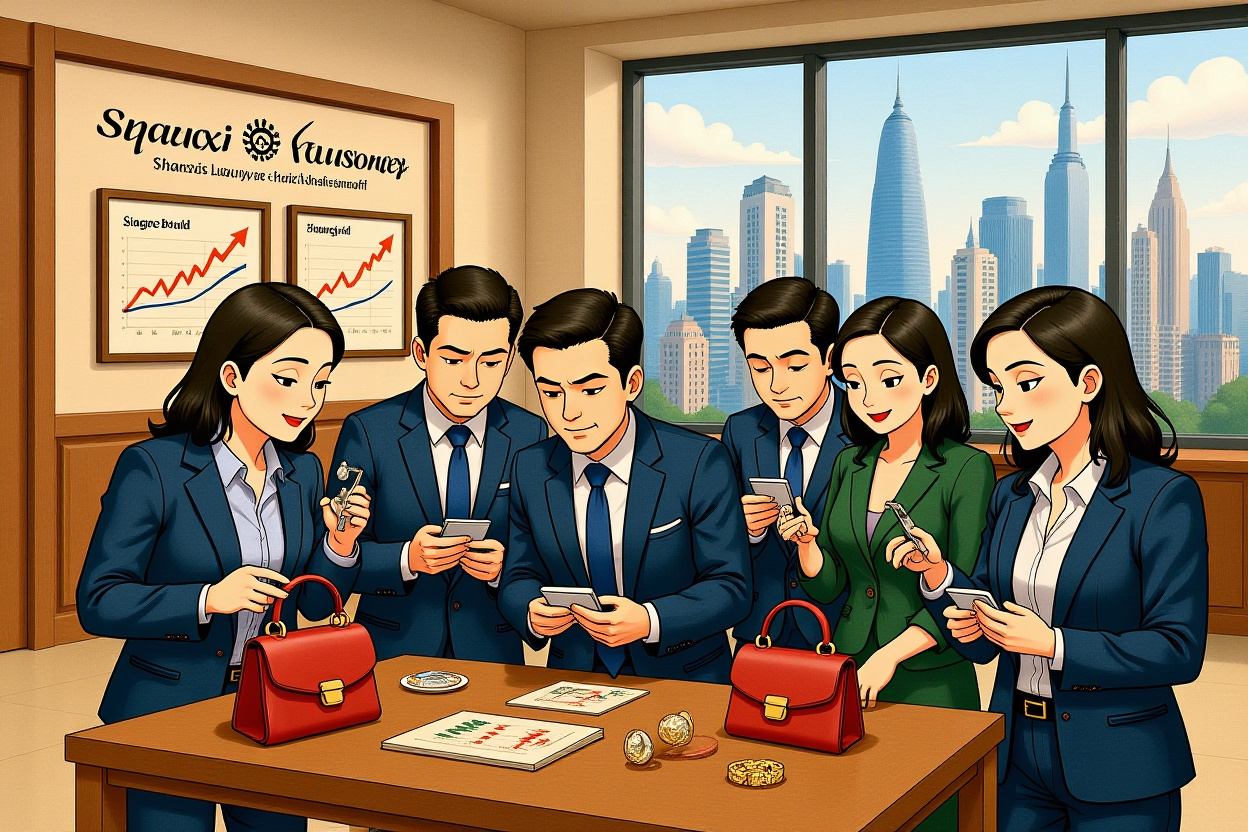
When Bernard Arnault (伯纳·阿尔诺), the chairman of LVMH Group, visited Shanghai in September, industry observers expected him to tour flagship stores of iconic brands like Louis Vuitton and Dior. Instead, the leader of the world’s largest luxury conglomerate quietly entered two Chinese domestic brand boutiques, purchasing handbags from Shanxia Yousong and admiring jewelry at Laopu Gold. This seemingly minor incident has ignited discussions about a profound transformation in China’s $490 billion luxury market, where Chinese luxury brands are increasingly outperforming their international counterparts. As economic growth moderates, consumers are pivoting toward homegrown labels, reshaping one of the world’s most critical consumer markets.
The rise of Chinese luxury brands represents a pivotal moment for global investors. For decades, European and American houses dominated China’s luxury spending, but recent data indicates a dramatic reversal. Bloomberg reported that Arnault spent time at Laopu Gold’s counter, describing the pieces as very exquisite and interesting, underscoring the quality and appeal of domestic offerings. This shift is not merely anecdotal; it is supported by robust sales figures and changing consumer sentiments that favor local heritage and innovation over traditional Western prestige.
Unpacking Arnault’s Strategic Moves
Bernard Arnault’s (伯纳·阿尔诺) visit to Shanxia Yousong and Laopu Gold was more than a casual shopping trip; it was a reconnaissance mission into the competitive landscape. At Shanxia Yousong, known for its minimalist leather goods, Arnault acquired two handbags, signaling recognition of the brand’s design ethos and craftsmanship. Similarly, his extended stay at Laopu Gold, where he examined intricate gold jewelry, suggests a keen interest in the artistry driving Chinese luxury brands forward. Industry insiders view this as a strategic acknowledgment that domestic players are becoming formidable rivals in categories long controlled by international giants.
The implications extend beyond symbolism. LVMH and other global conglomerates have historically acquired or partnered with emerging brands to maintain market dominance. Arnault’s actions hint at potential future investments or collaborations, as Chinese luxury brands demonstrate resilience and innovation. For instance, Shanxia Yousong’s focus on sustainable materials and Laopu Gold’s fusion of traditional techniques with modern designs resonate with younger consumers who value authenticity and cultural relevance. This alignment with consumer trends positions Chinese luxury brands for sustained growth, challenging the hegemony of European houses.
Market Performance: Domestic Brands Outpace International Rivals
Data from multiple sources confirms the accelerating momentum of Chinese luxury brands. According to Baiguan Tech, over the past two years, the top five domestic brands in handbags, apparel, perfumes, cosmetics, and jewelry have consistently outperformed seven major international competitors in sales growth. For example, Laopu Gold’s e-commerce sales skyrocketed by over 1000% in the first three quarters of this year compared to two years prior, while Shanxia Yousong’s online bag sales grew approximately 90%. In stark contrast, Gucci’s online handbag sales in China plummeted by more than 50%, and Michael Kors saw a 40% decline.
Other Chinese luxury brands like Maogeping, Guansia, and Icicle have also made significant strides in beauty, fragrance, and high-end apparel, respectively. On Tmall, domestic players have overtaken international names in several categories. Zhishi Tech statistics reveal that over the 12 months ending in October, Laopu Gold’s flagship store generated $630 million in sales, vastly exceeding Van Cleef & Arpels’ $57 million. Similarly, Maogeping’s revenue of $125 million was more than double that of Bobbi Brown. Financial reports show Laopu Gold doubled its performance from 2023 to 2024, with online and offline sales jumping 250% in the first half of this year, while Maogeping achieved double-digit growth in 2024.
Comparative Analysis of Sales Trends
The divergence between Chinese and international luxury brands is stark. Bain & Company noted that the Chinese luxury market, long led by European powerhouses like LVMH, Kering, and Burberry, contracted by 20% in 2023—the largest drop since 2011. Although there are signs of recovery, executives remain cautious amid economic uncertainties. This downturn has hit stock prices hard; LVMH shares have fallen about 30% from their 2023 peak in Paris markets, Kering Group has plunged 60% from its 2021 high, and Estée Lauder’s stock dropped roughly 76% from its 2021 peak in U.S. markets.
Key factors driving this shift include:
- Consumer preference for local cultural elements and storytelling in product design.
- Superior digital engagement strategies by Chinese luxury brands on platforms like Tmall and Douyin.
- Price competitiveness and value perception among cost-conscious shoppers.
- Enhanced supply chain agility allowing faster response to market trends.
For instance, Maogeping’s success stems from its integration of traditional Chinese aesthetics with modern marketing, appealing to consumers seeking unique identities. This contrasts with international brands that often rely on global uniformity, which can feel disconnected from local nuances.
Drivers of Change: Why Chinese Luxury Brands Are Thriving
Several economic and cultural forces are propelling the ascent of Chinese luxury brands. China’s GDP growth moderation has led consumers to reassess spending priorities, favoring brands that offer perceived value and cultural resonance. A survey by McKinsey & Company found that over 60% of Chinese consumers under 35 prefer domestic brands for their innovation and alignment with local values. This generational shift is critical, as younger demographics drive luxury consumption and are more digitally savvy, enabling Chinese luxury brands to leverage e-commerce and social media effectively.
Moreover, government initiatives like the Dual Circulation strategy emphasize domestic consumption and innovation, providing a favorable environment for homegrown labels. Brands such as Shanxia Yousong and Laopu Gold benefit from policies supporting cultural industries and digital transformation. Additionally, the post-pandemic focus on sustainability and ethical production has resonated with consumers, and many Chinese luxury brands have adopted transparent supply chains and eco-friendly practices, differentiating them from international counterparts often criticized for environmental issues.
Economic and Consumer Behavior Insights
The economic landscape in China has evolved, with inflation concerns and geopolitical tensions influencing purchasing decisions. Chinese consumers are increasingly patriotic, viewing domestic brands as symbols of national pride and quality. This sentiment is amplified by social media campaigns and influencer endorsements that highlight the heritage and craftsmanship of Chinese luxury brands. For example, Laopu Gold’s emphasis on ancient goldsmithing techniques taps into nostalgia and cultural identity, driving loyalty among affluent buyers.
Data from the National Bureau of Statistics shows that retail sales of consumer goods in China grew 5.5% year-over-year in the first half of 2024, with luxury segments outperforming overall retail. However, international brands have struggled to maintain share due to slower adaptation to local trends. In contrast, Chinese luxury brands excel in:
- Agile product development cycles, launching collections aligned with festivals like Chinese New Year.
- Integration of technology, such as AR try-ons and blockchain for authenticity verification.
- Collaborations with local artists and designers to create exclusive offerings.
These strategies not only capture consumer interest but also build long-term brand equity, positioning Chinese luxury brands for global expansion.
Global Implications: Impact on International Luxury Houses
The rise of Chinese luxury brands has sent shockwaves through the global luxury industry. LVMH, Kering, and other European giants are reevaluating their China strategies amid declining sales and stock performance. Bain & Company reports that the caution among executives stems from uncertainty about sustained demand, leading to scaled-back expansions and increased investments in digital channels to compete with agile domestic players. For instance, LVMH has accelerated its e-commerce partnerships in China, while Kering is revamping marketing to emphasize localization.
Stock market reactions underscore investor anxiety. LVMH’s market capitalization has shrunk by approximately $150 billion from its 2023 peak, reflecting concerns over its reliance on Chinese consumers. Similarly, Kering’s struggles with Gucci’s revitalization have prompted strategic overhauls, including leadership changes and portfolio diversification. Estée Lauder’s steep decline highlights vulnerabilities in the beauty sector, where Chinese brands like Maogeping are gaining ground with innovative products and direct-to-consumer models.
Strategic Responses from Global Giants
International luxury houses are adopting multipronged approaches to counter the threat from Chinese luxury brands. These include:
- Enhancing local design teams to incorporate Chinese elements into collections.
- Investing in joint ventures with domestic firms to gain market insights.
- Boosting digital marketing budgets on platforms like Little Red Book and WeChat.
- Exploring acquisitions of emerging Chinese brands to neutralize competition.
For example, LVMH’s venture arm, L Catterton, has increased its focus on Asian investments, potentially targeting high-growth Chinese labels. However, these efforts face challenges, as domestic brands often have deeper consumer connections and faster innovation cycles. The success of Chinese luxury brands in segments like jewelry and handbags suggests that global players must rethink their value propositions to stay relevant in a rapidly evolving market.
Future Outlook: Navigating the New Luxury Landscape
The trajectory of Chinese luxury brands points toward continued expansion and internationalization. Analysts predict that by 2028, domestic brands could capture over 30% of China’s luxury market, up from about 15% in 2023. This growth will likely be fueled by advancements in digital infrastructure, supportive government policies, and increasing consumer confidence in local craftsmanship. Brands like Shanxia Yousong and Laopu Gold are already exploring overseas markets, leveraging their success in China to build global presence.
For investors, the emergence of Chinese luxury brands presents both opportunities and risks. Key areas to monitor include regulatory developments, intellectual property protections, and macroeconomic indicators. The Chinese government’s focus on high-quality development and cultural exports could further accelerate this trend, making domestic brands attractive for portfolio diversification. However, competition will intensify, requiring thorough due diligence on brand sustainability and market positioning.
Investment Opportunities and Market Guidance
To capitalize on the rise of Chinese luxury brands, investors should consider:
- Diversifying into equity funds focused on consumer discretionary sectors in China.
- Tracking IPO activities of promising domestic brands on exchanges like Hong Kong and Shanghai.
- Engaging with market research firms for insights on consumer trends and brand performance.
- Monitoring regulatory announcements from bodies like the China Securities Regulatory Commission (CSRC) for policy impacts.
For instance, Laopu Gold’s planned listing could offer exposure to the booming jewelry segment, while Maogeping’s expansion into skincare aligns with global beauty trends. As Chinese luxury brands gain scale, they may also become acquisition targets for international conglomerates, creating potential windfalls for early backers. Ultimately, staying informed through reliable sources and adapting to market dynamics will be crucial for success in this shifting landscape.
Synthesizing the Shift in Luxury Dynamics
The visit by Bernard Arnault (伯纳·阿尔诺) to Chinese brands Shanxia Yousong and Laopu Gold symbolizes a broader market realignment, where domestic players are redefining luxury consumption in China. With robust growth metrics, cultural relevance, and strategic agility, Chinese luxury brands are not merely competing but leading in key categories. International houses must innovate rapidly to retain share, while investors have a unique chance to engage with high-growth opportunities in an evolving sector. As the global luxury map redraws itself, proactive monitoring of Chinese luxury brands will be essential for informed decision-making. Explore emerging trends and data analytics to navigate this transformative period effectively.