



Executive Summary
– Xiaopeng’s IRON humanoid robot faced widespread online skepticism for its ultra-realistic movements, leading CEO He Xiaopeng (何小鹏) to release an unedited video proving its authenticity.
– He Xiaopeng (何小鹏) asserts that developing humanoid robots is more complex than achieving Level 4 autonomous driving due to the need for machines to understand and execute simple human commands like fetching water.
– The company aims to mass-produce high-level intelligent humanoid robots by 2026, prioritizing commercial applications such as retail guidance before home use.
– Key challenges include balancing technological advancements with cost, safety, and consistency, rather than focusing solely on breakthrough features.
– Mass adoption in households could occur within 3-5 years, driven by rapid innovations in Chinese tech companies, but industrial and commercial sectors will first validate their value.
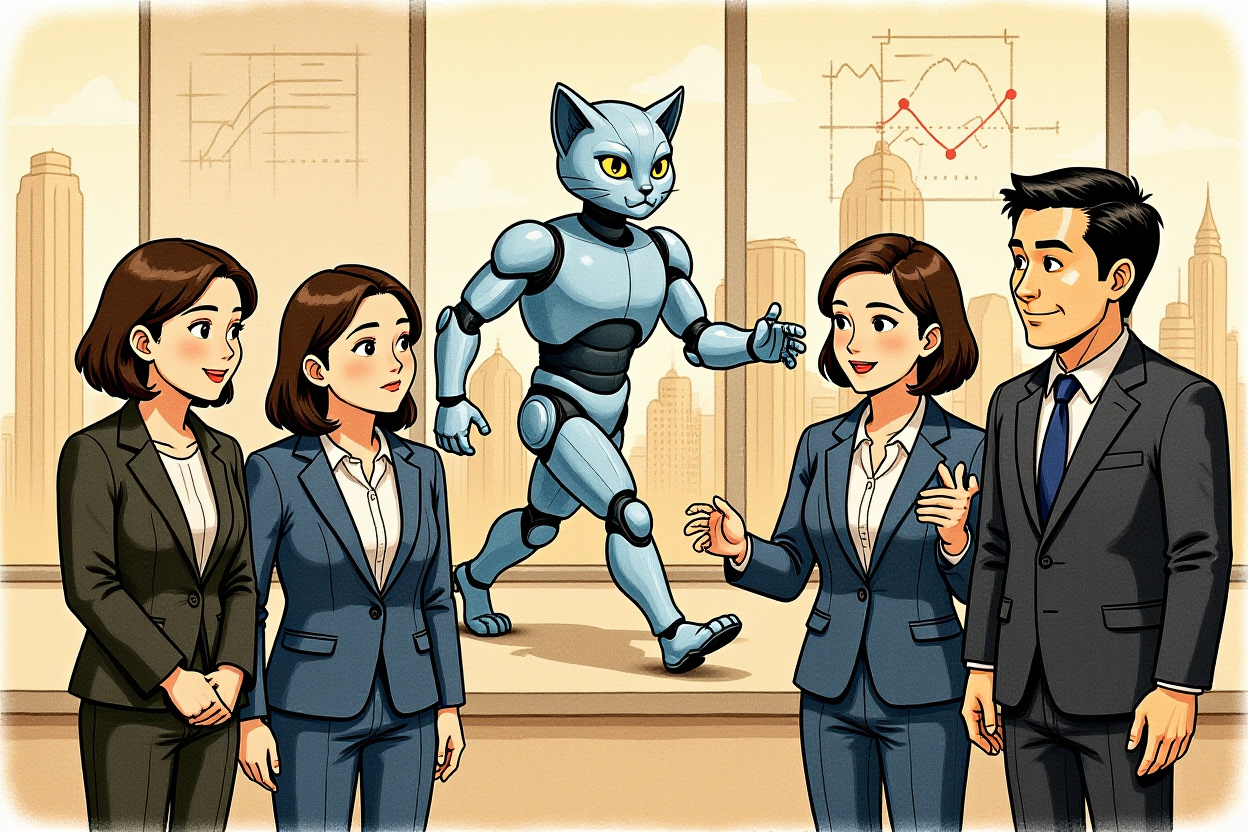
When Xiaopeng’s IRON humanoid robot gracefully walked across the stage with fluid, cat-like steps during its November 5 unveiling, it didn’t just demonstrate cutting-edge robotics—it ignited a firestorm of doubt. Spectators marveled at its human-like elegance, but online critics questioned whether it was merely a person in disguise. CEO He Xiaopeng (何小鹏) swiftly addressed the controversy with a transparent, one-take video showcasing the robot’s internal mechanics, underscoring the immense challenges in creating truly autonomous humanoid robots. In an exclusive interview with Phoenix Finance’s ‘Cover’栏目, he revealed that these machines pose greater difficulties than Level 4 self-driving cars, emphasizing that even simple tasks require profound AI understanding. This deep dive explores the technical, commercial, and regulatory landscapes shaping the future of humanoid robots, offering investors and professionals critical insights into one of tech’s most ambitious frontiers.
The Unveiling and Public Skepticism
IRON’s Groundbreaking Debut
On November 5, at Xiaopeng’s Technology Day, the next-generation humanoid robot IRON made a stunning entrance with a smooth, model-like walk that defied conventional robotics expectations. Its highly anthropomorphic posture, described by attendees as ‘elegant’ and ‘reminiscent of space walking,’ highlighted advancements in biomimetic design. According to the R&D team, this achievement stemmed from innovative passive toe freedom and a full-body structure with 82 degrees of freedom, enabling unprecedented gait precision. However, the very realism that captivated live audiences sparked skepticism online, where comments alleging ‘100% human inside’ gained traction. Critics pointed to details like joint movement angles and skin texture, fueling debates over the current limits of robotics technology.
He Xiaopeng’s Transparent Response
Facing what he termed a ‘sweet annoyance,’ He Xiaopeng (何小鹏) took to social media on November 6 with an unedited video to dispel doubts. The footage revealed IRON’s internal metal skeleton and biomimetic spine, while He Xiaopeng (何小鹏) noted his team’s sleepless night—both proud of their work and frustrated by disbelief. He emphasized that IRON represents seven years of R&D, integrating proprietary technologies like three self-developed Turing AI chips delivering 2250 TOPS of computing power, currently leading global humanoid robot benchmarks. The robot’s physical world model enables complex actions such as climbing stairs and picking up objects, while its ‘bone-muscle-skin’三层仿生构型 includes flexible skin with human-like touch and 22 degrees of freedom in a single hand. This transparency not only validated IRON’s authenticity but also highlighted the intense scrutiny facing humanoid robots as they near commercialization.
Why Humanoid Robots Surpass Autonomous Driving in Complexity
Comparing with L4 Autonomous Vehicles
In his interview, He Xiaopeng (何小鹏) drew a compelling parallel: while L4 autonomous driving focuses on navigating predefined routes safely, humanoid robots must interpret and execute open-ended commands. For instance, a robot asked to ‘fetch water’ must identify the water’s location, account for the person potentially moving, and even adjust for preferences like serving hot water if someone is unwell. This requires a level of contextual understanding and adaptability that exceeds the structured environments of self-driving cars. He Xiaopeng (何小鹏) elaborated that humanoid robots demand superior software capabilities, as they operate in dynamic, unpredictable settings where every interaction involves multi-sensory processing and real-time decision-making.
Core Technical Hurdles
The development of humanoid robots encounters several pivotal challenges:
– Software Intelligence: Machines must decode ambiguous human instructions, requiring advanced AI models that integrate vision, language, and task execution seamlessly.
– Hardware Precision: With 82 degrees of freedom, IRON mimics human motion, but maintaining stability and efficiency in joints—like its industry-smallest 16mm diameter slope joints—adds mechanical complexity.
– Energy and Cost Efficiency: High computational needs (e.g., 2250 TOPS) drive up power consumption and expenses, complicating mass production.
He Xiaopeng (何小鹏) noted that these hurdles make humanoid robots a tougher endeavor than autonomous driving, as they involve a broader spectrum of technologies that must work in harmony. For investors, this underscores the importance of backing companies with integrated R&D rather than those focusing on isolated breakthroughs.
Xiaopeng’s Strategic Roadmap to Mass Production
2026 Target and the Philosophy of Balance
Xiaopeng is targeting 2026 for the mass production of its first high-level intelligent humanoid robot, aiming to avoid mere demonstration pieces in favor of practical, scalable units. He Xiaopeng (何小鹏) introduced a ‘long board, medium board, and short board’平衡哲学, where success hinges on addressing all weaknesses—such as safety and cost—while harmonizing strengths. He compared current humanoid robots to early electric vehicles: functional but unrefined. True量产, he stressed, requires eliminating短板 (shortcomings) like inconsistent performance and ensuring中板 (medium aspects) such as cost control are optimized. This approach prioritizes reliability over flashy features, positioning Xiaopeng to lead in a market where many competitors prioritize spectacle over substance.
Overcoming Production Challenges
To achieve its 2026 goal, Xiaopeng must navigate:
– Supply Chain Limitations: As He Xiaopeng (何小鹏) pointed out, the robotics supply chain lacks maturity compared to automotive sectors, necessitating in-house innovations like custom AI chips.
– Cost and Consistency: Mass-producing humanoid robots demands rigorous quality checks to maintain uniformity, akin to manufacturing consumer electronics at scale.
– Regulatory Compliance: Adhering to safety standards for human-robot interaction will be critical, especially in commercial deployments.
By focusing on these areas, Xiaopeng aims to deliver robots that are not only advanced but also affordable and dependable, setting a benchmark for the industry’s evolution.
Commercial Applications and the Path to Home Adoption
Initial Focus on Business Scenarios
Xiaopeng plans to debut IRON in commercial settings, such as retail stores, where it can provide guided tours, shopping assistance, and咨询服务. He Xiaopeng (何小鹏) believes this is the fastest route to generating value, as businesses can justify costs through enhanced customer experiences and operational efficiency. For example, in Xiaopeng’s own outlets, IRON could greet visitors and explain products, serving as a testbed for refining AI interactions. This strategy mirrors historical tech adoption patterns, where innovations first prove their worth in controlled environments before reaching consumers. Early success here could accelerate investor confidence and pave the way for broader applications.
Timeline for Widespread Home Use
While commercial use is imminent, household adoption of humanoid robots remains a longer-term goal. He Xiaopeng (何小鹏) estimates that achieving annual sales of one million units for home use could take 3-5 years, contingent on breakthroughs in affordability and functionality. He cautioned that initial attempts—like robots for elderly care or companionship—have struggled to demonstrate clear value over cheaper alternatives like security cameras. However, with Chinese tech firms advancing rapidly, he remains optimistic about hitting this milestone. For now, industrial and commercial sectors will serve as the proving grounds, ensuring that when humanoid robots do enter homes, they are truly capable and cost-effective.
Expert Insights and Market Implications
Quotes from the Phoenix Finance Interview
In the ‘Cover’栏目 dialogue, He Xiaopeng (何小鹏) shared candid perspectives:
– On industry rankings: ‘I think robots are a very difficult, entirely new industry… it’s harder than L4 Robotaxi because past accumulations, including supply chain capabilities, are insufficient.’
– On量产 challenges: ‘The key isn’t just having long boards [strengths]—it’s about having no short boards and balancing medium boards like cost and consistency.’
– On adoption phases: ‘Family use is ultimately the hardest… most players are targeting industrial or commercial roles for specific tasks.’
These insights reveal a pragmatic leader focused on sustainable growth rather than hype, urging stakeholders to assess robotics ventures based on holistic development rather than isolated demos.
What It Means for Investors and the Industry
The progress in humanoid robots signals transformative opportunities:
– Investment Potential: Companies like Xiaopeng that prioritize integrated R&D could yield high returns as robotics permeates sectors from logistics to healthcare.
– Regulatory Considerations: Policymakers may need to update frameworks for human-robot collaboration, influencing market entry and scalability.
– Global Competition: With Chinese firms accelerating innovation, international investors should monitor partnerships and IP developments to capitalize on emerging trends.
As He Xiaopeng (何小鹏) envisions, humanoid robots could redefine productivity, but success will depend on overcoming the very challenges he outlined—making this a space ripe for strategic, informed engagement.
He Xiaopeng’s (何小鹏) revelations underscore a critical juncture for humanoid robotics, where technological ambition meets practical execution. The skepticism around IRON serves as a reminder that public trust must be earned through transparency, while the technical hurdles highlight the need for sustained investment in AI and hardware integration. With a clear roadmap targeting 2026 mass production and initial commercial deployments, Xiaopeng is positioning itself at the forefront of a revolution that could eventually see robots in every home. For professionals and investors, staying abreast of these developments—through updates from firms like Xiaopeng and regulatory bodies—is essential to navigating the risks and rewards. As humanoid robots evolve, proactive monitoring and adaptive strategies will be key to leveraging their full potential in shaping the future of automation.