



Executive Summary
Key insights into Pien Tzu Huang’s market performance and implications for investors:
- Pien Tzu Huang (片仔癀) experienced a dramatic 180 billion yuan decline in market capitalization over four years, raising questions about its sustainability.
- Regulatory changes, increased competition, and shifting consumer preferences have contributed to this downturn.
- The company’s historical comparison to Kweichow Moutai (贵州茅台) as ‘Medicine Maotai’ highlights its previous market dominance and current challenges.
- Expert analysis suggests potential recovery strategies but emphasizes ongoing risks in the traditional Chinese medicine sector.
- Investors should monitor regulatory developments and company initiatives for signs of stabilization or further decline.
The Unprecedented Fall of a Market Titan
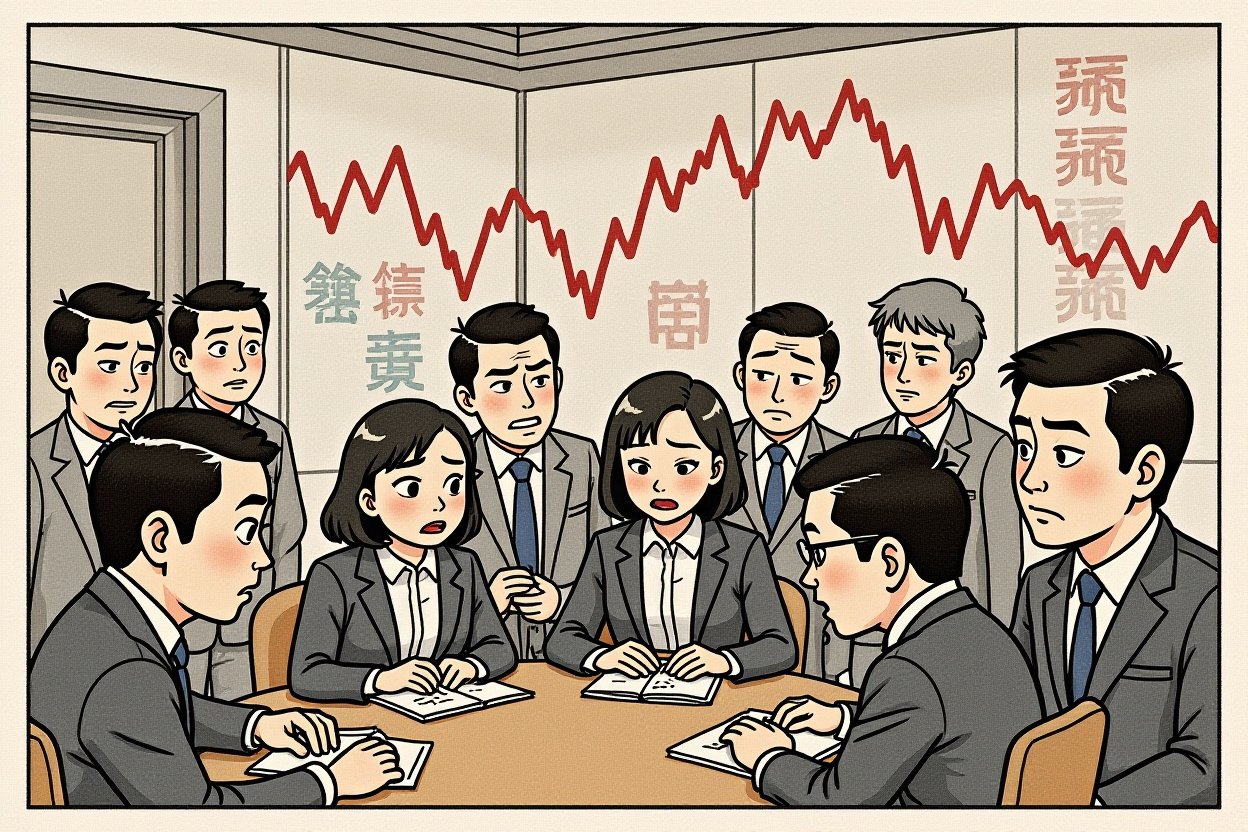
Pien Tzu Huang (片仔癀), once heralded as the ‘Medicine Maotai’ for its stellar performance in Chinese equity markets, has witnessed a staggering 180 billion yuan erosion in market value over the past four years. This dramatic Pien Tzu Huang’s decline from its peak has sent shockwaves through investment circles, forcing a reevaluation of traditional Chinese medicine (TCM) stocks and their long-term viability. The company’s shares, which once commanded premium valuations comparable to luxury giants, now face intense scrutiny from institutional investors and analysts alike.
The sheer scale of this Pien Tzu Huang’s decline represents one of the most significant corrections in China’s healthcare sector history. From its 2018 highs when market capitalization approached 200 billion yuan, Pien Tzu Huang has surrendered nearly 90% of its value, fundamentally altering perceptions about TCM investment thesis. This reversal fortunes comes amid broader market volatility but reflects specific company-level challenges that demand thorough examination.
Historical Context and Market Position
Pien Tzu Huang’s origins trace back to 1555 during the Ming Dynasty, with its proprietary formula for liver and inflammation treatments becoming a state-level protected secret. The company’s transition to a publicly traded entity saw it listed on the Shanghai Stock Exchange (上海证券交易所) in 2003, beginning a remarkable ascent that peaked in the late 2010s. During this period, Pien Tzu Huang achieved cult-like status among investors, with its products often compared to Kweichow Moutai (贵州茅台) for their premium pricing and loyal customer base.
The company’s business model centers on its namesake product – Pien Tzu Huang pills and capsules – which account for approximately 70% of revenue. Secondary offerings include cosmetics and healthcare products derived from similar formulations. Critical to understanding Pien Tzu Huang’s decline is recognizing its unique market position: unlike pharmaceutical companies dependent on pipeline developments, Pien Tzu Huang’s value proposition rested heavily on brand equity and pricing power for its established products.
Anatomy of the 180 Billion Yuan Decline
The precise mechanisms behind Pien Tzu Huang’s 180 billion yuan value destruction reveal complex interactions between market forces, regulatory interventions, and company-specific factors. Stock performance data from Wind Information (万得信息) shows the company’s share price declining from a peak of approximately 150 yuan in early 2018 to below 40 yuan by 2022, representing a nearly 75% drop that significantly underperformed broader market indices.
This Pien Tzu Huang’s decline unfolded across multiple phases, beginning with gradual profit-taking by early investors, accelerating through regulatory uncertainty, and culminating in fundamental concerns about growth sustainability. The company’s price-to-earnings ratio compressed from over 80 times at its peak to below 25 times currently, reflecting diminished growth expectations and increased risk perception among market participants.
Quantifying the Market Capitalization Erosion
Detailed analysis of Pien Tzu Huang’s market capitalization trajectory reveals several critical inflection points:
- 2018-2019: Initial 20% decline following China Securities Regulatory Commission (中国证券监督管理委员会) inquiries into TCM marketing practices
- 2020: Additional 35% drop amid COVID-19 disruptions and supply chain challenges
- 2021-2022: Further 40% erosion as growth stalled and competitor products gained traction
- Cumulative impact: Total market value decreased from approximately 200 billion yuan to 20 billion yuan
The acceleration of Pien Tzu Huang’s decline in recent years correlates strongly with changing reimbursement policies under China’s National Healthcare Security Administration (国家医疗保障局), which placed downward pressure on premium TCM product pricing. Additionally, inventory buildup at distributor levels created secondary headwinds that exacerbated the downward spiral.
Primary Drivers Behind the Downturn
Multiple interconnected factors have driven Pien Tzu Huang’s decline, with regulatory changes representing the most significant headwind. In 2018, the National Medical Products Administration (国家药品监督管理局) implemented stricter controls on TCM advertising and efficacy claims, directly impacting Pien Tzu Huang’s marketing effectiveness. Subsequent reforms to China’s drug procurement system further compressed margins, as the company faced pressure to participate in volume-based purchasing programs.
The fundamental Pien Tzu Huang’s decline also stems from evolving competitive dynamics. The traditional competitive moat provided by its state-protected formula has gradually eroded as modern pharmaceutical companies developed alternative treatments for similar conditions. Companies like Yunnan Baiyao (云南白药) have captured market share with more diversified product portfolios and aggressive digital marketing strategies.
Regulatory Landscape Reshaping
China’s healthcare reform initiatives have particularly impacted premium-priced TCM products like Pien Tzu Huang. Key regulatory developments include:
- 2019 National Drug Reimbursement List update that limited coverage for certain TCM formulations
- 2020 implementation of diagnosis-related groups (DRG) payment systems that disincentivized expensive traditional medicines
- Ongoing anti-corruption campaigns targeting hospital procurement practices
- Increased scrutiny of TCM clinical evidence requirements
These regulatory shifts have directly contributed to Pien Tzu Huang’s decline by constraining both pricing power and market access. The company’s previously reliable hospital channel has become increasingly challenging, forcing greater reliance on retail pharmacies where competition is more intense and margins thinner.
Market Saturation and Consumer Shifts
Beyond regulatory factors, Pien Tzu Huang’s decline reflects broader market saturation in the premium TCM segment. After years of rapid expansion, the addressable market for high-end traditional medicines has shown signs of maturation. Demographic analysis reveals declining interest among younger consumers toward traditional remedies in favor of Western medicines or integrative approaches.
Consumer behavior data from iResearch (艾瑞咨询) indicates that TCM purchase frequency among urban residents aged 20-35 decreased by 18% between 2017-2021, with particular weakness in premium segments. This generational shift has undermined the growth narrative that previously supported Pien Tzu Huang’s valuation premium, accelerating the Pien Tzu Huang’s decline as growth projections were revised downward.
Expert Analysis and Market Sentiment
Financial analysts covering Pien Tzu Huang have progressively downgraded their recommendations throughout the company’s decline. Goldman Sachs (高盛) analyst Zhang Wei (张伟) noted in a recent report: ‘Pien Tzu Huang faces structural challenges that cannot be resolved through short-term measures. The company’s product concentration and dependence on a single brand create vulnerability that has been exposed during this downturn.’
Institutional investor positioning has shifted dramatically during Pien Tzu Huang’s decline. Data from Hong Kong Exchange (香港交易所) shows that foreign ownership decreased from 12% of outstanding shares in 2018 to just 3% by 2022, reflecting international capital’s retreat from the story. Domestic mutual funds have also reduced exposure, with many completely exiting positions amid concerns about further downside.
Comparative Performance Against Peers
Pien Tzu Huang’s decline appears particularly severe when contextualized against broader sector performance. While the CSI 300 Healthcare Index declined approximately 25% over the same four-year period, Pien Tzu Huang’s 75% drop significantly underperformed this benchmark. Even compared to other TCM companies, Pien Tzu Huang’s decline stands out:
- Yunnan Baiyao (云南白药): 15% decline over same period
- Tong Ren Tang (同仁堂): 22% decline over same period
- JZJT (健之佳): 8% increase over same period
This relative underperformance suggests company-specific issues beyond sector-wide headwinds. The severity of Pien Tzu Huang’s decline points to fundamental concerns about business model sustainability rather than temporary market dislocation.
Recovery Prospects and Strategic Options
Despite the profound Pien Tzu Huang’s decline, potential pathways to stabilization exist. The company has initiated several strategic responses, including product diversification beyond its core pill business. Recent launches in cosmetics and health supplements represent attempts to leverage brand equity into adjacent categories with better growth profiles. Early results from these initiatives show promise, with the cosmetics division growing 45% year-over-year in 2021, albeit from a small base.
International expansion represents another potential avenue for mitigating Pien Tzu Huang’s decline. The company has increased exports to Southeast Asian markets with significant Chinese diaspora populations, where cultural affinity for TCM remains strong. Registration of products in markets like Singapore and Malaysia has progressed, though contribution to overall revenue remains minimal at approximately 5%.
Management Response and Governance
Pien Tzu Huang’s leadership has acknowledged the challenges driving the company’s decline. Chairman Liu Jianmin (刘建民) stated in the 2021 annual report: ‘We recognize the need for transformation while preserving our heritage. Our strategy focuses on scientific validation of traditional formulations and digital engagement with younger consumers.’ The company has increased R&D investment by 30% year-over-year and established partnerships with academic institutions to strengthen evidence supporting product efficacy.
Governance improvements have also been implemented amid Pien Tzu Huang’s decline, with enhanced disclosure practices and more frequent investor communication. The company now provides detailed breakdowns of sales by channel and region, addressing previous transparency concerns. These measures have helped stabilize sentiment to some degree, though they have yet to reverse the fundamental Pien Tzu Huang’s decline in market valuation.
Investment Implications and Forward Outlook
The dramatic Pien Tzu Huang’s decline carries significant implications for investors in Chinese healthcare equities. The episode demonstrates that even companies with seemingly impregnable competitive advantages can face rapid valuation compression when growth assumptions change. Investors must now weigh whether current prices adequately reflect remaining risks or whether excessive pessimism has created opportunity.
Looking forward, several scenarios could unfold for Pien Tzu Huang. A base case suggests gradual stabilization as new initiatives gain traction, with single-digit revenue growth returning by 2024. A bear case envisions further Pien Tzu Huang’s decline as market share erosion continues and margins contract further. A bull case, though less probable, involves successful product diversification and international expansion driving a revaluation.
Critical to monitoring will be quarterly prescription data, inventory levels at distributors, and regulatory developments affecting TCM reimbursement. Investors should also track the company’s progress in demonstrating clinical efficacy through modern research methodologies, as this could help rebuild physician and consumer confidence. While the depth of Pien Tzu Huang’s decline suggests caution remains warranted, the company’s strong brand recognition and cash flow generation provide a foundation for potential recovery if management executes effectively on its transformation strategy.