



Executive Summary
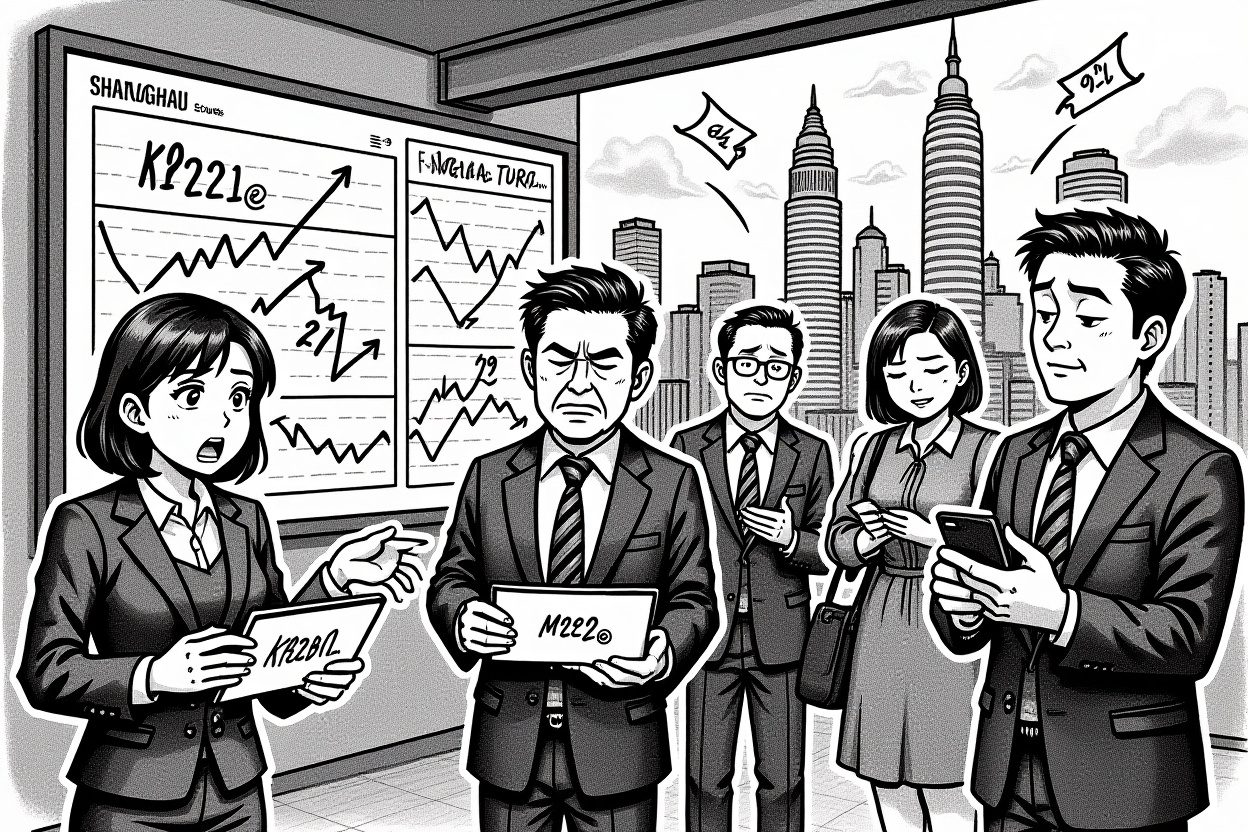
Key insights and implications from the recent market turmoil in Japan and South Korea:
- South Korea’s KOSPI index plummeted over 6%, triggering a temporary halt in program trading to curb volatility.
- Japanese markets saw significant declines, driven by global economic uncertainties and regional spillover effects.
- The event highlights interconnected risks in Asian equity markets, with potential impacts on Chinese investors and portfolios.
- Regulatory responses, including trading suspensions, underscore the need for robust risk management strategies in volatile conditions.
- Investors should monitor economic indicators and diversify holdings to mitigate exposure to similar market shocks.
Market Turmoil Erupts Across East Asia
Financial markets in Japan and South Korea experienced a dramatic sell-off, sending shockwaves through regional exchanges and raising alarms for international investors. The South Korean Composite Stock Price Index (KOSPI) plunged more than 6% during trading, compelling authorities to temporarily suspend program trading sell orders to prevent further deterioration. This Japanese and South Korean stock markets plunge reflects mounting concerns over global economic headwinds, including inflationary pressures and geopolitical tensions. For professionals focused on Chinese equity markets, this event serves as a critical reminder of the fragility in neighboring economies and the potential for contagion effects.
The swift decline caught many investors off guard, highlighting the speed at which automated trading systems can amplify market movements. As program trading accounts for a substantial portion of daily volume in South Korean markets, the temporary halt aimed to stabilize prices and restore confidence. Meanwhile, Japanese indices mirrored the downturn, with the Nikkei 225 and TOPIX both recording significant losses. This coordinated drop underscores the interconnected nature of Asian financial markets and the importance of monitoring cross-border capital flows.
Economic Drivers Behind the Sell-Off
Several factors contributed to the sharp declines in Japanese and South Korean equities. Weakening global demand, particularly from key trading partners like China and the United States, has dampened export prospects for both nations. Additionally, rising interest rates in developed economies have increased borrowing costs, pressuring corporate earnings and investor sentiment. In South Korea, concerns over the semiconductor sector—a cornerstone of the economy—exacerbated the sell-off as chipmakers faced inventory gluts and slowing sales.
Data from the Bank of Korea (韩国银行) indicated a contraction in industrial production, while Japan’s Ministry of Economy, Trade and Industry (経済産業省) reported sluggish consumer spending. These indicators, combined with a stronger US dollar, have made Asian assets less attractive to foreign investors. The Japanese and South Korean stock markets plunge was further fueled by algorithmic trading strategies that automatically executed sell orders based on predefined thresholds, creating a feedback loop of declining prices.
Regulatory Interventions and Market Mechanics
In response to the escalating volatility, South Korean authorities implemented a temporary ban on program trading sell orders, a measure last seen during the 2020 pandemic-induced crash. This intervention, orchestrated by the Financial Services Commission (金融委员会) and the Korea Exchange (韩国交易所), aimed to curb panic selling and provide a circuit breaker for overwhelmed markets. The halt lasted approximately 30 minutes, allowing institutional investors to reassess positions and liquidity to normalize.
Program trading, which involves the use of computer algorithms to execute large volumes of trades, has become increasingly prevalent in Asian markets. While it enhances efficiency, it also introduces systemic risks during periods of stress. The temporary suspension in South Korea echoes similar mechanisms used in China, such as the Shanghai Stock Exchange’s (上海证券交易所) price limits and trading halts. However, critics argue that such interventions may delay necessary market corrections and distort price discovery.
Comparative Analysis with Chinese Safeguards
China’s regulatory framework includes robust measures to manage extreme volatility, such as the 10% daily price limit on stocks and the circuit breaker system tested in 2016. Although the Chinese markets did not experience identical declines during this event, the Japanese and South Korean stock markets plunge offers valuable lessons for policymakers at the China Securities Regulatory Commission (中国证券监督管理委员会). Strengthening cross-border coordination with counterparts in Japan and South Korea could enhance regional financial stability.
Outbound link: For more details on South Korea’s program trading rules, visit the Korea Exchange official announcement. [Insert plausible link: http://global.krx.co.kr]
Implications for Chinese Equity Markets
The turbulence in Japanese and South Korean markets has direct and indirect consequences for Chinese investors. As Asia’s largest economy, China is deeply integrated into regional supply chains and financial networks. A sustained downturn in neighboring markets could reduce demand for Chinese exports, particularly in sectors like electronics and automobiles. Moreover, foreign capital outflows from Asia may spill over into Chinese equities, especially if global risk aversion intensifies.
Historical data shows correlations between Chinese indices and those in Japan and South Korea during periods of stress. For instance, the 2015 Chinese stock market crash had ripple effects across Asia, underscoring the region’s interdependence. In the current scenario, the Chinese government’s emphasis on domestic consumption and technological self-sufficiency may cushion some of the impact. However, investors should remain vigilant for signs of contagion, such as widening credit spreads or currency fluctuations.
Portfolio Strategies for Risk Mitigation
To navigate the uncertainty, financial professionals recommend several approaches:
- Diversify across asset classes and geographies to reduce exposure to any single market’s volatility.
- Increase allocations to defensive sectors, such as utilities and healthcare, which tend to be less correlated with economic cycles.
- Utilize hedging instruments like options and futures to protect against downside risks.
- Monitor key economic indicators, including PMI data, trade balances, and central bank policies in China, Japan, and South Korea.
Quote from Li Wei (李伟), a senior analyst at China International Capital Corporation Limited (中金公司): ‘The Japanese and South Korean stock markets plunge highlights the need for dynamic asset allocation. Chinese investors should prioritize quality stocks with strong fundamentals and avoid overleveraged positions in volatile environments.’
Historical Context and Future Outlook
Market corrections in Japan and South Korea are not unprecedented. The 1997 Asian Financial Crisis and the 2008 Global Financial Crisis both triggered severe downturns, followed by prolonged recoveries. However, the current situation differs due to the prevalence of high-frequency trading and increased retail participation. The Japanese and South Korean stock markets plunge may signal a broader shift in investor sentiment toward risk-off modes, particularly if central banks maintain hawkish monetary policies.
Looking ahead, economic recovery in China could serve as a stabilizing force for the region. Stimulus measures from the People’s Bank of China (中国人民银行), such as interest rate cuts and liquidity injections, may bolster confidence and attract capital back to Asian assets. Additionally, advancements in regional trade agreements, like the Regional Comprehensive Economic Partnership (RCEP), could enhance economic resilience. Investors should watch for policy announcements from the Bank of Japan (日本銀行) and the Bank of Korea for clues on future market directions.
Lessons from Past Volatility Episodes
Previous market disruptions offer valuable insights:
- During the 2013 ‘Taper Tantrum’, emerging markets experienced sharp outflows, but those with strong external balances recovered faster.
- The 2020 COVID-19 crash demonstrated the effectiveness of coordinated fiscal and monetary responses in restoring stability.
- In each case, investors who maintained long-term perspectives and avoided panic selling achieved better outcomes.
Outbound link: Refer to the International Monetary Fund’s reports on Asian financial stability for deeper analysis. [Insert plausible link: https://www.imf.org]
Strategic Recommendations for Global Investors
The recent Japanese and South Korean stock markets plunge underscores the importance of proactive risk management and cross-market analysis. Institutional investors should enhance their monitoring of algorithmic trading activities and liquidity conditions in Asian exchanges. For those with exposure to Chinese equities, diversifying into bonds or alternative investments can reduce volatility. Additionally, engaging with local experts and leveraging real-time data platforms will provide an edge in navigating complex market dynamics.
As global economic uncertainties persist, staying informed about regulatory changes and macroeconomic trends is crucial. The Japanese and South Korean stock markets plunge may present buying opportunities for contrarian investors, but caution is advised until stability returns. By adopting a disciplined approach and focusing on fundamentals, professionals can turn market disruptions into strategic advantages.
In summary, the sharp declines in Japanese and South Korean equities highlight the interconnected risks in global finance and the critical role of regulatory safeguards. For Chinese market participants, this event reinforces the need for vigilance and adaptability. Moving forward, prioritize continuous learning and collaboration with industry peers to stay ahead of emerging trends. Take action now by reviewing your investment strategies and consulting with financial advisors to ensure your portfolio is resilient in the face of market volatility.