



Executive Summary
Key insights from the current market turmoil in Chinese equities:
- – Widespread sell-offs driven by aggressive actions from prominent investment figures, raising concerns over a systemic bubble burst.
- – Regulatory interventions from bodies like 中国证券监督管理委员会 (China Securities Regulatory Commission) aim to stabilize markets but face challenges in restoring investor confidence.
- – Historical data suggests parallels to past financial crises, emphasizing the need for cautious risk management strategies.
- – Opportunities may emerge in undervalued sectors, though volatility is expected to persist in the short term.
- – Global investors should monitor liquidity conditions and policy shifts to navigate potential recovery phases.
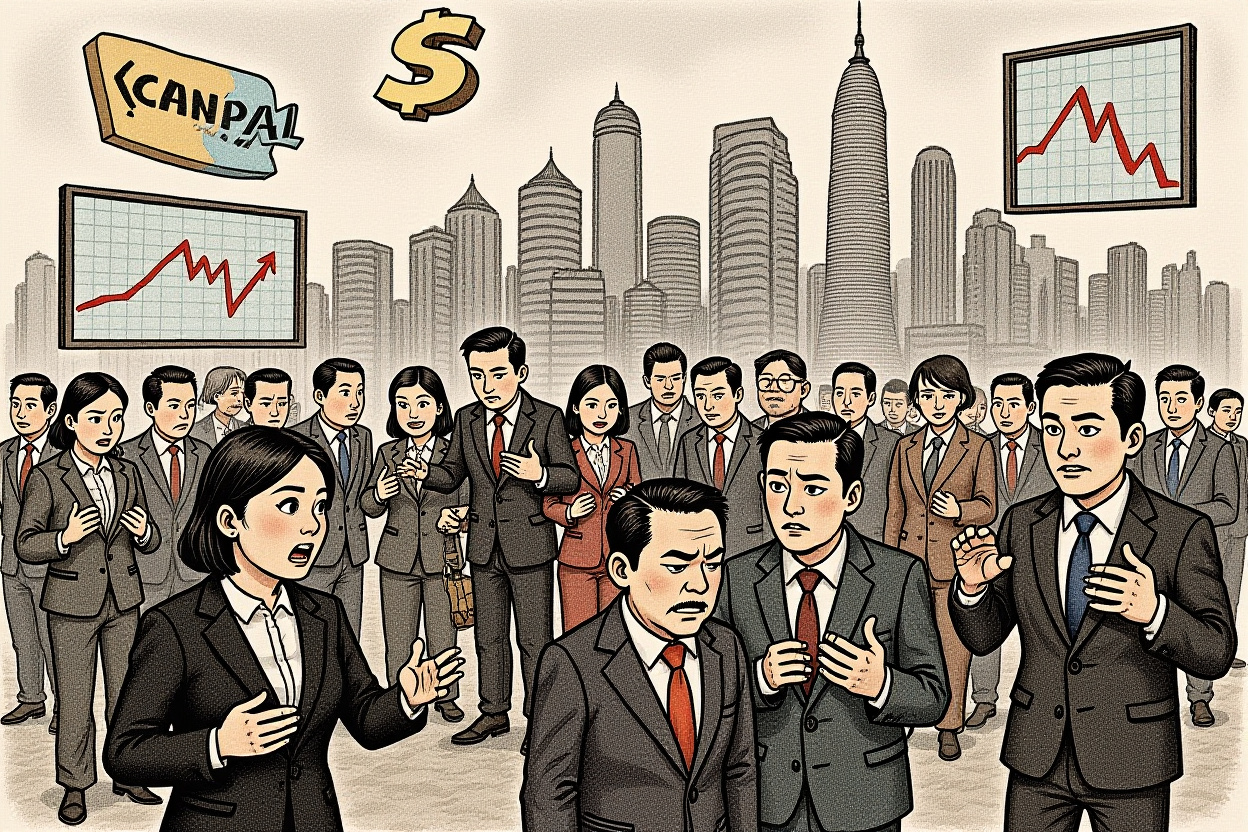
The Chinese equity markets are experiencing one of the most severe downturns in recent memory, with major indices like the 沪深300 (CSI 300) and 上证指数 (Shanghai Composite Index) plunging amid frenzied selling by top investment managers. This dramatic collapse has ignited debates among analysts and institutional players worldwide: is this the long-anticipated bubble burst that could reshape investment landscapes? As portfolios hemorrhage value and panic spreads, understanding the drivers behind this meltdown becomes critical for anyone with exposure to Chinese assets. The actions of so-called “investment titans” have amplified the sell-off, prompting questions about market sustainability and the very foundations of China’s financial ecosystem. With the specter of a full-blown bubble burst looming, stakeholders must decipher whether this is a temporary correction or the start of a prolonged bear cycle.
The Anatomy of the Market Collapse
Recent weeks have witnessed a precipitous drop in Chinese equities, erasing gains from the past year and triggering margin calls across brokerage firms. The 深圳证券交易所 (Shenzhen Stock Exchange) and 上海证券交易所 (Shanghai Stock Exchange) reported record outflows, with retail and institutional investors alike rushing for the exits. This section delves into the core factors fueling the decline and the historical context that informs current risks.
Key Triggers and Catalysts
Multiple elements converged to spark the sell-off, beginning with overheated valuations in tech and property sectors. Data from 万得 (Wind Information) indicates that price-to-earnings ratios for firms like 腾讯控股 (Tencent Holdings) and 阿里巴巴集团 (Alibaba Group) had soared to unsustainable levels, reminiscent of the 2015 market crash. Additionally, geopolitical tensions and slowing economic growth exacerbated fears, leading to a domino effect. For instance, the 中国人民银行 (People’s Bank of China) ‘s tightening of monetary policy reduced liquidity, while corporate debt defaults among developers like 中国恒大集团 (China Evergrande Group) intensified systemic worries. The bubble burst scenario gained traction as leveraged positions unwound, with margin debt levels hitting multi-year highs before the downturn.
Historical Context and Comparisons
Drawing parallels to past crises, such as the 2008 global financial meltdown or China’s 2015-2016 stock market crash, reveals patterns of speculative excess and regulatory missteps. In 2015, a similar bubble burst wiped out over $5 trillion in market value, driven by margin trading and herd behavior. Today, the scale of derivatives trading and foreign investment has magnified risks, with 沪港通 (Shanghai-Hong Kong Stock Connect) and 深港通 (Shenzhen-Hong Kong Stock Connect) channels amplifying cross-border volatility. Experts like Goldman Sachs analyst 刘炽平 (Martin Lau) caution that without intervention, a deeper correction could unfold, though lessons from history suggest recovery is possible with coordinated policy measures.
Role of Investment Titans in the Turmoil
Prominent investors, often hailed as “whales” in financial circles, have played a pivotal role in the recent market dynamics. Their aggressive strategies, from short-selling to portfolio rebalancing, have accelerated the downturn and fueled speculation about a broader bubble burst. This section examines their influence and the repercussions for market stability.
Profiles of Major Players
Figures like 张磊 (Zhang Lei) of 高瓴资本 (Hillhouse Capital Group) and 王亚伟 (Wang Yawei) , formerly of 华夏基金 (China Asset Management Co., Ltd.) , have made headlines for their decisive moves during the slump. For example, 张磊 (Zhang Lei) ‘s fund reportedly liquidated positions in overvalued tech stocks, sparking a chain reaction among peers. Similarly, hedge fund manager 徐翔 (Xu Xiang) , known for his contrarian bets, has been actively shorting sectors vulnerable to a bubble burst, such as renewable energy and electric vehicles. These actions underscore how concentrated power among a few elites can dictate market sentiment, with data from 中国证券投资基金业协会 (Asset Management Association of China) showing that top 10 funds control nearly 30% of A-share trading volume.
Strategies and Their Impact
The tactics employed by these titans range from high-frequency trading to public statements that sway retail investors. In one instance, a series of bearish reports from 中金公司 (China International Capital Corporation Limited) triggered a 5% single-day drop in the 创业板 (ChiNext Index) . Moreover, the use of algorithmic trading has amplified sell-offs, with automated systems reacting to volatility indicators. This environment heightens the risk of a full-scale bubble burst, as herd mentality takes hold. As 摩根士丹利 (Morgan Stanley) ‘s Asia equity strategist Jonathan Garner noted, “When giants retreat, the ripples become waves—investors must assess whether this is prudent risk management or a catalyst for panic.”
Regulatory Response and Market Sentiment
In response to the turmoil, Chinese regulators have rolled out a series of measures aimed at curbing excesses and restoring order. However, the effectiveness of these interventions remains debated, as investor sentiment wavers between hope and skepticism. This section analyzes the policy landscape and its implications for a potential bubble burst.
Government Interventions
The 中国证券监督管理委员会 (China Securities Regulatory Commission) has introduced circuit breakers, tightened margin requirements, and encouraged state-owned enterprises to buy shares, echoing steps taken during the 2015 crisis. For instance, the 国家队 (national team) —a colloquial term for government-backed funds—reportedly injected over 100 billion yuan into the market to stem losses. Additionally, the 国务院 (State Council) issued guidelines promoting stability, including tax incentives for long-term holdings. Despite these efforts, concerns persist that regulatory lag could exacerbate the downturn, with some analysts warning that a delayed response might allow the bubble burst to intensify. Outbound links to official announcements, such as those on the 中国证监会 (CSRC) website, provide further details on evolving policies.
Investor Psychology and Behavior
Market sentiment has deteriorated rapidly, with fear gauges like the 中国波动率指数 (China Volatility Index) spiking to multi-year highs. Surveys from 北京大学光华管理学院 (Peking University Guanghua School of Management) reveal that over 60% of retail investors have turned bearish, citing the bubble burst as a primary concern. This pessimism is compounded by social media trends, where platforms like 微博 (Weibo) amplify negative narratives. Behavioral finance experts, such as 陈志武 (Chen Zhiwu) , argue that emotional decision-making could prolong the slump, as investors overlook fundamentals in favor of short-term noise. To counteract this, financial advisors recommend diversification and adherence to disciplined investment frameworks.
Future Outlook and Investment Strategies
Looking ahead, the trajectory of Chinese equities hinges on a complex interplay of economic data, regulatory clarity, and global factors. While the immediate outlook appears bleak, strategic opportunities may arise for those who navigate the volatility wisely. This section offers forward-looking analysis and actionable advice to mitigate risks associated with a bubble burst.
Opportunities Amidst the Chaos
Historically, market dislocations have created entry points for value investors. Sectors like healthcare and consumer staples, which are less correlated to speculative bubbles, show resilience based on data from 中信证券 (CITIC Securities) . For example, companies in the 医药生物 (pharmaceuticals and biotechnology) space have maintained steady earnings growth despite the broader decline. Moreover, the push for technological self-sufficiency under policies like 中国制造2025 (Made in China 2025) could spur recovery in select industries. Investors should focus on firms with strong cash flows and low debt, as these are better positioned to weather a prolonged bubble burst. As 瑞银集团 (UBS Group AG) ‘s head of Asia equity research, Damien Kestel, advises, “Differentiate between cyclical downturns and structural shifts—the latter often yield long-term gains.”
Risk Management Approaches
To safeguard portfolios, professionals emphasize hedging through instruments like 股指期货 (stock index futures) or offshore yuan-denominated bonds. Diversifying into 香港交易所 (Hong Kong Exchanges and Clearing Limited) -listed H-shares can also reduce exposure to mainland volatility. Key steps include:
- – Monitor liquidity indicators, such as the 上海银行间同业拆放利率 (Shanghai Interbank Offered Rate) , for early warning signs.
- – Stay informed on regulatory updates from bodies like 国家外汇管理局 (State Administration of Foreign Exchange) to anticipate policy shifts.
- – Utilize technical analysis tools to identify support levels, reducing the impact of emotional trading during a bubble burst.
By adopting a proactive stance, investors can turn uncertainty into advantage, as markets eventually recalibrate.
In summary, the current market upheaval in Chinese equities underscores the fragile balance between growth and speculation. The aggressive maneuvers by investment titans have accelerated concerns of a bubble burst, yet history shows that crises often birth innovation and reform. For global investors, the path forward demands vigilance, with a focus on data-driven decisions and adaptive strategies. As regulatory frameworks evolve and economic fundamentals reassert themselves, those who remain calibrated to market rhythms may uncover hidden value. Ultimately, the lessons from this downturn should inform a more resilient approach to Chinese assets—one that balances opportunity with the ever-present risk of a bubble burst. Take action now by reviewing your exposure and consulting trusted advisors to navigate these turbulent waters effectively.