



Executive Summary
Key takeaways from the overnight market movements include:
- Gold prices experienced a sharp decline, dropping over 3% in Asian trading hours, driven by strengthening US dollar and rising bond yields.
- Brent crude oil fell below $80 per barrel, reflecting concerns over global demand and inventory buildups.
- Cryptocurrencies led by Bitcoin crashed over 10%, erasing gains from previous sessions amid regulatory fears.
- Chinese A-shares and Hong Kong-listed stocks showed resilience but faced indirect pressure from commodity-linked sectors.
- Investors should monitor Federal Reserve policies and Chinese economic data for near-term direction.
Late-Night Market Turmoil Unfolds
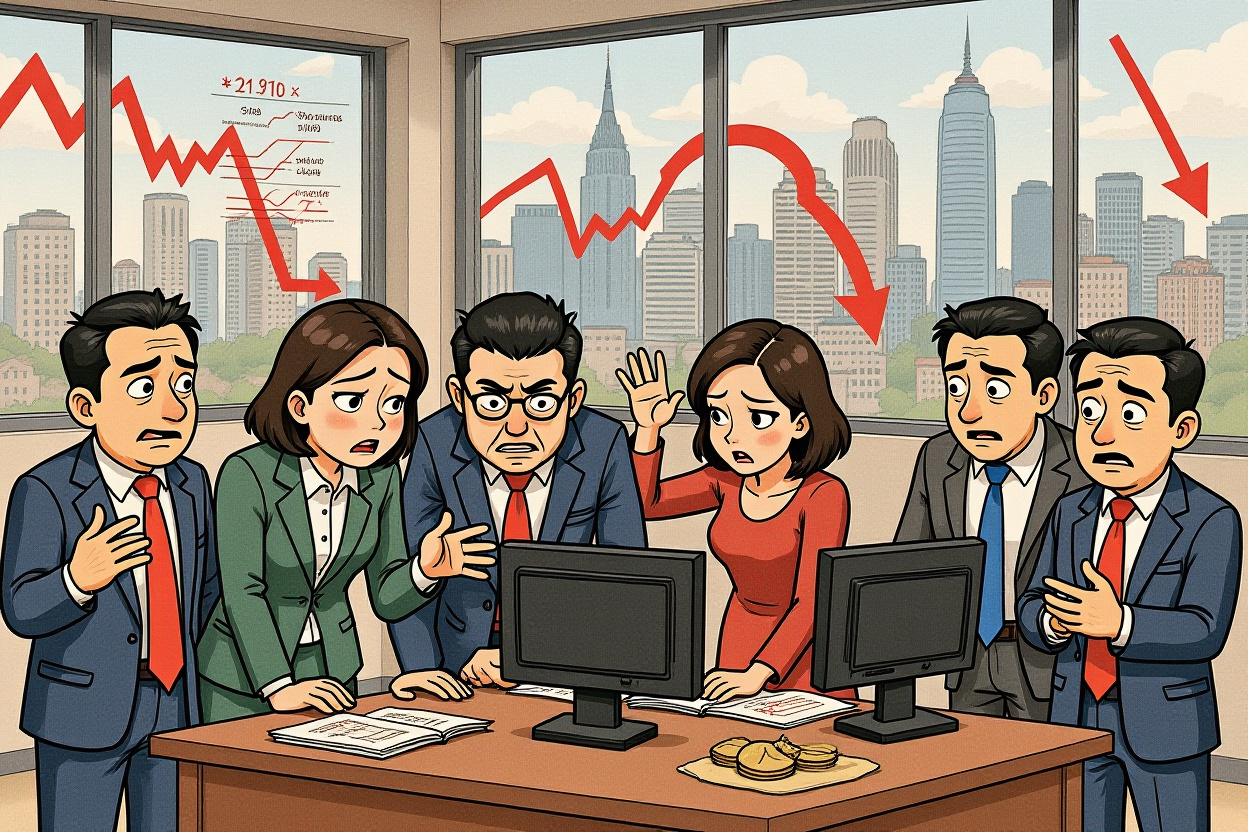
In a dramatic overnight session, global financial markets witnessed a significant downturn, with commodities and digital assets leading the decline. The overnight market plunge caught many investors off-guard, particularly during Asian trading hours when liquidity typically thins. Gold, often seen as a safe-haven asset, suddenly reversed its upward trajectory, while oil prices extended losses amid demand worries. Cryptocurrency markets, already volatile, collapsed under selling pressure, highlighting the interconnected nature of modern financial systems.
This overnight market plunge underscores the fragility of current market sentiment, where even minor triggers can amplify sell-offs. For Chinese equity investors, the movements in global commodities and cryptocurrencies serve as critical indicators for domestic market trends. The People’s Bank of China (中国人民银行) and other regulators closely monitor such shifts, as they can influence capital flows and monetary policy decisions. Understanding the drivers behind this overnight market plunge is essential for navigating the complexities of cross-border investments.
Gold’s Sudden Dive Explained
Gold prices tumbled sharply, with spot gold falling from $1,950 to below $1,890 per ounce within hours. This decline was primarily fueled by a stronger US dollar and rising US Treasury yields, which reduce the appeal of non-yielding assets like gold. Additionally, technical selling triggered stop-loss orders, exacerbating the drop. Data from the World Gold Council indicates that central bank buying, including from the People’s Bank of China (中国人民银行), provided some support but couldn’t offset the bearish momentum.
Historical patterns show that gold often experiences volatility during late-night sessions when Asian markets are active. For instance, during the 2023 market corrections, similar overnight plunges led to buying opportunities for long-term investors. Experts like Zhang Wei (张伟), a commodities analyst at CICC (中金公司), note that “gold’s sensitivity to dollar strength makes it vulnerable in the current macroeconomic environment.” Investors should watch for US inflation data and Federal Reserve commentary for clues on future gold price movements.
Oil Price Corrections and Market Impact
Brent crude oil prices declined by over 2%, settling near $79 per barrel, while WTI crude followed suit. The drop was attributed to rising US crude inventories and concerns over slowing global economic growth, particularly in China. Reports from the Energy Information Administration (EIA) showed a larger-than-expected build in stockpiles, adding to downward pressure. Furthermore, OPEC+ production cuts failed to fully counterbalance worries about demand destruction from prolonged high interest rates.
For Chinese markets, lower oil prices can alleviate input costs for industries like manufacturing and transportation, potentially boosting corporate earnings. However, energy sector stocks, such as those of PetroChina (中国石油), may face headwinds. The overnight market plunge in oil highlights the need for diversified energy investments, including renewables, to mitigate risks. Analysts recommend tracking geopolitical developments and OPEC+ meetings for oil price forecasts.
Cryptocurrency Market Collapse Intensifies
The cryptocurrency sector suffered a brutal sell-off, with Bitcoin losing over 10% of its value and Ethereum dropping similarly. Altcoins like Binance Coin and Solana saw even steeper declines, wiping out billions in market capitalization. This crash was triggered by a combination of regulatory crackdowns, leverage unwinding, and negative sentiment spillover from traditional markets. The overnight market plunge in cryptocurrencies reflects their growing correlation with broader financial assets, contrary to earlier perceptions of decoupling.
In China, where cryptocurrency trading is largely banned, the collapse had indirect effects through mining operations and offshore investments. The China Securities Regulatory Commission (中国证监会) has repeatedly warned about the risks of digital assets, emphasizing their volatility and lack of intrinsic value. Despite this, some Chinese investors remain active in overseas crypto markets, using platforms like Huobi (火币) or OKX. The overnight market plunge serves as a reminder of the high-risk nature of these instruments.
Bitcoin and Altcoins Hit Hard
Bitcoin’s price fell below $60,000, a key psychological level, while major altcoins declined by 15-20%. The sell-off was exacerbated by liquidations in derivatives markets, where over $1 billion in long positions were wiped out. Data from CoinGlass shows that funding rates turned negative, indicating bearish sentiment. This overnight market plunge in cryptocurrencies mirrors patterns seen in previous cycles, where rapid gains are followed by sharp corrections.
For global investors, including those in Chinese markets, the volatility underscores the importance of risk management. Diversifying into stablecoins or regulated crypto products may offer some protection. However, experts caution that cryptocurrencies remain highly speculative. As Li Ming (李明), a fintech researcher, states, “The overnight market plunge in crypto is a wake-up call for investors to reassess their exposure and align it with their risk tolerance.”
Factors Driving the Overnight Sell-Off
Multiple factors converged to trigger the overnight market plunge, including macroeconomic data, geopolitical tensions, and technical indicators. Strong US employment figures reinforced expectations of prolonged high interest rates, strengthening the dollar and pressuring commodities. Additionally, escalating Middle East conflicts and trade disputes between the US and China added to uncertainty. The overnight market plunge was amplified by algorithmic trading, which can accelerate trends during low-liquidity periods.
In China, economic indicators such as PMI data and consumer inflation play a crucial role in market sentiment. The National Bureau of Statistics (国家统计局) reported mixed signals, with manufacturing activity showing slight contraction. This contributed to the overnight market plunge by raising concerns about global growth. Investors should monitor upcoming releases from the US Federal Reserve and China’s State Council for policy clues.
Economic Indicators and Geopolitical Tensions
Key economic reports, including US CPI data and Chinese export figures, influenced the overnight market plunge. Higher-than-expected US inflation readings bolstered the dollar, while weak Chinese trade data highlighted demand softness. Geopolitically, tensions in the South China Sea and US sanctions on Chinese tech firms added to risk aversion. The overnight market plunge reflects how interconnected global events can trigger cascading effects across asset classes.
For Chinese equity investors, these developments underscore the need for hedges against currency and commodity volatility. Tools like yuan-denominated bonds or gold ETFs can provide stability. The overnight market plunge also highlights the importance of staying informed through reliable sources, such as the China Financial Futures Exchange (中国金融期货交易所) for derivatives insights.
Regulatory Developments in China
Recent regulatory announcements from Chinese authorities contributed to the overnight market plunge. The China Banking and Insurance Regulatory Commission (中国银行保险监督管理委员会) issued guidelines tightening oversight on commodity trading, while the State Administration of Foreign Exchange (国家外汇管理局) monitored cross-border flows. These measures aim to stabilize markets but can initially cause volatility. The overnight market plunge in cryptocurrencies, for example, was partly driven by rumors of stricter enforcement against underground trading.
Investors should pay attention to policy shifts from the Central Financial Work Commission (中央金融工作会议), which coordinates financial stability efforts. As Wang Tao (王涛), a policy analyst, notes, “Regulatory clarity can eventually reduce volatility, but short-term adjustments are inevitable.” The overnight market plunge may prompt further interventions if it threatens systemic risk.
Impact on Chinese Equity Markets
Chinese A-shares and Hong Kong-listed stocks felt the ripple effects of the overnight market plunge, though to a lesser extent than global commodities. The CSI 300 index dipped slightly, while the Hang Seng Index saw modest declines in energy and tech sectors. However, defensive stocks in consumer staples and utilities outperformed, demonstrating the resilience of China’s domestic market. The overnight market plunge highlights the growing integration of Chinese equities with global trends, necessitating sophisticated risk management strategies.
For institutional investors, the events underscore the value of diversification across geographies and asset classes. Exchange-traded funds (ETFs) tracking Chinese stocks, such as those listed on the Shanghai Stock Exchange (上海证券交易所), may offer exposure with lower volatility. The overnight market plunge also reinforces the importance of monitoring yuan exchange rates, as currency movements can amplify equity returns or losses.
A-Shares and Hong Kong Listings
A-shares on the Shanghai and Shenzhen exchanges showed mixed reactions, with commodity producers like Zijin Mining (紫金矿业) declining but healthcare firms holding steady. In Hong Kong, listings of Chinese companies, such as Tencent (腾讯) and Alibaba (阿里巴巴), experienced mild selling pressure. The overnight market plunge in global commodities directly affected sectors like materials and energy, which account for a significant portion of China’s export economy.
Data from the Hong Kong Exchanges and Clearing Limited (香港交易及结算所有限公司) indicates that trading volumes spiked during the sell-off, reflecting active risk management. Investors should consider sector rotation strategies, shifting from cyclical to defensive stocks during such periods. The overnight market plunge may create buying opportunities in undervalued Chinese tech and consumer names, according to fund managers like Liu Yan (刘岩).
Investor Strategies in Volatile Times
Navigating the aftermath of an overnight market plunge requires disciplined strategies and a long-term perspective. Diversification remains key, with allocations to non-correlated assets like Chinese government bonds or gold ETFs. Additionally, using stop-loss orders and options can limit downside risk. The overnight market plunge serves as a reminder that volatility is inherent in global markets, and preparedness is crucial for capital preservation.
For Chinese investors, leveraging tools from the China Securities Depository and Clearing Corporation (中国证券登记结算有限责任公司) can enhance portfolio management. Regular reviews of asset allocation and stress testing against scenarios like the overnight market plunge can improve resilience. As global markets evolve, staying informed through platforms like the China Foreign Exchange Trade System (中国外汇交易中心) is essential for timely decisions.
Hedging and Diversification Tips
Effective hedging techniques include using futures contracts on the Dalian Commodity Exchange (大连商品交易所) for commodities or currency swaps for forex exposure. Diversifying into Asian bonds or real estate investment trusts (REITs) can also reduce portfolio volatility. The overnight market plunge demonstrated that even traditional safe havens like gold can be volatile, so a multi-asset approach is advisable.
Practical steps for investors: 1. Rebalance portfolios quarterly to maintain target allocations. 2. Incorporate alternative investments like private equity or infrastructure. 3. Monitor macroeconomic indicators such as US Fed rates and China’s GDP growth. The overnight market plunge should prompt a reassessment of risk tolerance and investment horizons. As veteran investor Chen Gang (陈刚) advises, “Use volatility as an opportunity to buy quality assets at discounted prices.”
Key Takeaways and Forward Guidance
The overnight market plunge in global commodities and cryptocurrencies underscores the importance of vigilance and adaptability in today’s interconnected financial landscape. Key lessons include the need for robust risk management, awareness of regulatory changes, and diversification across asset classes. While short-term volatility can be unsettling, it often presents opportunities for strategic entries in undervalued markets.
Looking ahead, investors should focus on upcoming economic data from China and the US, including inflation reports and industrial production figures. The overnight market plunge may repeat if underlying issues like high leverage or geopolitical tensions persist. Proactive measures, such as consulting with financial advisors or using AI-driven analytics, can enhance decision-making. Take action now by reviewing your portfolio’s exposure to commodities and digital assets, and consider adjustments to align with your long-term goals in the dynamic Chinese equity market environment.