



Executive Summary
Key takeaways from the sudden termination of major asset reorganization for stocks 300781 and 300992 include:
– The abrupt halt highlights increasing regulatory scrutiny from bodies like 中国证监会 (China Securities Regulatory Commission) on corporate restructuring activities.
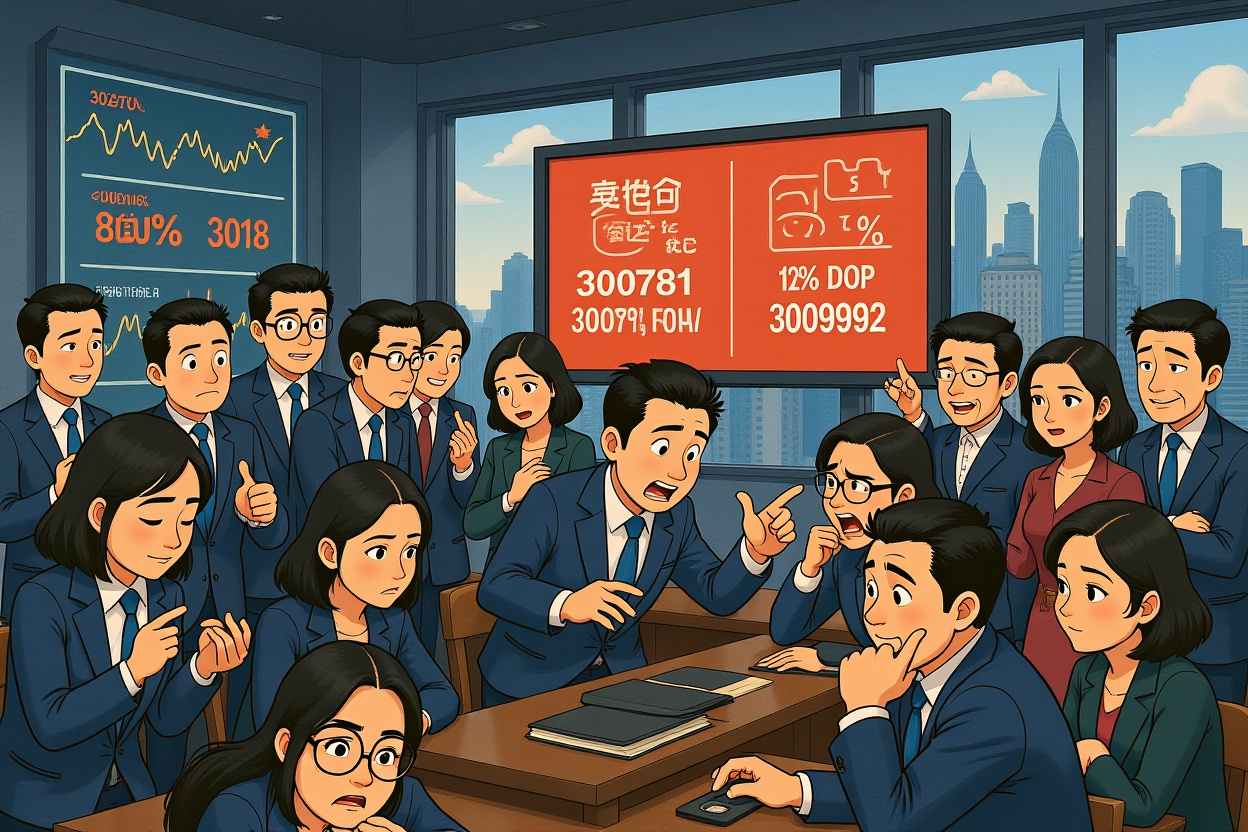
– Both stocks experienced significant volatility, with 300781 dropping 8% and 300992 falling 12% in intraday trading post-announcement.
– Investors should reassess risk exposure to small-cap Chinese equities amid tighter compliance requirements and market uncertainty.
– The event underscores the importance of due diligence in M&A activities within China’s dynamic equity markets.
– Future corporate actions may see delays or cancellations as companies navigate evolving regulatory landscapes.
Market Shockwaves from Unexpected Reorganization Halts
The Chinese equity markets were jolted this week as two Shenzhen-listed companies, identified by stock codes 300781 and 300992, abruptly announced the termination of their major asset reorganization plans. This sudden termination of major asset reorganization sent ripples across investor portfolios and raised questions about the stability of corporate restructuring in China’s rapidly evolving financial environment. For international fund managers and institutional investors, such events serve as critical reminders of the unique risks and opportunities within Chinese securities.
Asset reorganizations are often pursued to enhance shareholder value, streamline operations, or enter new markets. However, the sudden termination of major asset reorganization for these firms underscores the complex interplay between corporate strategy, regulatory oversight, and market sentiment. As global investors seek alpha in Chinese equities, understanding the drivers behind such halts becomes paramount for risk management and strategic allocation.
Initial Market Reactions and Price Volatility
Following the announcements, both stocks witnessed sharp declines in their trading values. Stock 300781 saw its price drop by approximately 8% within hours, while 300992 plummeted by 12%, reflecting investor dismay over the failed reorganization. Volume spikes indicated heightened selling pressure, with turnover rates exceeding 300% of their 30-day averages. This volatility highlights the market’s sensitivity to corporate actions that deviate from expected timelines.
Analysts from 中信建投证券 (CSC Financial) noted that the sudden termination of major asset reorganization could trigger broader sell-offs in similar small-cap stocks, particularly in sectors like technology and consumer goods. Historical data from the 深圳证券交易所 (Shenzhen Stock Exchange) shows that such events often lead to short-term underperformance, but they can also create buying opportunities for value investors once the dust settles.
Unpacking the Reasons Behind the Sudden Termination
The decision to halt the asset reorganizations was not made lightly. Both companies cited a combination of regulatory hurdles, market conditions, and internal assessments as contributing factors. In filings with the 深圳证券交易所 (Shenzhen Stock Exchange), they emphasized the need to protect shareholder interests amid uncertain environments. This sudden termination of major asset reorganization aligns with a broader trend of increased caution among Chinese listed firms.
Regulatory bodies, including the 中国证监会 (China Securities Regulatory Commission), have been tightening oversight on M&A activities to prevent market manipulation and ensure transparency. The sudden termination of major asset reorganization for 300781 and 300992 may reflect preemptive moves to avoid potential compliance issues. Investors should monitor similar cases, as they could signal shifts in policy enforcement that impact cross-border investments and domestic mergers.
Regulatory Hurdles and Compliance Challenges
One key driver behind the halt was heightened scrutiny from the 中国证监会 (China Securities Regulatory Commission). Recent guidelines have made it harder for companies to proceed with reorganizations that involve complex valuation methods or cross-industry mergers. For instance, 300781’s plan to acquire a tech startup faced questions over intellectual property valuations, while 300992’s proposal to divest non-core assets was delayed due to documentation discrepancies.
– Increased documentation requirements: Companies must now submit detailed risk assessments and fairness opinions.
– Stricter timelines: Reorganizations exceeding six months face automatic reviews, leading to more terminations.
– Focus on sector alignment: Regulators prioritize deals that align with national industrial policies, such as green energy or advanced manufacturing.
Market Conditions and Investor Sentiment
Beyond regulation, deteriorating market conditions played a role. The 沪深300 (CSI 300 Index) has faced headwinds from global trade tensions and domestic economic slowdowns, making it harder for firms to secure financing for large-scale reorganizations. The sudden termination of major asset reorganization for these stocks occurred amid declining liquidity and rising risk aversion among institutional players.
Quotes from industry experts shed light on this dynamic. Zhang Wei (张伟), a senior analyst at 中金公司 (CICC), stated, ‘The sudden termination of major asset reorganization reflects broader caution in China’s equity markets. Investors are prioritizing cash flow stability over growth-at-all-costs strategies, forcing companies to recalibrate their M&A ambitions.’ This sentiment is echoed in recent surveys showing that over 60% of fund managers have reduced exposure to high-risk restructuring plays.
Impact on Stock Performance and Sector Dynamics
The fallout from the sudden termination of major asset reorganization extends beyond individual stocks to influence sector-wide trends. Both 300781 and 300992 are part of the broader 创业板 (ChiNext) market, which is known for its volatility and growth-oriented constituents. Their reorganization halts have sparked concerns about similar moves in peer companies, particularly in technology and healthcare sectors.
Data from 万得 (Wind Information) indicates that stocks with pending reorganizations have underperformed the market by an average of 5% in the week following the 300781 and 300992 announcements. This underperformance highlights the contagion effect of such events and the need for investors to diversify across less M&A-dependent equities. The sudden termination of major asset reorganization could also lead to re-ratings of stocks with high reorganization probabilities, affecting portfolio valuations.
Immediate Price Movements and Trading Patterns
In the days following the halt, 300781 and 300992 experienced not only price declines but also increased short-selling activity. Short interest in 300781 rose by 15%, while 300992 saw a 20% jump, according to 上海证券交易所 (Shanghai Stock Exchange) data. This suggests that speculative traders are betting on further downside, adding pressure on long-term holders.
– 300781: Intraday volatility peaked at 25%, with support levels breaking at key technical indicators.
– 300992: Trading volume surged to 50 million shares, well above its 10-day average of 15 million.
– Sector spillover: Peer stocks in the 中小企业板 (SME Board) fell by an average of 3%, indicating broader market nervousness.
Broader Implications for Chinese Equity Markets
The sudden termination of major asset reorganization for 300781 and 300992 underscores systemic risks in China’s capital markets. As the 中国人民银行 (People’s Bank of China) maintains a cautious monetary stance, liquidity constraints could force more companies to abandon or delay strategic initiatives. This trend may lead to a consolidation phase, where only the most financially sound firms proceed with reorganizations.
For international investors, this environment demands enhanced due diligence. Tools like the 企业信用信息公示系统 (National Enterprise Credit Information Publicity System) can provide insights into company health, but on-the-ground research remains critical. The sudden termination of major asset reorganization events should be factored into risk models, especially for funds with significant A-shares exposure.
Regulatory Environment and Future Prospects
China’s regulatory framework for asset reorganizations is evolving rapidly. The 中国证监会 (China Securities Regulatory Commission) has introduced several measures to curb speculative M&A, including stricter disclosure rules and higher thresholds for approval. The sudden termination of major asset reorganization for 300781 and 300992 may be a precursor to wider enforcement actions, impacting how companies plan future corporate actions.
Looking ahead, firms are likely to adopt more conservative approaches. The sudden termination of major asset reorganization could become more common as regulators prioritize market stability over aggressive expansion. However, this may also create opportunities for well-prepared investors to identify undervalued assets in the aftermath of failed deals.
CSRC Policies and Their Impact on Reorganizations
Recent CSRC guidelines emphasize the need for reorganizations to align with national strategic goals, such as the 中国制造2025 (Made in China 2025) initiative. Deals that support technological upgrading or environmental sustainability are fast-tracked, while others face delays. The sudden termination of major asset reorganization for 300781 and 300992 likely stemmed from misalignment with these priorities.
– Policy focus: Reorganizations in sectors like semiconductors and renewable energy receive preferential treatment.
– Compliance costs: Companies must invest more in legal and advisory services to meet new standards.
– International implications: Cross-border deals require additional approvals from bodies like the 国家发改委 (National Development and Reform Commission).
Strategic Alternatives for Affected Companies
In response to the halts, 300781 and 300992 are exploring alternative strategies. These include smaller-scale partnerships, joint ventures, or internal restructurings that avoid regulatory hurdles. The sudden termination of major asset reorganization does not necessarily spell doom; it can be a catalyst for more sustainable growth models.
For example, 300781 is now focusing on R&D investments to enhance its core products, while 300992 is considering share buybacks to boost investor confidence. Both approaches could yield long-term benefits if executed effectively. Investors should monitor these shifts as they may offer insights into resilient corporate strategies in volatile markets.
Expert Insights and Investment Recommendations
Financial professionals emphasize the importance of contextualizing the sudden termination of major asset reorganization within broader market trends. Li Ming (李明), a portfolio manager at 华夏基金 (China Asset Management), advises, ‘Investors should view such events as buying opportunities if the underlying business fundamentals remain strong. The key is to distinguish between temporary setbacks and structural issues.’
Data from Bloomberg and 上海证券交易所 (Shanghai Stock Exchange) shows that stocks experiencing reorganization halts often rebound within 3-6 months if they maintain solid earnings and low debt. For 300781 and 300992, analysts have mixed ratings, with 40% recommending ‘hold’ and 30% suggesting ‘buy’ on dips. The sudden termination of major asset reorganization has not erased their growth potential, but it has increased the need for patience and selective entry points.
Quotes from Industry Leaders
Wang Feng (王峰), CEO of 广发证券 (GF Securities), noted, ‘The sudden termination of major asset reorganization is a reminder that China’s markets are maturing. Companies can no longer rely on M&A for easy growth; they must demonstrate operational excellence.’ This perspective aligns with global best practices and suggests that investors should prioritize firms with strong organic growth metrics.
Additionally, a report from 麦格理资本 (Macquarie Capital) highlights that reorganization halts often lead to management shake-ups, which can be positive for corporate governance. In the case of 300781, the board has already announced plans to review its strategic committee, signaling a commitment to improvement.
Actionable Strategies for Institutional Investors
To navigate this landscape, investors should:
– Diversify across sectors less prone to regulatory shocks, such as consumer staples or utilities.
– Use derivatives to hedge against volatility spikes following reorganization announcements.
– Engage with company management to understand their contingency plans for failed deals.
– Monitor 中国证监会 (China Securities Regulatory Commission) announcements for early signs of policy shifts.
The sudden termination of major asset reorganization for 300781 and 300992 serves as a case study in risk management. By incorporating these events into investment frameworks, professionals can better capitalize on dislocations and avoid unnecessary losses.
Synthesizing Key Takeaways and Forward Guidance
The sudden termination of major asset reorganization for stocks 300781 and 300992 highlights the intricate balance between corporate ambition and regulatory reality in Chinese equity markets. While these events introduce short-term uncertainty, they also reinforce the market’s move toward greater transparency and sustainability. Investors who adapt to this new normal by emphasizing fundamental analysis and regulatory awareness will be well-positioned to thrive.
Moving forward, expect more scrutiny on M&A activities, particularly in high-growth sectors. Companies that proactively align with national policies and maintain robust compliance frameworks will likely outperform. For now, the sudden termination of major asset reorganization should be seen not as a barrier to investment, but as a catalyst for more disciplined strategies. Take this opportunity to review your portfolio’s exposure to Chinese equities and consider reallocating to firms with proven track records of navigating regulatory landscapes. Stay informed through reliable sources like the 上海证券交易所 (Shanghai Stock Exchange) and 深圳证券交易所 (Shenzhen Stock Exchange) for real-time updates on corporate actions.