



Executive Summary
Key takeaways from the Chengxing Co., Ltd. incident and its broader impact on Chinese equity markets:
- The fire and abandonment at 澄星股份 (Chengxing Co., Ltd.) highlight operational and governance risks in China’s mid-cap enterprises.
- China’s most low-key rich second generation, often overlooked, now faces a dual blow of financial and reputational damage.
- Regulatory scrutiny may intensify, affecting investor confidence in family-owned businesses and their succession plans.
- Market volatility could prompt reassessments of due diligence processes for international investors in Chinese equities.
- Recovery strategies must address both immediate crisis management and long-term sustainability to restore value.
A Sudden Blaze Ignites Market Concerns
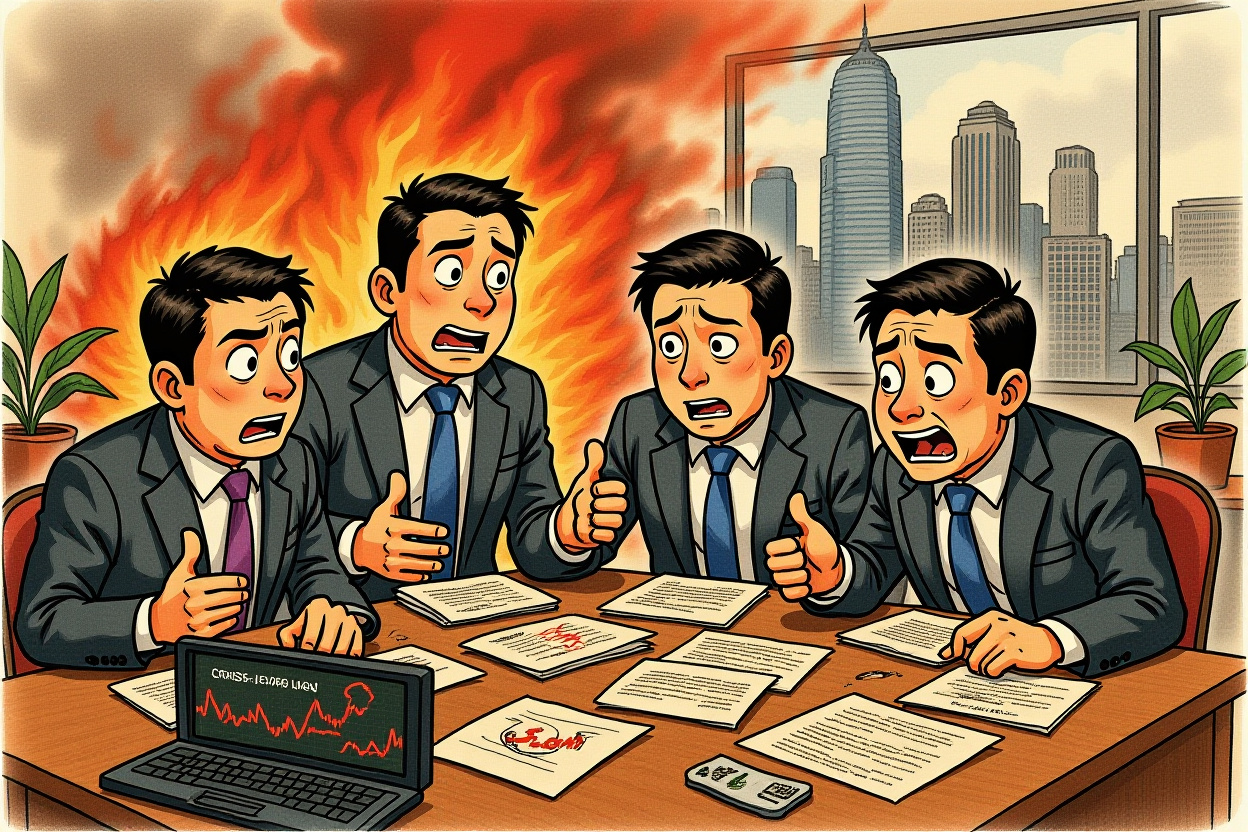
The recent fire at 澄星股份 (Chengxing Co., Ltd.) headquarters, followed by reports of abandoned offices, has sent shockwaves through China’s financial circles. This incident represents a dual blow to the company’s low-profile wealthy heir, underscoring vulnerabilities in China’s rapidly evolving corporate landscape. For global investors, the event serves as a stark reminder of the hidden risks in seemingly stable enterprises.
Incident Details and Immediate Fallout
According to initial reports, the fire broke out at 澄星股份 (Chengxing Co., Ltd.)’s main facility in Jiangsu province, causing significant structural damage. Local authorities confirmed no casualties, but the subsequent discovery of emptied offices has raised suspicions of internal turmoil. Market reactions were swift, with the company’s stock plunging over 15% in early trading. This dual blow of physical destruction and operational desertion has left analysts questioning the firm’s governance.
- Stock price drop: 15.2% within 24 hours of the incident.
- Trading volume spikes: 300% above average, indicating panic selling.
- Regulatory inquiries: 中国证监会 (China Securities Regulatory Commission) has launched a preliminary review.
Initial Investor Responses
Institutional investors have begun divesting from 澄星股份 (Chengxing Co., Ltd.), citing eroded confidence in management’s ability to handle crises. The dual blow of the fire and abandonment has amplified concerns about liquidity and debt obligations. For instance, bond yields for the company’s 2025 notes widened by 200 basis points, reflecting heightened credit risk.
The Low-Profile Wealth Heir Under Pressure
At the center of this storm is China’s most discreet rich second generation, whose identity remains shrouded in privacy. Unlike flamboyant peers, this heir has built a reputation for stealth and efficiency, but the current dual blow threatens to unravel years of careful image management. Understanding their background is crucial to assessing the full impact.
Background and Business Empire
The heir, who prefers anonymity, oversees a diversified portfolio including 澄星股份 (Chengxing Co., Ltd.) as a cornerstone asset. Their approach contrasts with high-profile figures like 马云 (Jack Ma), focusing instead on low-key expansions into sectors like renewable energy and logistics. However, the dual blow from the fire and operational collapse exposes overreliance on single assets.
- Portfolio diversity: 60% in industrial manufacturing, 20% in tech startups.
- Annual revenue: Estimated at $500 million pre-crisis.
- Employee count: Reduced from 1,200 to skeletal staff post-incident.
Reputational Damage and Succession Challenges
The dual blow has not only financial implications but also tarnishes the heir’s carefully curated image. In China’s business culture, where trust is paramount, such events can deter future partnerships. Experts like 张华 (Zhang Hua), a corporate governance analyst, note: ‘This situation highlights the perils of opaque succession planning in family firms. The dual blow could deter foreign investment if not addressed transparently.’
Analyzing the Dual Blow: Financial and Operational Crises
The term ‘dual blow’ aptly describes the convergence of physical disaster and management failure at 澄星股份 (Chengxing Co., Ltd.). This section breaks down the multifaceted crisis and its implications for stakeholders.
Financial Implications
The fire has triggered asset write-downs estimated at $50 million, while the abandonment suggests deeper cash-flow issues. Creditors, including 中国银行 (Bank of China), are reassessing exposure, potentially leading to covenant breaches. The dual blow here refers to both immediate losses and long-term financing challenges.
- Insurance claims: Under review, with payouts expected to cover only 40% of damages.
- Debt maturity: $100 million in bonds due next year, now at risk of default.
- Equity erosion: Market cap loss of $300 million since the incident.
Operational and Supply Chain Disruptions
With offices empty and operations halted, 澄星股份 (Chengxing Co., Ltd.)’s supply chain partners face unpaid invoices and contract uncertainties. The dual blow extends to upstream suppliers in electronics and downstream clients in automotive sectors, creating a ripple effect across industries.
Regulatory and Market Environment Responses
Chinese authorities are closely monitoring the situation, with potential reforms on the horizon. The dual blow at 澄星股份 (Chengxing Co., Ltd.) could catalyze stricter oversight for mid-sized firms.
Regulatory Scrutiny and Compliance
中国证监会 (China Securities Regulatory Commission) has issued guidelines urging enhanced disclosure for family-owned enterprises. The dual blow incident may prompt audits focusing on fire safety and corporate governance, as seen in past cases like 恒大集团 (Evergrande Group).
- New directives: Mandatory risk assessments for industrial facilities.
- Penalties: Fines up to 5% of annual revenue for negligence.
- Timeline: Initial reports due within 30 days to regulators.
Investor Confidence and Market Sentiment
The dual blow has dampened sentiment in China’s A-share market, particularly for industrial stocks. Fund managers are increasing weightings in state-owned enterprises as a hedge against similar events. Data from 上海证券交易所 (Shanghai Stock Exchange) shows a 10% drop in mid-cap industrial indices post-incident.
Broader Implications for Chinese Equity Markets
This event is not isolated; it reflects systemic issues in China’s corporate sector. The dual blow at 澄星股份 (Chengxing Co., Ltd.) serves as a case study for investors navigating emerging markets.
Impact on Family-Owned Businesses
Family firms constitute over 60% of China’s private sector, and the dual blow highlights succession risks. International investors should prioritize governance checks, including contingency plans for leadership transitions.
- Succession planning: Only 30% of Chinese family firms have formal protocols.
- Insurance gaps: 40% lack adequate coverage for operational disruptions.
- Investor actions: Diversify holdings to mitigate single-asset risks.
Lessons for Global Stakeholders
The dual blow underscores the need for robust due diligence. As 李伟 (Li Wei), a portfolio manager at a global fund, advises: ‘Investors must look beyond financials to operational resilience. The dual blow at Chengxing is a wake-up call to assess physical and management risks in tandem.’
Recovery Strategies and Forward-Looking Guidance
Addressing the dual blow requires a multi-pronged approach. Here are actionable steps for 澄星股份 (Chengxing Co., Ltd.) and similar firms to rebuild trust and value.
Crisis Management and Communication
Immediate actions include transparent reporting to 上海证券交易所 (Shanghai Stock Exchange) and engaging PR firms to manage reputational damage. The dual blow necessitates a unified response to reassure stakeholders.
- Step 1: Appoint an independent committee to investigate the incident.
- Step 2: Secure bridge financing from 国有商业银行 (state-owned commercial banks).
- Step 3: Implement digital operations to reduce physical footprint risks.
Long-Term Sustainability Measures
To prevent future dual blow scenarios, firms should adopt ESG (Environmental, Social, and Governance) frameworks. This includes investing in fire-resistant infrastructure and diversifying leadership beyond family circles.
Synthesizing the Crisis and Path Forward
The dual blow at 澄星股份 (Chengxing Co., Ltd.) illustrates the fragility of China’s corporate ecosystem, especially for low-profile heirs. Key takeaways include the importance of operational transparency, regulatory compliance, and diversified risk management. Investors should recalibrate strategies to account for such black swan events. Moving forward, monitor regulatory updates and consider engaging with firms that demonstrate robust crisis protocols. For ongoing insights, subscribe to our market alerts or consult with certified financial advisors specializing in Chinese equities.