



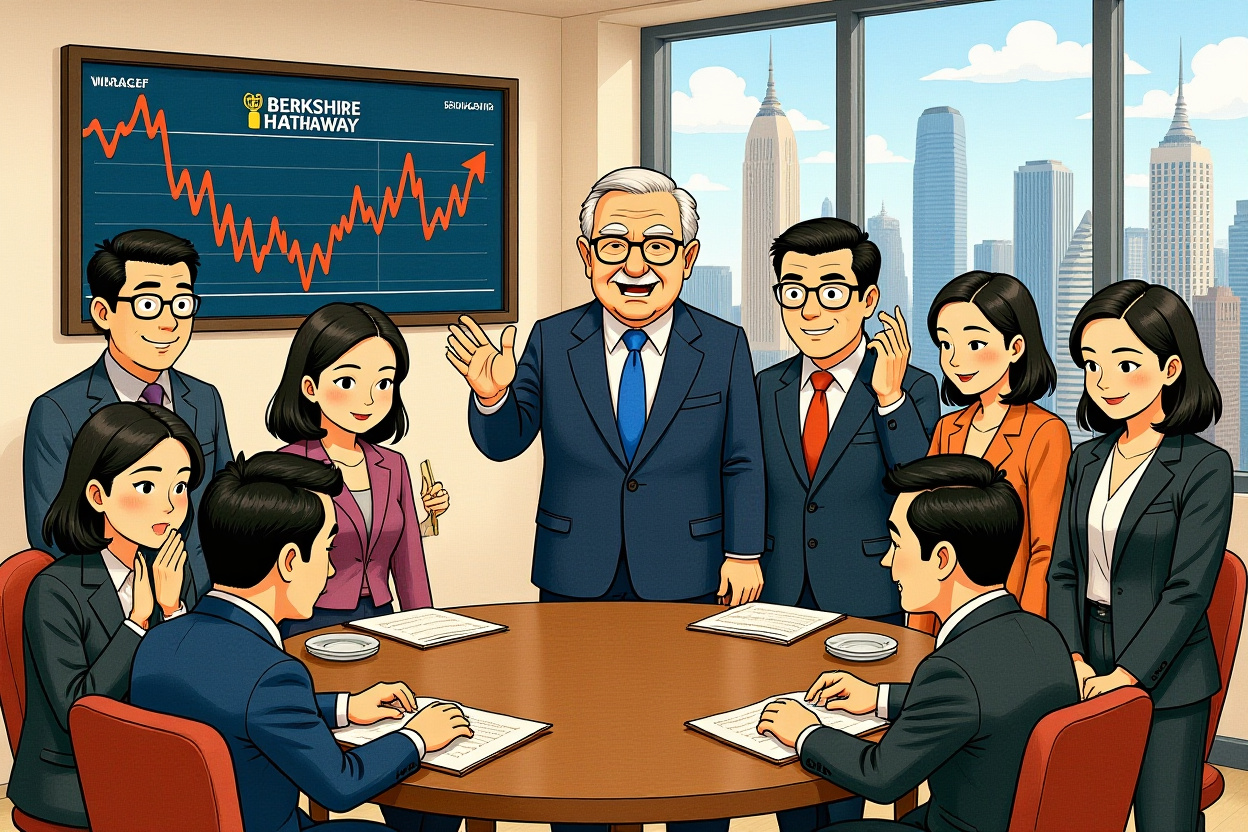
– Berkshire Hathaway officially separates chairman and CEO roles after nearly six decades under Warren Buffett (沃伦·巴菲特), signaling a major corporate governance shift.
– Greg Abel (格雷格·阿贝尔) is set to become CEO in 2026, with Buffett retaining the chairman position, ensuring continuity in leadership.
– The move aligns with global best practices and could influence investment strategies, particularly for holdings in Chinese markets like BYD (比亚迪).
– Recent $9.7 billion OxyChem acquisition underscores Berkshire’s active deal-making amid the transition.
– Investors should monitor how this CEO succession plan affects Berkshire’s approach to Asian investments and corporate stability.
A New Chapter in Corporate Leadership
The investment community is abuzz as Warren Buffett (沃伦·巴菲特), the legendary investor often called the Oracle of Omaha, initiates a pivotal CEO succession plan at Berkshire Hathaway. For decades, Buffett has embodied the conglomerate’s identity, steering it from a struggling textile mill to a global powerhouse. His decision to step down as CEO by year-end marks a historic moment, not just for Berkshire but for global markets, especially those with ties to Chinese equities where Berkshire holds significant stakes. This transition underscores the importance of robust leadership frameworks in sustaining long-term growth, a lesson resonating with investors worldwide.
The formal separation of chairman and CEO roles, detailed in a recent SEC filing, reflects a proactive approach to governance. By appointing Greg Abel (格雷格·阿贝尔) as successor, Berkshire aims to maintain its strategic vision while adapting to evolving market dynamics. This CEO succession plan is more than a corporate update; it’s a signal to international investors about the stability and future direction of one of the world’s most watched firms. As Chinese markets navigate regulatory shifts and economic reforms, Berkshire’s moves offer valuable insights into leadership resilience and investment continuity.
The Legacy of Buffett’s Dual Role
Since acquiring Berkshire Hathaway in 1965, Warren Buffett (沃伦·巴菲特) has served as both chairman and CEO, a dual role that became synonymous with the company’s culture of centralized decision-making. Under his leadership, Berkshire’s book value per share grew at an annualized rate of over 20% for decades, outperforming the S&P 500. This structure allowed Buffett to execute long-term strategies, such as investments in Coca-Cola and Apple, without the friction of divided authority. However, as corporate governance standards evolved globally, including in China where entities like the China Securities Regulatory Commission (CSRC) emphasize role separation, Berkshire’s model faced scrutiny.
Historical Impact on Governance
Buffett’s combined roles enabled swift, conviction-driven investments, but they also concentrated power. In recent years, proxy advisors and institutional investors have pushed for splits to enhance oversight. For instance, in Chinese markets, companies like Alibaba Group (阿里巴巴集团) have faced similar pressures, leading to governance reforms. Berkshire’s decision to separate roles aligns with these trends, potentially reducing risk and improving accountability. The CEO succession plan here isn’t just about replacing a leader; it’s about modernizing a legacy system to meet contemporary expectations.
Buffett’s Reflections on Leadership
At Berkshire’s annual meeting, Buffett acknowledged he never intended to be a lifetime CEO, dispelling myths about his permanence. This humility resonates in markets like China, where founder-led firms often grapple with succession. His planned daily presence post-transition assures stakeholders of continued involvement, similar to how Chinese executives maintain advisory roles. This aspect of the CEO succession plan highlights the balance between innovation and tradition, crucial for investors eyeing stability in volatile sectors.
Greg Abel’s Ascent to the Helm
Greg Abel (格雷格·阿贝尔), currently vice chairman of non-insurance operations, brings a proven track record to the CEO role. His background in energy and utilities, including leadership at Berkshire Hathaway Energy, positions him to steer the conglomerate’s diverse portfolio. Abel’s appointment, effective January 1, 2026, followed a unanimous board vote, underscoring internal confidence. For global investors, his rise signals a shift toward operational expertise, contrasting with Buffett’s investment-centric approach. This CEO succession plan could influence how Chinese companies, such as those in Berkshire’s portfolio like BYD (比亚迪), perceive leadership transitions.
Qualifications and Market Reception
Abel’s experience includes overseeing businesses with revenues exceeding $150 billion, demonstrating his capability to manage complex operations. Market reaction has been cautiously optimistic, with Berkshire’s stock showing resilience post-announcement. Analysts note that Abel’s pragmatic style may lead to more disciplined capital allocation, akin to trends in Chinese SOEs (State-Owned Enterprises) where efficiency gains are prioritized. The CEO succession plan here reinforces that succession isn’t a crisis but an opportunity for renewal, a perspective valuable for investors in emerging markets.
Comparative Global Leadership Models
Abel’s succession mirrors practices in firms like Tencent Holdings (腾讯控股), where founders gradually hand over operational duties. This CEO succession plan emphasizes continuity, with Buffett remaining as chairman to provide strategic guidance. For international fund managers, it underscores the importance of evaluating leadership depth in holdings, particularly in Chinese equities where governance can impact valuations. Resources like the Harvard Law School Forum on Corporate Governance offer further insights into global succession trends.
Corporate Governance and Strategic Implications
Berkshire’s role separation marks a significant evolution in its governance framework, aligning with standards promoted by bodies like the International Corporate Governance Network. The amended charter, effective immediately, aims to enhance board independence and risk management. This move could set a precedent for other multinationals, including those with substantial Chinese operations, where regulatory emphasis on governance is growing. The CEO succession plan is integral to this, ensuring that leadership changes don’t disrupt strategic objectives like value investing or geographic expansion.
Investment Decision-Making Post-Transition
With Abel as CEO, Berkshire may adopt a more decentralized approach to investments, potentially increasing focus on sectors like technology and renewable energy. This aligns with global shifts, including China’s dual circulation strategy, which emphasizes domestic innovation. Investors should assess how this CEO succession plan affects Berkshire’s appetite for Chinese assets, given its history of stakes in companies like PetroChina (中国石油). Tools like Bloomberg Terminal or SEC Edgar can help track filings for deeper analysis.
Risk Mitigation in Leadership Handovers
The structured transition mitigates risks associated with sudden changes, a lesson for markets where leadership vacuums can trigger volatility. By phasing the CEO succession plan over months, Berkshire allows for knowledge transfer and stakeholder adjustment. This approach is relevant for Chinese investors monitoring firms like Huawei, where succession planning is critical amid geopolitical tensions. Key takeaways include:
– Regular board evaluations to identify successor candidates early.
– Transparent communication to maintain investor confidence.
– Alignment with global governance codes to attract international capital.
Global Ripples and Chinese Market Connections
Berkshire’s leadership shift has profound implications for international investors, particularly those focused on Chinese equities. The conglomerate’s investments in Chinese companies, such as its longstanding stake in BYD (比亚迪), have yielded significant returns, and any strategic pivot under new leadership could affect these holdings. As China pursues policies like common prosperity, Berkshire’s CEO succession plan may influence how global capital flows into Chinese markets, emphasizing the need for governance that supports long-term partnerships.
Berkshire’s Footprint in China
Berkshire’s history with Chinese investments includes early bets on BYD (比亚迪), which have appreciated substantially, showcasing Buffett’s value investing principles. Under Abel, the focus might expand to sectors aligned with China’s 14th Five-Year Plan, such as green technology. This CEO succession plan could lead to more collaborative ventures, similar to joint ventures in automotive or fintech. Investors should monitor Berkshire’s annual reports and Chinese regulatory updates for clues on future directions.
Opportunities for Cross-Border Alliances
The transition coincides with China’s financial opening, offering chances for Berkshire to deepen ties with entities like the Shanghai Stock Exchange (上海证券交易所). Abel’s operational background might facilitate partnerships in infrastructure or ESG initiatives, areas where Chinese firms excel. This CEO succession plan thus serves as a case study in navigating global interdependencies, encouraging investors to diversify with an eye on leadership stability. For further reading, refer to the People’s Bank of China (中国人民银行) reports on foreign investment trends.
Recent Moves and Future Trajectory
Berkshire’s announcement of a $9.7 billion all-cash acquisition of OxyChem, Occidental Petroleum’s chemical subsidiary, highlights its aggressive deal-making amid the leadership transition. This deal, the largest in nearly three years, signals confidence in Abel’s ability to oversee complex integrations. It also reflects broader trends in energy and chemicals, sectors where Chinese companies like Sinopec (中国石化) are major players. Analyzing this in the context of the CEO succession plan reveals Berkshire’s commitment to growth, even during periods of change.
Analyzing the OxyChem Acquisition
The OxyChem purchase aligns with Berkshire’s strategy of investing in essential, cash-generating businesses. It could enhance synergies with existing holdings and provide a buffer against economic cycles. For Chinese market observers, this mirrors moves by firms like CNOOC (中国海洋石油), which pursue strategic acquisitions to bolster resilience. The CEO succession plan ensures that such decisions are backed by a cohesive leadership team, reducing execution risks. Key data points include:
– OxyChem’s annual revenue of approximately $4 billion.
– Potential for cost savings through integration with Berkshire’s other energy assets.
– Implications for global chemical markets, where China is a dominant producer.
Buffett’s Enduring Influence and Company Vision
Despite stepping down as CEO, Buffett’s role as chairman will allow him to shape Berkshire’s culture and investment philosophy. His daily office attendance post-transition mirrors practices in Chinese family businesses, where elders provide mentorship. This CEO succession plan balances innovation with tradition, offering a model for firms worldwide. Investors should expect continued emphasis on value investing, with potential adjustments to geographic focus under Abel’s leadership.
Navigating the Future of Investment Leadership
Berkshire Hathaway’s leadership restructuring and the CEO succession plan represent a milestone in corporate history, with lessons for global investors. The separation of roles enhances governance, while Abel’s appointment ensures operational excellence. For those engaged in Chinese equities, this transition underscores the importance of monitoring leadership changes in key holdings, as they can signal shifts in strategy and risk. As markets evolve, investors should leverage resources like SEC filings and annual reports to stay informed. Ultimately, Berkshire’s move invites a proactive approach to portfolio management, emphasizing that even the most iconic firms must adapt to thrive. Consider reviewing your investment strategies to incorporate governance factors, and explore how succession planning in other markets, such as China, could impact your returns.