



Executive Summary
Key takeaways from the recent market movements:
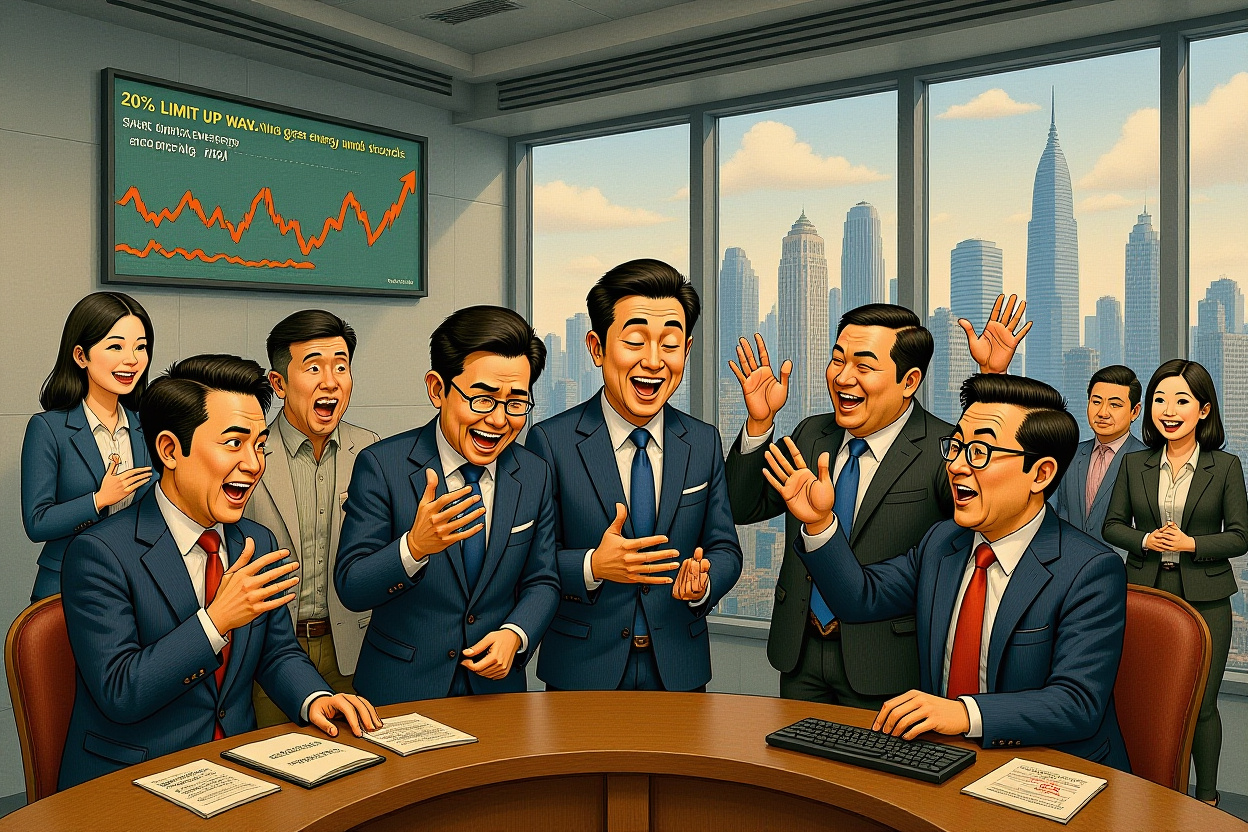
- A sudden 20% limit-up wave has swept through specific A-share sectors, driven by policy tailwinds and investor optimism.
- Technology and green energy stocks are at the forefront, reflecting broader economic shifts and government support.
- Regulatory changes from 中国证监会 (China Securities Regulatory Commission) are influencing market liquidity and volatility.
- Historical data suggests such surges often precede short-term corrections, requiring cautious portfolio management.
- International investors should monitor sector rotations and policy announcements for entry or exit opportunities.
Unprecedented Surge in A-Share Markets
The Chinese equity markets experienced a dramatic shift this week, with a 20% limit-up wave electrifying specific sectors. This surge, reminiscent of past bullish cycles, has captured the attention of global institutional investors scrambling to decode its implications. The 20% limit-up wave underscores the volatile yet opportunistic nature of A-shares, where regulatory nudges and economic data converge to create explosive movements.
Market participants noted that trading volumes spiked by over 30% in targeted industries, fueled by retail frenzy and algorithmic trading. The 上海证券交易所 (Shanghai Stock Exchange) and 深圳证券交易所 (Shenzhen Stock Exchange) both reported heightened activity, with circuit breakers triggering multiple times. This 20% limit-up wave isn’t just a statistical anomaly—it’s a bellwether for underlying investor sentiment and macroeconomic trends.
Mechanics of Limit-Up Rules in China
In Chinese markets, a limit-up refers to the maximum daily price increase allowed for a stock, typically set at 10% for main board listings and 20% for 科创板 (Sci-Tech Innovation Board) and 创业板 (ChiNext). The recent 20% limit-up wave primarily affected growth-oriented boards, where volatility thresholds are higher. For instance, stocks in renewable energy and semiconductor sectors hit their ceilings within hours of market open, reflecting pent-up demand.
Data from 万得 (Wind Information) shows that over 50 companies across these sectors locked in limit-up positions, with aggregate gains exceeding 500 billion yuan in market capitalization. This 20% limit-up wave highlights the effectiveness of China’s market stabilization mechanisms, but also raises concerns about speculative bubbles. Historical parallels, such as the 2015 boom-bust cycle, remind investors to balance enthusiasm with due diligence.
Sectors Driving the 20% Limit-Up Wave
Technology and innovation-focused industries emerged as the primary beneficiaries of this rally. Companies in 人工智能 (AI) and 新能源汽车 (new energy vehicles) led the charge, buoyed by state-backed initiatives like 中国制造2025 (Made in China 2025). The 20% limit-up wave here signals confidence in China’s long-term industrial upgrading strategy, which prioritizes self-reliance in critical technologies.
Concurrently, green energy stocks soared amid new carbon neutrality pledges from the 国家发展和改革委员会 (National Development and Reform Commission). Solar and wind power firms, such as 隆基绿能 (LONGi Green Energy Technology), saw their shares appreciate rapidly, drawing comparisons to global ESG investing trends. This sector-specific 20% limit-up wave illustrates how policy directives can swiftly recalibrate market dynamics.
Policy Tailwinds and Investor Behavior
Government stimuli, including tax incentives and R&D subsidies, have amplified the 20% limit-up wave. A recent announcement from 国务院 (State Council) regarding tech infrastructure spending triggered a cascade of buy orders from both domestic and qualified foreign institutional investors (QFII). Experts like 李迅雷 (Li Xunlei), chief economist at 中泰证券 (Zhongtai Securities), attribute the momentum to coordinated fiscal and monetary easing.
Quotes from industry leaders reinforce this view. 马云 (Jack Ma), founder of 阿里巴巴集团 (Alibaba Group), recently emphasized in a private forum that digital transformation investments are accelerating post-pandemic. Similarly, 董明珠 (Dong Mingzhu), chairperson of 格力电器 (Gree Electric Appliances), highlighted innovation in smart manufacturing as a key growth driver. The 20% limit-up wave thus mirrors strategic shifts in corporate priorities.
Regulatory Framework and Market Stability
The 中国证监会 (China Securities Regulatory Commission) has played a dual role in both facilitating and tempering the 20% limit-up wave. Recent adjustments to margin trading rules and short-selling restrictions have injected liquidity, while circuit breakers prevent excessive speculation. Regulatory filings indicate that 证监会 (CSRC) is monitoring leveraged positions closely to avoid systemic risks akin to the 2015 market crash.
Moreover, collaborations with 中国人民银行 (People’s Bank of China) on monetary policy have ensured that interbank rates remain stable, supporting equity valuations. The 20% limit-up wave occurs within a broader context of financial reforms, including the upcoming 北京证券交易所 (Beijing Stock Exchange) launch, which aims to diversify funding channels for small and medium enterprises (SMEs).
Historical Precedents and Risk Assessment
Analyzing past limit-up episodes reveals patterns that inform current strategies. The 20% limit-up wave of 2020, centered on 生物医药 (biopharmaceutical) stocks, was followed by a 15% correction within three months. Risk metrics such as the 沪深300 (CSI 300) volatility index now suggest elevated but manageable exposure levels.
Investors should note that sectors experiencing a 20% limit-up wave often face profit-taking pressure. Data from 晨星 (Morningstar) shows that mutual funds focused on A-shares have increased cash holdings by 5% in response, hedging against potential downturns. Diversification into 港股 (Hong Kong-listed) H-shares or 债券 (bonds) could mitigate concentration risks.
Global Implications and Investment Strategies
For international fund managers, the 20% limit-up wave presents both opportunities and pitfalls. Exchange-traded funds (ETFs) like iShares MSCI China A-Share ETF have seen inflows spike, reflecting renewed interest. However, currency fluctuations in 人民币 (renminbi) and geopolitical tensions necessitate agile asset allocation.
Actionable strategies include:
- Overweighting sectors with strong policy backing, such as 5G and clean energy.
- Using derivatives like 期权 (options) to hedge against volatility after a 20% limit-up wave.
- Monitoring 宏观经济数据 (macroeconomic data) releases, including PMI and CPI, for timing entries.
Expert Insights and Forward Guidance
Prominent analysts like 高善文 (Gao Shanwen) of 安信证券 (Essence Securities) caution that the 20% limit-up wave may not sustain without earnings growth. In a recent webinar, he advised focusing on companies with ROE above 15% and low debt-to-equity ratios. Similarly, 刘鹤 (Liu He), Vice Premier of China, has reiterated commitments to market-led reforms in speeches, calming nerves about state intervention.
Looking ahead, the 20% limit-up wave could catalyze broader index gains if supported by Q2 GDP data and corporate earnings. Investors should watch for 证监会 (CSRC) guidelines on foreign ownership limits and 科创板 (Star Market) IPOs, which may unlock new avenues. The 20% limit-up wave is a reminder that Chinese equities remain a high-growth, high-reward segment in global portfolios.
Synthesizing Market Dynamics for Informed Decisions
The 20% limit-up wave in A-shares underscores the interplay of policy, sentiment, and global capital flows. While short-term gains are enticing, a disciplined approach rooted in fundamental analysis is crucial. Sector rotations, regulatory updates, and macroeconomic indicators will dictate whether this surge evolves into a sustained rally or a transient spike.
As markets digest these developments, proactive engagement with research from 中金公司 (China International Capital Corporation Limited) and 摩根士丹利华鑫证券 (Morgan Stanley Huaxin Securities) can provide edge. Consider rebalancing portfolios to include defensive assets while selectively capitalizing on the 20% limit-up wave’s momentum. The next steps involve closely tracking 证监会 (CSRC) announcements and earnings seasons to navigate this dynamic landscape effectively.