



Executive Summary
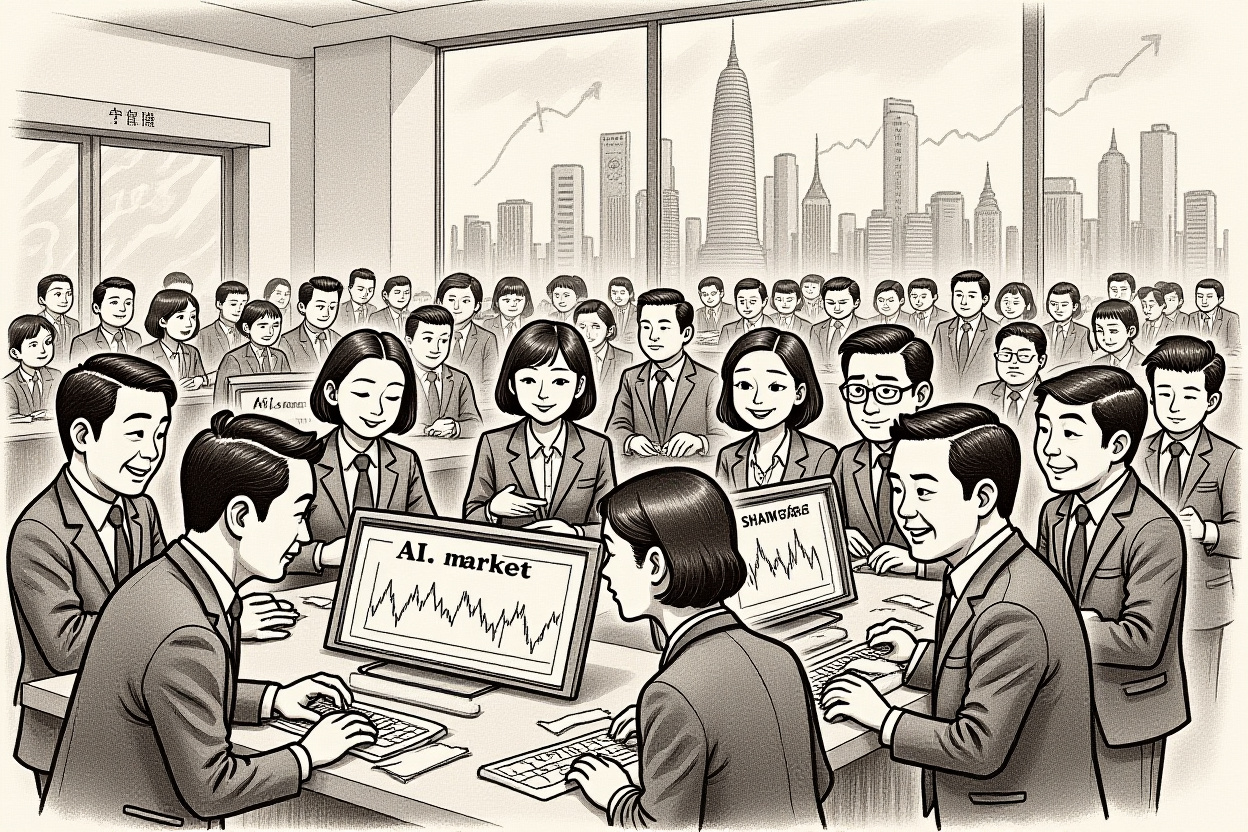
Key insights from the Phoenix Bay Area Financial Forum 2025 highlight critical developments in global AI markets and their implications for investors.
- Artificial intelligence has emerged as the sole unifying theme across global capital markets, driving synchronized movements rather than isolated performances.
- Nvidia’s dominance in AI infrastructure makes it a bellwether for the entire sector, with capital expenditures flowing disproportionately to its solutions.
- Any shift in expectations for leading AI stocks, particularly in the U.S., could trigger a global AI sector resonance, affecting markets from Japan to China.
- Investors must prioritize understanding this interconnectedness over traditional diversification to navigate potential volatilities.
- Proactive monitoring of AI consensus trends is essential for risk management and capitalizing on growth opportunities.
The Unifying Force of AI in Global Capital Markets
At the recent Phoenix Bay Area Financial Forum 2025 in Guangzhou, industry leaders gathered to dissect the evolving economic landscape. Fu Peng (付鹏), Chief Economist of Northeast Securities (东北证券), delivered a compelling analysis that underscores artificial intelligence as the central driver of contemporary market dynamics. His observations reveal that AI is no longer a niche technological advancement but a foundational element influencing equity performances worldwide.
The concept of global AI sector resonance has become increasingly relevant, as national policies and investment flows align around AI development. This resonance signifies that markets are moving in concert, driven by shared expectations and technological dependencies. For investors, this means that isolated market analysis may no longer suffice; a holistic, global perspective is imperative.
From National Strategy to International Consensus
Fu Peng emphasized that AI development is treated as a national policy in many countries, fueling cross-border investments and collaborations. In China, initiatives like the Made in China 2025 plan have accelerated AI integration into various sectors, from manufacturing to finance. Similarly, the U.S. and European Union have launched strategic AI frameworks, creating a web of interdependent growth.
Data from the International Monetary Fund (IMF) shows that AI-related investments have grown by over 20% annually in major economies since 2020. This collective focus has cemented AI as a common thread, reducing divergence and amplifying resonance across markets. For instance, when the U.S. announces breakthroughs in AI research, Asian markets often experience correlated upticks in technology stocks.
Quantifying AI’s Market Impact
Statistical evidence supports the rise of global AI sector resonance. An analysis of the MSCI World Index reveals that AI-focused companies now account for nearly 15% of its composition, up from 5% a decade ago. Moreover, correlation coefficients between U.S. and Chinese AI equities have increased from 0.3 to 0.7 over the past five years, indicating stronger synchronous movements.
- AI sector capitalization has surpassed $5 trillion globally, with projections to double by 2030.
- Cross-border venture capital funding in AI startups exceeded $100 billion in 2024, highlighting the interconnected nature of investments.
- Regulatory bodies like the China Securities Regulatory Commission (CSRC) have issued guidelines to streamline AI innovations, further integrating markets.
Nvidia: The Linchpin of the AI Ecosystem
Nvidia’s role in the AI landscape cannot be overstated. As Fu Peng noted, the company’s dominance in computing infrastructure positions it as the primary beneficiary of AI capital expenditures. Its graphics processing units (GPUs) and software solutions are integral to machine learning and data processing, making it a critical node in the global AI supply chain.
This centrality means that Nvidia’s performance directly influences the global AI sector resonance. When the company reports strong earnings, it bolsters confidence across AI-related equities worldwide. Conversely, any signs of weakness can trigger broad-based sell-offs, as seen in recent market corrections.
Infrastructure Dominance and Capital Flows
Nvidia controls an estimated 80% of the data center GPU market, according to industry reports. This market share translates into significant revenue streams, with the company’s data center segment growing by over 50% year-over-year in recent quarters. Fu Peng described Nvidia as the industry’s toll collector, where nearly every AI participant’s spending eventually flows to its hardware and solutions.
For example, Chinese tech giants like Alibaba Group (阿里巴巴集团) and Tencent Holdings (腾讯控股) rely heavily on Nvidia’s chips for their cloud and AI services. This dependency creates a direct channel for global AI sector resonance, where shifts in Nvidia’s outlook immediately affect these companies’ stock performances.
Financial Performance and Market Expectations
Nvidia’s stock has outperformed major indices, with its valuation soaring due to AI-driven demand. However, Fu Peng cautioned that future adjustments in U.S. stocks may stem from changes in AI产业链 (AI industry chain) expectations rather than traditional valuation metrics. The company’s price-to-earnings ratio has expanded significantly, reflecting high market expectations that could be vulnerable to sentiment shifts.
- Nvidia’s revenue reached $60 billion in fiscal 2024, with AI-related segments contributing over 70%.
- The company’s market capitalization briefly exceeded $3 trillion in 2024, rivaling other tech behemoths.
- Analysts from Goldman Sachs (高盛) project that AI infrastructure spending will grow to $500 billion by 2027, sustaining Nvidia’s central role.
Understanding Market Resonance in the AI Era
The phenomenon of global AI sector resonance challenges conventional investment theories that emphasize diversification across geographies. Fu Peng explained that under the strong AI共识 (AI consensus), markets exhibit synchronized trends rather than a seesaw effect where gains in one region offset losses in another. This resonance is rooted in a shared belief in AI’s transformative potential, transcending national boundaries.
Investors must recognize that the days of decoupled market performances are fading. As AI technologies become ubiquitous, their impact on productivity and profitability creates parallel trajectories for equities globally. This understanding is crucial for developing effective investment strategies in the current landscape.
The Seesaw Effect vs. Synchronized Movements
Historically, markets often moved inversely—when U.S. stocks declined, emerging markets might rise, providing a hedge. However, the AI era has introduced a new dynamic. Fu Peng illustrated this with a rhetorical question: If the leading U.S. AI sector’s expectations change, can Japanese stocks rise independently? The answer, he asserted, is no, due to the pervasive global AI sector resonance.
Case in point: When the U.S. Federal Reserve hinted at tightening monetary policy in 2024, AI stocks in Asia, including those in the Shenzhen Stock Exchange (深圳证券交易所), experienced simultaneous declines. This synchronization underscores the need for investors to monitor global AI trends rather than relying on regional insulation.
Case Studies: U.S., Japan, and Chinese AI Sectors
Examining specific markets reveals the depth of global AI sector resonance. In the U.S., companies like Nvidia and AMD lead the charge, while in Japan, firms such as SoftBank Group (软银集团) are heavily invested in AI startups. In China, entities like Baidu (百度) and SenseTime (商汤科技) drive innovation, yet their stock movements often mirror U.S. counterparts.
- In 2024, a 10% drop in Nvidia’s stock correlated with a 7% decline in the Hang Seng Tech Index within days.
- Japanese AI-related equities showed a 0.8 correlation with the NASDAQ AI Index over the past year.
- Chinese AI firms have raised over $50 billion in capital, much of it tied to global investor expectations.
Implications for Global Investors
The interconnected nature of AI markets necessitates a shift in investment approaches. Fu Peng advised that investors should focus on the quality and sustainability of AI innovations rather than geographic allocations. This global AI sector resonance means that diversification must occur within the AI ecosystem itself—across different segments like hardware, software, and applications—rather than across regions.
Moreover, risk management strategies should account for the heightened correlation among AI equities. Traditional tools like beta analysis may need adjustments to reflect the unique volatilities of the AI sector. Investors should also stay abreast of regulatory changes, as policies in one country can ripple through global markets.
Portfolio Strategies in a Resonant Market
To navigate global AI sector resonance, consider a balanced portfolio that includes leaders like Nvidia alongside emerging players in various regions. Exchange-traded funds (ETFs) focused on AI and technology offer diversified exposure, but due diligence is essential to avoid overconcentration. Fu Peng recommended monitoring quarterly earnings reports and guidance from key companies to anticipate market shifts.
For instance, if Nvidia revises its revenue projections, investors should reassess holdings in related sectors globally. Similarly, announcements from Chinese regulators regarding AI ethics or data security can impact international AI stocks, highlighting the need for a vigilant, informed approach.
Risk Assessment and Mitigation Techniques
The high interdependence of AI-related equities introduces systemic risks. Fu Peng warned that a downturn in the U.S. AI sector could trigger a cascade of sell-offs worldwide. To mitigate this, investors should:
- Diversify within AI sub-sectors, such as investing in both infrastructure and application companies.
- Maintain liquidity reserves to capitalize on buying opportunities during market dips.
- Use hedging instruments like options on AI indices to protect against downside risks.
- Engage with financial advisors who specialize in technology and global markets for tailored strategies.
Forward-Looking Analysis: What’s Next for AI Markets?
The trajectory of global AI sector resonance will likely intensify as technologies like generative AI and quantum computing evolve. Fu Peng projected that AI will account for over 30% of global GDP growth in the next decade, reinforcing its role as a market unifier. However, this growth comes with challenges, including ethical concerns and regulatory scrutiny.
Investors should prepare for increased volatility as AI milestones—such as artificial general intelligence (AGI) breakthroughs—could amplify market reactions. Collaboration between governments and private sectors will be pivotal in shaping a stable AI ecosystem. The People’s Bank of China (中国人民银行) and other central banks are already exploring digital currencies and AI in monetary policy, which could further intertwine markets.
Regulatory Developments and Their Impact
Regulatory frameworks are evolving to address AI’s rapid expansion. In China, the Cyberspace Administration of China (国家互联网信息办公室) has introduced guidelines for AI governance, affecting companies like ByteDance (字节跳动). In the U.S., the Securities and Exchange Commission (SEC) is evaluating disclosure requirements for AI risks. These regulations will influence the global AI sector resonance by standardizing practices and potentially curbing excesses.
For example, stricter data privacy laws in the European Union could impact AI companies worldwide, necessitating adaptive business models. Investors should monitor these developments through official channels and industry reports to anticipate market implications.
Technological Advancements and New Opportunities
Emerging technologies promise to reshape the AI landscape. Advances in neuromorphic computing and edge AI could decentralize some of Nvidia’s dominance, creating new investment avenues. Fu Peng highlighted that countries investing in R&D, such as through China’s National AI Development Plan, may see their markets gain prominence in the global AI sector resonance.
- Quantum AI research is accelerating, with potential applications in finance and healthcare.
- 5G and IoT integrations are expanding AI’s reach, benefiting companies in sectors like autonomous vehicles and smart cities.
- Global partnerships, such as those between U.S. and Chinese universities, are fostering innovation that transcends borders.
Synthesizing Key Insights for Strategic Action
The insights from Fu Peng and the Phoenix Bay Area Financial Forum 2025 underscore that global AI sector resonance is a defining feature of modern equity markets. AI’s role as a common driver means that investors cannot afford to view markets in isolation. Nvidia’s performance remains a critical indicator, but broader consensus trends will dictate market movements.
To thrive in this environment, prioritize continuous learning and adaptability. Engage with reliable sources, such as financial news platforms and regulatory announcements, to stay informed. Consider consulting with experts who can provide nuanced analyses of AI developments. By embracing a global perspective and proactive strategy, you can turn the challenges of resonance into opportunities for growth and resilience in your investment portfolio.