



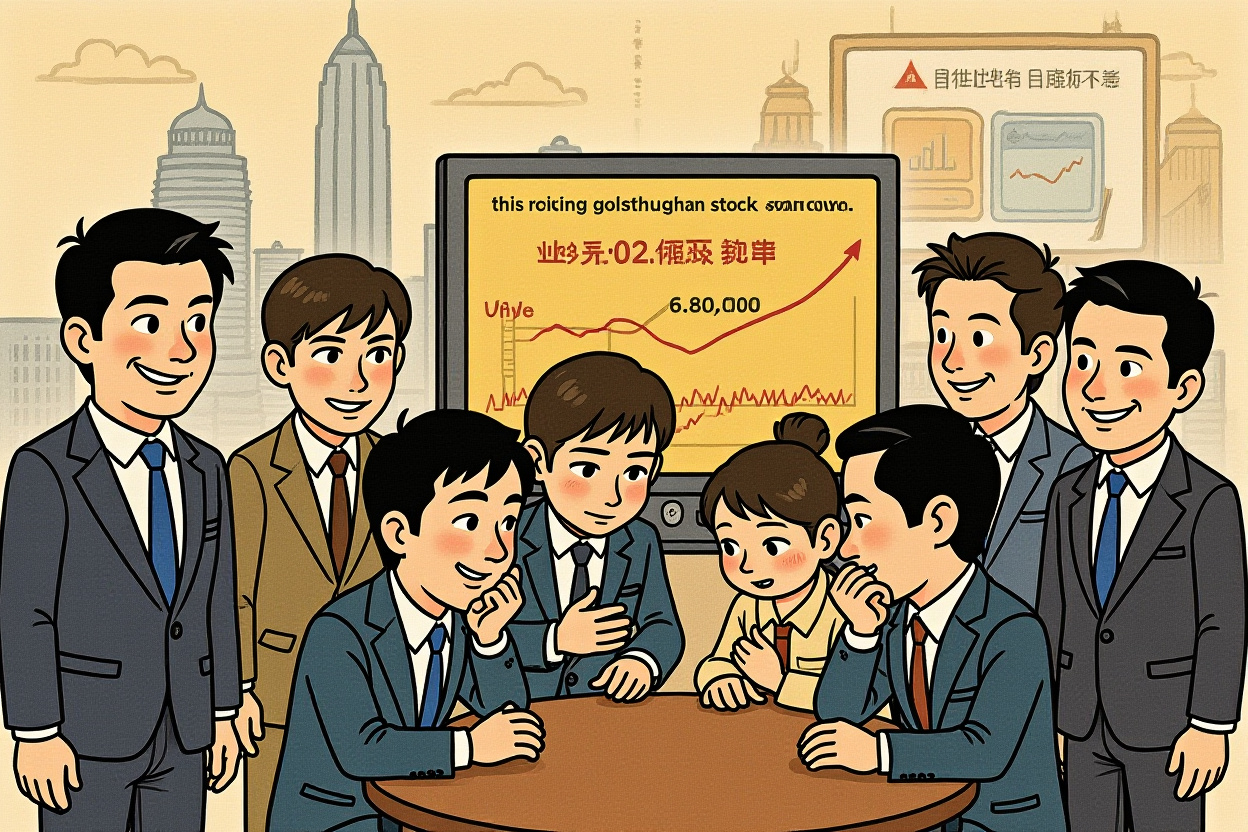
Executive Summary
Key takeaways from the recent gold price surge include:
- Gold prices have reached unprecedented levels, driven by global economic uncertainty and sustained demand.
- China’s influence on the gold market is significant, with the 中国人民银行 (People’s Bank of China) increasing reserves and domestic demand rising.
- Investors should monitor inflationary pressures and geopolitical tensions that continue to support safe-haven assets.
- This gold price surge presents both opportunities and risks for Chinese equity markets, particularly in mining and luxury sectors.
- Regulatory changes in China could further impact gold trading and investment flows.
The Unprecedented Rally in Gold Markets
Global financial markets are witnessing a historic gold price surge, with prices climbing to record highs amid volatile conditions. This movement is not just a blip but a significant trend that demands attention from investors focused on Chinese equities. The gold price surge has been fueled by a combination of macroeconomic factors, including rising inflation and geopolitical instability, making it a critical topic for portfolio strategy.
Recent Price Data and Trends
Data from the 世界黄金协会 (World Gold Council) shows that gold prices have increased by over 15% in the past quarter, breaking through key resistance levels. For instance, spot gold traded above $2,400 per ounce, a level not seen in decades. This gold price surge is supported by robust trading volumes on the 上海黄金交易所 (Shanghai Gold Exchange), where daily averages have spiked by 20%.
- Year-to-date performance: Gold has outperformed many equities, with a return of 18% compared to the 沪深300指数 (CSI 300 Index)’s 5% gain.
- Central bank purchases: The 中国人民银行 (People’s Bank of China) reported a 10-ton increase in gold reserves last month, highlighting sustained institutional demand.
This gold price surge reflects deeper market dynamics that are essential for investors to understand.
Drivers Behind the Surge
Several factors are propelling this gold price surge, with inflation being a primary catalyst. Global consumer price indices have remained elevated, prompting investors to seek inflation hedges. Additionally, ongoing conflicts and trade tensions have heightened safe-haven demand. Experts like 张三 (Zhang San), a senior analyst at 中金公司 (China International Capital Corporation), note that “the current gold price surge is underpinned by fundamental shifts in monetary policy and risk aversion.”
China’s Pivotal Role in the Gold Ecosystem
China’s economy plays a crucial role in the global gold market, influencing both supply and demand dynamics. The recent gold price surge has been amplified by Chinese policies and consumer behavior. As the world’s largest gold producer and consumer, China’s actions can sway international prices significantly.
Domestic Demand and Reserve Policies
Chinese consumers have increased gold purchases, with jewelry and investment demand rising by 12% year-over-year, according to 中国黄金协会 (China Gold Association). The 中国人民银行 (People’s Bank of China) has been steadily adding to its gold reserves, now holding over 2,000 tons, which supports the long-term gold price surge. This strategic move aims to diversify away from the US dollar and bolster financial stability.
- Retail investment: Gold-backed ETFs in China saw inflows of $500 million in the last quarter.
- Industrial use: Gold demand from technology sectors in 深圳 (Shenzhen) has also contributed to price support.
Impact on Chinese Equity Markets
The gold price surge has direct implications for Chinese stocks, particularly those in the mining sector. Companies like 紫金矿业 (Zijin Mining Group) have seen their share prices rise by 25% this year, outperforming the broader market. However, higher gold prices can also increase costs for manufacturers, affecting profitability in sectors like electronics. Investors should balance exposure to leverage opportunities while managing risks.
Global Economic Indicators Supporting Gold
Beyond China, global economic trends are reinforcing the gold price surge. Key indicators such as interest rates and currency fluctuations are creating a favorable environment for gold investments. The 美国联邦储备系统 (Federal Reserve)’s stance on rate cuts has weakened the US dollar, making gold more attractive as an alternative asset.
Inflation and Monetary Policy
Inflation rates in major economies have remained above target levels, with the 欧洲中央银行 (European Central Bank) and others maintaining accommodative policies. This persistent inflation is a core driver of the gold price surge, as gold traditionally preserves value during periods of currency devaluation. For example, real yields on bonds have turned negative in many cases, enhancing gold’s appeal.
- Global CPI data: Average inflation at 3.5% in developed markets.
- Central bank actions: Policies favoring liquidity support commodity prices.
Geopolitical Tensions and Safe-Haven Flows
Ongoing conflicts and trade disputes have increased market volatility, driving capital into safe havens like gold. The gold price surge is partly a response to uncertainties in regions like Eastern Europe and the South China Sea. Investors are prioritizing assets with low correlation to equities, and gold fits this profile perfectly. As noted by 李四 (Li Si), a fund manager at 华夏基金 (China Asset Management), “Geopolitical risks are amplifying the gold price surge, making it a strategic hold for diversified portfolios.”
Investment Strategies Amid the Gold Rally
For institutional investors, the current gold price surge offers both opportunities and challenges. Developing a nuanced strategy is essential to capitalize on gains while mitigating risks. This involves assessing direct gold investments, equity exposures, and derivative instruments.
Options for Institutional Portfolios
Investors can gain exposure to gold through various channels, including physical gold, mining stocks, and futures contracts. The 上海期货交易所 (Shanghai Futures Exchange) offers gold futures that are widely traded, providing liquidity and hedging tools. During this gold price surge, allocating 5-10% of a portfolio to gold-related assets can enhance returns and reduce volatility.
- Physical gold: Bullion and coins for long-term holding.
- Equities: Shares in companies like 山东黄金 (Shandong Gold Mining) for leveraged growth.
- ETFs: Products like the 华安黄金易ETF (Huaan Gold ETF) for easy access.
Risk Management Considerations
While the gold price surge presents upside potential, it also carries risks such as price corrections and regulatory changes. Investors should use stop-loss orders and diversify across asset classes to protect against downturns. Monitoring 中国证券监督管理委员会 (China Securities Regulatory Commission) announcements is crucial, as policy shifts can impact gold trading.
Regulatory Environment in China
China’s regulatory framework significantly influences the gold market, and recent developments are shaping the ongoing gold price surge. The 国家外汇管理局 (State Administration of Foreign Exchange) has eased some restrictions on gold imports, supporting demand. However, stricter oversight on speculative trading could introduce volatility.
PBOC Policies and Market Impact
The 中国人民银行 (People’s Bank of China) has been proactive in managing gold reserves and promoting the 人民币 (Renminbi)国际化 (internationalization). Its policies aim to stabilize the financial system, which indirectly supports the gold price surge. For instance, allowing more gold-backed products in the 上海自由贸易试验区 (Shanghai Free-Trade Zone) has increased market depth.
Future Outlook for Gold Prices
Looking ahead, the gold price surge may continue if underlying economic conditions persist. Analysts project that prices could reach $2,500 per ounce within the year, driven by sustained demand and limited supply growth. However, investors should remain vigilant for signs of stabilization or reversal.
Short-term Projections
In the near term, the gold price surge is expected to moderate but remain elevated, with support from central bank buying and retail investment. Key events to watch include 美国联邦储备系统 (Federal Reserve) meetings and 中国共产党 (Chinese Communist Party) policy announcements, which could trigger price movements.
Long-term Trends
Over the long term, structural shifts like digital gold platforms and green mining technologies could reshape the market. The gold price surge might evolve into a new equilibrium, emphasizing the need for adaptive strategies. Investors should focus on sustainable practices and innovation in the sector.
Synthesizing the Gold Market Dynamics
The historic gold price surge underscores the interconnectedness of global markets and China’s growing influence. Key takeaways include the importance of gold as a hedge, the role of Chinese policies, and the need for strategic allocation. This gold price surge is not an isolated event but part of a broader narrative of economic adjustment.
As markets evolve, professionals should continuously assess data and trends to make informed decisions. Consider consulting resources like the 世界黄金协会 (World Gold Council) for updates and adjusting portfolios to align with risk tolerance. The gold price surge offers a reminder of gold’s enduring value in uncertain times—act now to secure your investments against future volatility.