



Executive Summary
Key takeaways from the recent market movement include:
- A significant broad market decline affected over 4900 stocks, highlighting systemic risks in Chinese equities.
- Economic slowdown concerns and regulatory tightening by 中国证监会 (China Securities Regulatory Commission) contributed to the sell-off.
- Sectoral analysis shows technology and consumer discretionary stocks were hardest hit, while utilities and healthcare showed relative resilience.
- Foreign investor outflow accelerated, impacting 人民币 (Renminbi) stability and global index weights.
- Short-term volatility is expected, but long-term opportunities may emerge for strategic investors.
Market Overview: Unpacking the Broad Decline
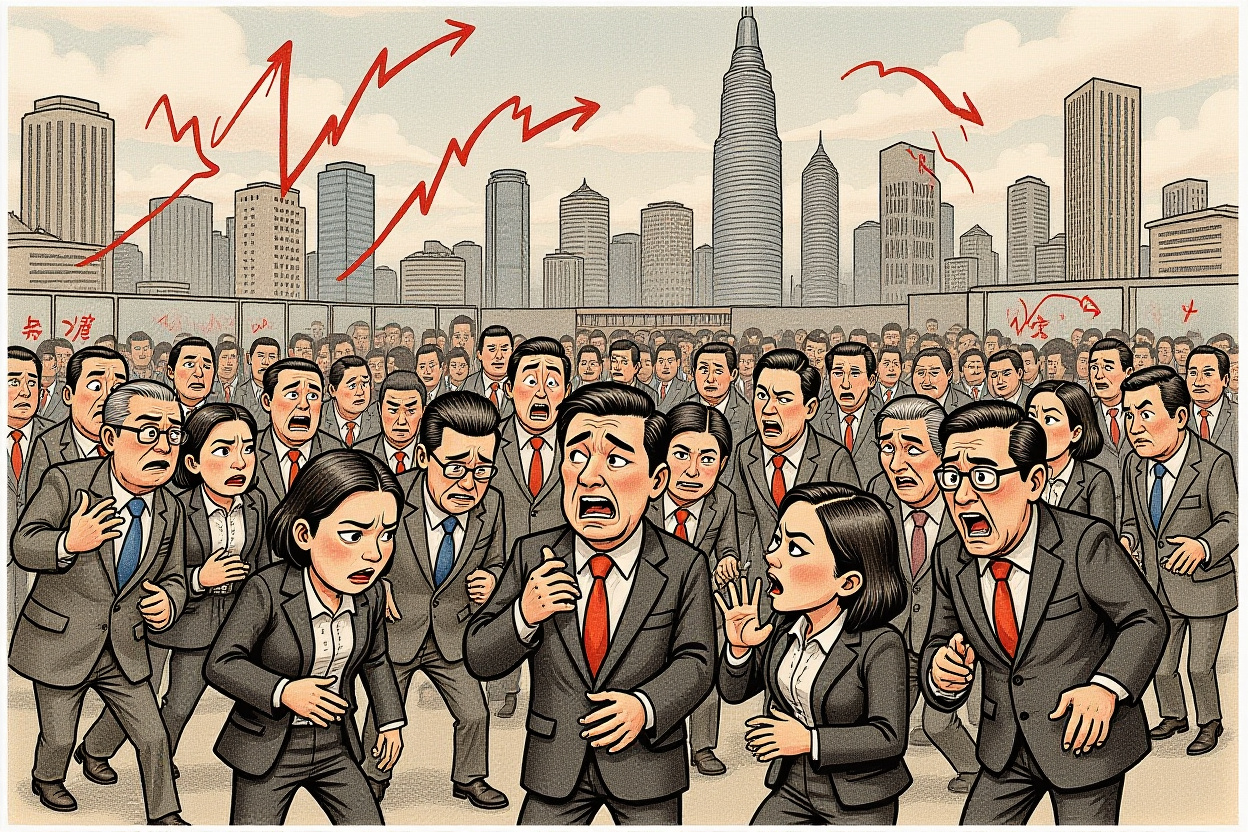
The Chinese equity markets experienced a sharp downturn, with the 上证指数 (Shanghai Composite Index) dropping by 3.2% and the 深证成指 (Shenzhen Component Index) falling 4.1% in a single session. This broad market decline saw over 4900 stocks closing in negative territory, marking one of the worst performances this year. The sell-off was triggered by a combination of weak economic data and heightened regulatory scrutiny, causing panic among both retail and institutional investors. As trading volumes surged, liquidity concerns emerged, exacerbating the downward spiral.
Historical context reveals that such broad market declines are rare but not unprecedented; similar events occurred during the 2015 market crash and the 2018 trade war tensions. However, the current scenario is distinct due to post-pandemic recovery uncertainties and global monetary policy shifts. The focus phrase ‘broad market decline’ aptly captures the scale of this event, which has raised alarms about the stability of 中国资本市场 (Chinese capital markets). Experts from 中金公司 (China International Capital Corporation Limited) note that the decline reflects underlying fragilities, necessitating cautious investment approaches.
Economic Data Points and Indicators
Recent releases from 国家统计局 (National Bureau of Statistics) showed 国内生产总值 (GDP) growth slowing to 4.9% in the last quarter, below expectations. Additionally, 工业生产 (industrial production) and 零售销售 (retail sales) figures disappointed, signaling weakening domestic demand. This broad market decline was further fueled by inflation concerns, with 消费者物价指数 (Consumer Price Index) rising by 2.5% year-over-year, prompting fears of monetary tightening by 中国人民银行 (People’s Bank of China).
- GDP growth missed forecasts, contributing to investor pessimism.
- Industrial output grew by only 3.8%, down from previous months.
- Retail sales increased by 2.5%, highlighting consumer caution.
Regulatory Environment Shifts
Authorities like 中国证监会 (China Securities Regulatory Commission) have intensified oversight on sectors such as technology and education, leading to uncertainty. Recent fines imposed on 阿里巴巴集团 (Alibaba Group) and 腾讯控股 (Tencent Holdings) for antitrust violations have dampened investor sentiment. This regulatory crackdown is part of a broader effort to align with 共同富裕 (common prosperity) goals, but it has immediate negative impacts on equity valuations.
Sectoral Impact Analysis
The broad market decline disproportionately affected certain sectors. Technology stocks, represented by indices like 创业板 (ChiNext), fell by over 6%, with giants like 美团 (Meituan) and 京东集团 (JD.com) losing significant value. Consumer discretionary and real estate sectors also suffered, while defensive plays such as utilities and healthcare saw smaller declines. This divergence underscores the importance of sector rotation strategies during volatile periods.
Analysts from 摩根士丹利 (Morgan Stanley) emphasize that the broad market decline highlights systemic risks, but selective opportunities exist. For instance, 新能源 (new energy) stocks related to electric vehicles showed resilience due to policy support. The focus phrase ‘broad market decline’ is critical here, as it reminds investors to assess sector-specific vulnerabilities rather than generalizing the sell-off.
Worst-Performing Sectors
Technology and internet-based companies were hit hardest, with the 恒生科技指数 (Hang Seng Tech Index) plunging 7.2%. Regulatory actions against 平台经济 (platform economy) firms have created uncertainty, leading to massive sell-offs. Real estate developers like 中国恒大集团 (China Evergrande Group) continued to struggle, reflecting ongoing debt crises.
- Technology sector down 6.5% on average.
- Real estate indices fell by 5.8%.
- Consumer discretionary stocks declined 4.9%.
Resilient Sectors Amid the Decline
Healthcare and utilities sectors declined by less than 2%, benefiting from defensive characteristics. Stocks like 药明康德 (WuXi AppTec) and 华润电力 (China Resources Power) held up relatively well. This resilience is attributed to stable demand and government backing, offering safe havens during the broad market decline.
Investor Sentiment and Behavioral Shifts
Retail investors, who dominate A股 (A-shares) trading, exhibited panic selling, with margin call volumes rising by 30% according to 上海证券交易所 (Shanghai Stock Exchange) data. In contrast, institutional investors used the broad market decline to accumulate undervalued stocks, particularly in blue-chip companies. Behavioral finance experts note that such events often lead to herd mentality, amplifying the downturn.
The focus phrase ‘broad market decline’ was frequently cited in analyst reports from 高盛 (Goldman Sachs), which warned of short-term pessimism but long-term value. Historical data shows that similar declines in 2019 were followed by rebounds, suggesting that current sentiment may be overblown. However, foreign investors reduced exposure, with northbound flows turning negative for the first time in months.
Retail vs. Institutional Reactions
Retail investors accounted for 65% of the sell-off volume, driven by social media trends and fear of further losses. Institutions, however, increased holdings in 沪深300 (CSI 300) index constituents, betting on a recovery. This divergence highlights the need for educated decision-making during a broad market decline.
Historical Context and Comparisons
Comparing to the 2015 crash, when over 5000 stocks fell, the current broad market decline is less severe but more rapid due to automated trading. Recovery took approximately six months then, suggesting a similar timeline if fundamentals improve.
Regulatory and Policy Responses
中国证监会 (China Securities Regulatory Commission) issued statements reassuring markets, emphasizing that the broad market decline is temporary and fundamentals remain strong. 中国人民银行 (People’s Bank of China) injected 500 billion 人民币 (Renminbi) via medium-term lending facilities to ease liquidity concerns. These actions aim to stabilize sentiment but may not immediately reverse the downturn.
Policy shifts towards 绿色发展 (green development) and 科技创新 (technological innovation) are expected to support certain sectors, mitigating future broad market declines. For example, subsidies for 新能源汽车 (new energy vehicles) could boost related stocks. The focus phrase ‘broad market decline’ underscores the urgency for coordinated policy measures.
CSRC Interventions
The regulator accelerated approvals for 回购 (share buybacks) and encouraged 上市公司 (listed companies) to enhance disclosures. These steps are designed to restore confidence amid the broad market decline.
PBOC Monetary Measures
Interest rates were kept unchanged, but reserve requirement ratios may be cut if the decline persists. Such proactive approaches are crucial to managing the broad market decline’s impact on the economy.
Global Implications and Foreign Investment Trends
International indices like MSCI China fell by 4.5%, affecting global portfolios. Foreign investors withdrew $2 billion from A股 (A-shares) in a week, raising concerns about 人民币 (Renminbi) depreciation. However, long-term investors like 贝莱德 (BlackRock) view the broad market decline as a buying opportunity, citing undervaluation.
The focus phrase ‘broad market decline’ resonates globally, as it affects supply chains and emerging market correlations. For instance, 港股 (Hong Kong stocks) also declined, though less severely, due to different regulatory environments. This interconnectedness necessitates a global perspective when analyzing Chinese equities.
Impact on MSCI and FTSE Indices
Weightings of Chinese stocks in global indices may be adjusted if volatility continues, influencing passive fund flows. This could prolong the broad market decline if not addressed.
Currency and Trade Considerations
人民币 (Renminbi) volatility increased, with the USD/CNY pair rising to 7.25. Trade data remained robust, but equity outflows pose risks to balance of payments.
Investment Strategies and Forward Outlook
In the short term, investors should focus on quality stocks with strong fundamentals, such as those in the 沪深300 (CSI 300). Diversification into 债券 (bonds) or 黄金 (gold) can hedge against further broad market decline. Long-term, sectors aligned with 十四五规划 (14th Five-Year Plan), like tech and green energy, offer growth potential.
Analysts from 中信证券 (CITIC Securities) recommend a gradual accumulation strategy, as valuations are attractive post-decline. The broad market decline may present entry points for patient investors, but caution is advised until regulatory clarity emerges. Historical recoveries suggest that markets often rebound strongly after such events, making this a critical juncture for decision-making.
Short-term Tactical Moves
Reduce exposure to high-debt companies and increase cash holdings. Monitor 宏观经济 (macroeconomic) indicators for signs of stabilization.
Long-term Strategic Adjustments
Emphasize ESG-compliant stocks and those benefiting from policy support. The broad market decline is a reminder of the importance of risk management in volatile environments.
Synthesizing Key Insights and Next Steps
The recent broad market decline underscores the vulnerability of Chinese equities to domestic and global shocks. While over 4900 stocks fell, selective opportunities exist for informed investors. Regulatory responses and economic data will be pivotal in determining the recovery pace. Investors should stay updated with sources like 凤凰网 (Phoenix Net) and regulatory announcements to navigate this volatility. Consider consulting with financial advisors to tailor strategies to individual risk profiles, turning this challenge into a potential advantage.