



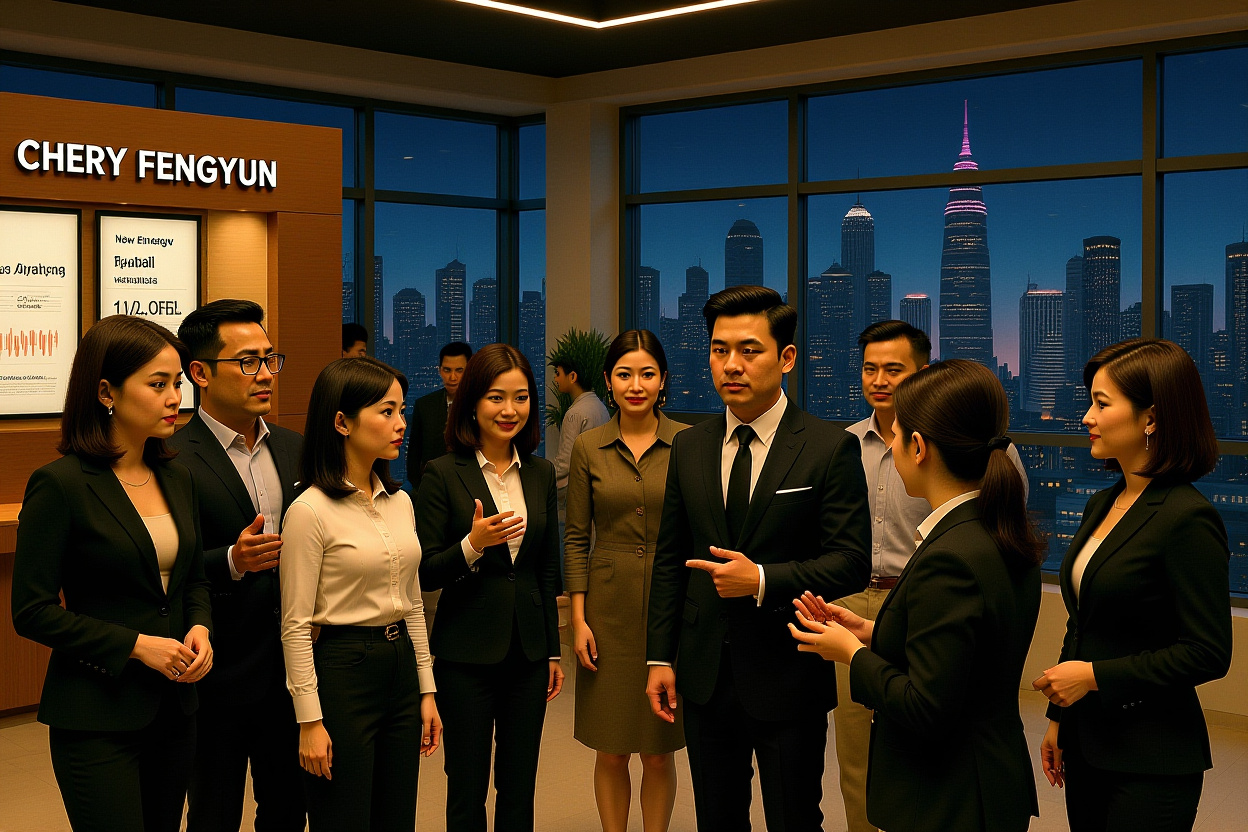
Chery Automobile has once again made headlines with a new internal directive requiring its Fengyun brand retail stores to extend daily operating hours by four hours. This move comes just weeks after Chairman Yin Tongyue (尹同跃) publicly apologized for the company’s historically demanding work culture and pledged to reduce meetings and overtime. The latest overtime notice highlights the persistent tension between Chery’s ambition to capture greater market share and its commitment to improving employee welfare.
– Chery has instructed Fengyun brand stores to extend business hours until 10 PM to accommodate evening customers.
– The automaker’s chairman recently apologized for overworking employees and promised to reduce meetings.
– Despite internal reforms, strong sales growth is driving aggressive retail strategies.
– The new policy requires staff in key roles to remain fully engaged during extended hours.
– Chery’s August sales increased 14.6% year-over-year, indicating strong market demand.
Chery’s New Overtime Directive for Fengyun Stores
On September 8, Chery Auto issued a notice to all Fengyun brand retail locations, urging them to extend operating hours until 10 PM. The company stated that this change is aimed at better serving customers who prefer to visit showrooms, test drive vehicles, or seek after-sales services in the evening. This latest overtime notice is part of a broader effort to enhance customer convenience and drive sales.
The directive emphasizes that sales consultants, service advisors, and reception staff must be fully present and attentive during these extended hours. Chery explicitly warned against any reduction in service quality or employee engagement after normal closing time. The company insists that the customer experience must remain consistent, whether during the day or late into the evening.
Staffing and Service Requirements
To ensure a seamless experience, Chery has mandated that all key personnel must be on duty during the extended operating window. The notice makes it clear that stores should avoid scheduling fewer staff or allowing fatigue to affect service levels. This move is intended to support Chery’s brand image and competitiveness in a crowded automotive market.
Background: Chairman’s Apology and Pledge to Reduce Overtime
The new overtime notice stands in stark contrast to recent internal reforms championed by Chery’s leadership. In late July, Chairman Yin Tongyue (尹同跃) addressed company executives at a mid-year meeting, acknowledging that Chery had long relied on excessive work hours and inefficient practices. He described these tactics as “inhumane” and offered a sincere apology to employees.
Yin emphasized that manufacturing excellence should be achieved through innovation and efficiency—not through what he called “fatigue tactics” or treating employee time as an unlimited resource. He announced that henceforth, meetings should not be scheduled on Saturdays, allowing employees—especially those based away from their families—to enjoy their weekends without work interruptions.
Internal Policy Reforms
Earlier this year, Chery introduced measures to streamline operations, including a 30% reduction in company-wide meetings and a 30% cut in the number of attendees at those meetings. These steps were meant to improve productivity and ensure that employees could focus on value-adding tasks rather than bureaucratic processes.
Strong Sales Performance Driving Aggressive Measures
Chery’s push for extended operating hours coincides with impressive sales results. In August, the company sold 242,736 vehicles, a 14.6% increase compared to the same period last year. Its subsidiary, Chery Automobile Co., Ltd., alone sold 230,752 units—a 12.3% year-on-year rise.
The group’s new energy vehicle sales reached 71,218, up 53.1% from the previous year. Exports also grew significantly, with 129,472 vehicles sold overseas—an increase of 32.3%. This robust performance helps explain why Chery is eager to keep its retail channels open longer and capture even more sales.
Competitive Pressure in the Chinese Auto Market
The Chinese automotive industry is highly competitive, with both domestic and international brands vying for market share. Companies like BYD, Geely, and Tesla are aggressively expanding their retail and service networks. In this environment, convenience and accessibility have become key differentiators for consumers making purchasing decisions.
Implications for Employees and Corporate Culture
While the extended hours may benefit customers and boost sales, they also raise questions about employee well-being. The latest overtime notice appears to conflict with Yin Tongyue’s earlier commitments to reduce overwork and promote a healthier work-life balance. This has led to discussions within the industry about whether Chery’s new policies are sustainable or merely a short-term sales tactic.
Many employees, particularly those in customer-facing roles, may find it challenging to adapt to longer shifts, especially if the changes are implemented without additional compensation or support. How Chery manages this balance could influence its reputation as an employer and its ability to attract top talent.
Industry-Wide Trends in Retail Operations
Chery is not alone in experimenting with extended operating hours. Other automakers and retail chains have also tested late-night services to appeal to busy professionals and families. However, the success of such initiatives often depends on staffing models, customer demand patterns, and operational efficiency.
What’s Next for Chery and the Fengyun Brand?
The Fengyun series is one of Chery’s strategic brand initiatives, focusing on new energy and intelligent vehicles. As consumer preferences shift toward electric and hybrid models, Chery is investing heavily in this segment. The decision to extend showroom hours may be part of a larger effort to raise the brand’s profile and compete more effectively with rivals.
If the longer hours lead to higher customer engagement and sales, Chery may consider expanding the policy to other brands within its portfolio. However, if employee morale drops or operational costs rise significantly, the company may need to rethink its approach.
Balancing Growth and Well-Being
The situation underscores a classic corporate dilemma: how to pursue aggressive growth while maintaining a positive organizational culture. For Chery, the challenge will be to align its market ambitions with its pledge to respect employees’ time and well-being. How the company navigates this balance may serve as a case study for other automakers in China and beyond.
Chery’s latest overtime notice reflects the persistent pressure on automakers to adapt quickly to market demands while addressing internal operational challenges. While the company’s sales growth is impressive, its long-term success will depend on more than just extended operating hours—it will require a sustainable approach to retail innovation, employee satisfaction, and customer service. As consumers and employees alike watch closely, Chery has an opportunity to lead not only in sales but also in corporate responsibility and workplace culture.