



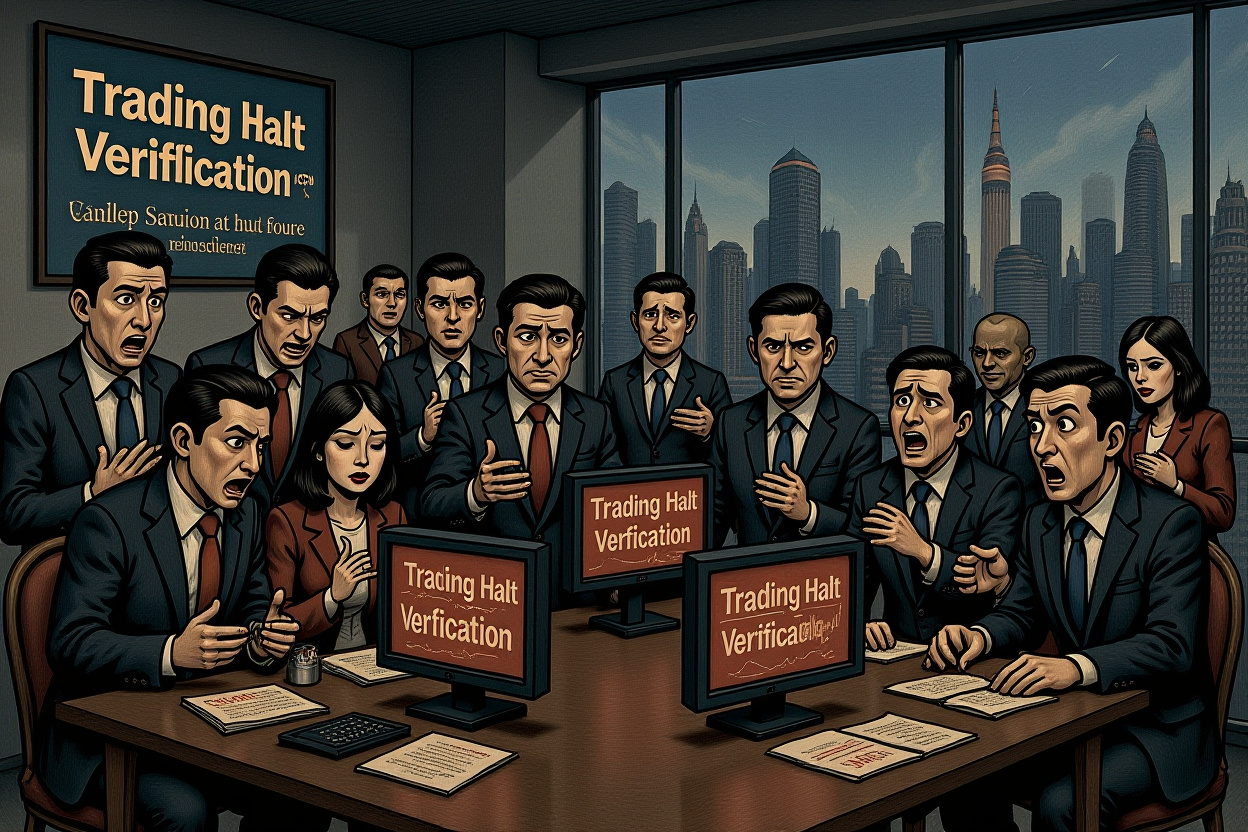
A high-flying stock that captured market attention with eight consecutive days of hitting the upward price limit has suddenly been suspended from trading pending verification. This development has sent shockwaves through the investment community and raised questions about market stability and regulatory oversight. The trading halt verification alert represents a critical moment for both the company involved and the broader market ecosystem.
– A previously surging stock with 8 straight limit-up sessions faces immediate trading suspension
– Regulatory authorities have initiated a verification process to examine potential irregularities
– This event highlights the risks associated with extreme market speculation and volatility
– Investors need to understand the implications of such trading halts on their portfolios
– The situation demonstrates China’s ongoing efforts to maintain orderly markets
The Phenomenon of Consecutive Limit-Up Stocks
The Chinese stock market has frequently witnessed stocks achieving multiple consecutive limit-up sessions, creating both opportunities and risks for investors. These dramatic price movements often attract significant attention from retail investors seeking quick profits. However, they also draw scrutiny from regulators concerned about market manipulation and excessive speculation.
What Drives Extreme Price Movements
Several factors can contribute to a stock experiencing multiple limit-up sessions:
– Market sentiment and herd behavior among retail investors
– Speculative trading based on rumors or unverified information
– Genuine fundamental improvements in the company’s prospects
– Limited float and high demand creating supply constraints
– Algorithmic trading and automated systems amplifying movements
The trading halt verification alert typically occurs when authorities detect unusual patterns or potential violations of market rules. This protective measure aims to prevent further market distortion while investigators examine the situation.
Regulatory Framework for Trading Halts
China’s securities regulatory framework includes specific provisions for temporary trading suspensions when stocks exhibit extreme volatility. The China Securities Regulatory Commission (CSRC) and stock exchanges maintain surveillance systems that automatically flag unusual trading activity.
Verification Process and Timeline
When a trading halt verification alert is issued, the company must cooperate with regulators to provide comprehensive information about recent developments. This process typically involves:
– Reviewing all corporate announcements and disclosures for accuracy
– Examining trading records of major shareholders and company insiders
– Assessing whether material information was properly disclosed to all investors
– Determining if market manipulation or other violations occurred
The verification period can last from several hours to multiple trading days, depending on the complexity of the investigation. During this time, investors cannot buy or sell the stock, creating potential liquidity issues for those holding positions.
Impact on Investors and Market Participants
The sudden imposition of a trading halt verification alert creates significant challenges for various market participants. Retail investors who chased the rally may find themselves trapped in positions unable to exit. Institutional investors must reassess their risk models and compliance procedures.
Risk Management Considerations
Sophisticated investors employ several strategies to manage the risks associated with potential trading halts:
– Setting strict position limits for high-volatility stocks
– Implementing stop-loss orders that trigger before extreme moves occur
– Diversifying across sectors and market capitalizations
– Maintaining awareness of regulatory changes and enforcement priorities
The trading halt verification alert serves as a reminder that rapid price appreciation without fundamental support often ends abruptly. Investors should approach such situations with caution rather than euphoria.
Historical Precedents and Case Studies
This isn’t the first time the Chinese market has experienced stocks with multiple limit-ups facing sudden trading suspensions. Historical analysis reveals patterns that can inform current investment decisions.
Outcomes of Previous Verification Processes
Previous instances of trading halt verification alerts have resulted in various outcomes:
– Resumption of trading after no violations were found (approximately 35% of cases)
– Discovery of disclosure violations leading to fines and management changes (40%)
– Identification of market manipulation resulting in criminal investigations (15%)
– Permanent delisting due to severe irregularities (10%)
These statistics highlight the serious nature of regulatory verification processes and the potential consequences for companies and investors. The trading halt verification alert should never be ignored as a routine market event.
Market Implications and Systemic Concerns
The frequency of extreme price movements and subsequent trading halt verification alerts raises questions about market efficiency and stability. Regulators walk a fine line between allowing market forces to operate and preventing manipulative practices.
Balancing Innovation and Regulation
Chinese authorities continue to refine their approach to market supervision:
– Enhancing surveillance technology to detect irregularities more quickly
– Increasing penalties for violations to deter misconduct
– Educating investors about the risks of speculative trading
– Developing circuit breakers and other mechanisms to reduce volatility
The trading halt verification alert system represents one tool in this broader regulatory toolkit. While sometimes controversial, these interventions aim to maintain fair and orderly markets for all participants.
Investor Strategies in Volatile Conditions
Navigating markets where trading halt verification alerts occur requires adjusted investment approaches. Both short-term traders and long-term investors must incorporate the possibility of sudden trading suspensions into their planning.
Practical Steps for Portfolio Protection
Investors can take several concrete actions to mitigate risks associated with verification halts:
– Conduct thorough fundamental analysis before investing in high-flying stocks
– Avoid allocating excessive capital to any single speculative position
– Monitor company announcements and regulatory developments closely
– Maintain cash reserves to handle unexpected liquidity constraints
– Consider using options or other derivatives to hedge positions
The trading halt verification alert often arrives without warning, making preparation essential rather than reactive. Smart investors plan for worst-case scenarios while hoping for best-case outcomes.
The Future of Market Regulation in China
As China’s financial markets continue developing and internationalizing, regulatory approaches will evolve. The trading halt verification alert mechanism will likely undergo refinement to address new challenges and market conditions.
International Comparisons and Best Practices
China can learn from other markets that have dealt with similar issues:
– The United States’ approach to trading halts and volatility controls
– European mechanisms for addressing market manipulation concerns
– Asian markets’ experiences with speculative bubbles and regulatory responses
Adapting global best practices to local conditions will help China develop more effective market oversight while supporting healthy capital formation. The trading halt verification alert system will remain a key component of this regulatory infrastructure.
The sudden trading suspension of a stock after eight consecutive limit-up sessions serves as a powerful reminder of market risks and regulatory responsibilities. While such dramatic price movements create profit opportunities, they also carry significant dangers for unprepared investors. The verification process aims to ensure market integrity and protect investors from potential manipulation.
As markets continue evolving, both regulators and participants must adapt to new challenges. Investors should view the trading halt verification alert not as an isolated event but as part of the broader market ecosystem. By maintaining discipline, conducting thorough research, and implementing robust risk management, market participants can navigate these situations successfully.
Stay informed about regulatory developments and market conditions by subscribing to our financial updates and following official exchange announcements. Your vigilance today can prevent costly mistakes tomorrow.