



Executive Summary
The recent debut of Sichuan-Chongqing grilled fish brand Kaozhuang in Shanghai has captivated market observers, but beneath the surface lies a critical case study for investors in Chinese consumer equities. This article delves into the phenomenon, extracting key insights:
- Kaozhuang’s 13-hour queues represent a peak in ‘hunger marketing’ tactics, driving short-term viral fame but exposing operational and reputational vulnerabilities.
- The brand’s dependence on queuing data for promotion highlights a broader trend in China’s F&B sector, where virality often masks deeper sustainability challenges.
- Consumer backlash and the emergence of a scalper economy indicate that such strategies can quickly lead to negative sentiment, impacting brand equity.
- Historical parallels with other ‘queue king’ brands like Tai Er Suancai Yu suggest a common lifecycle, raising questions about long-term value creation.
- For investors, this case underscores the need to scrutinize operational resilience, consumer retention metrics, and marketing dependence when evaluating F&B stocks in volatile markets.
The Shanghai Spectacle: When Queuing Becomes a Market Signal
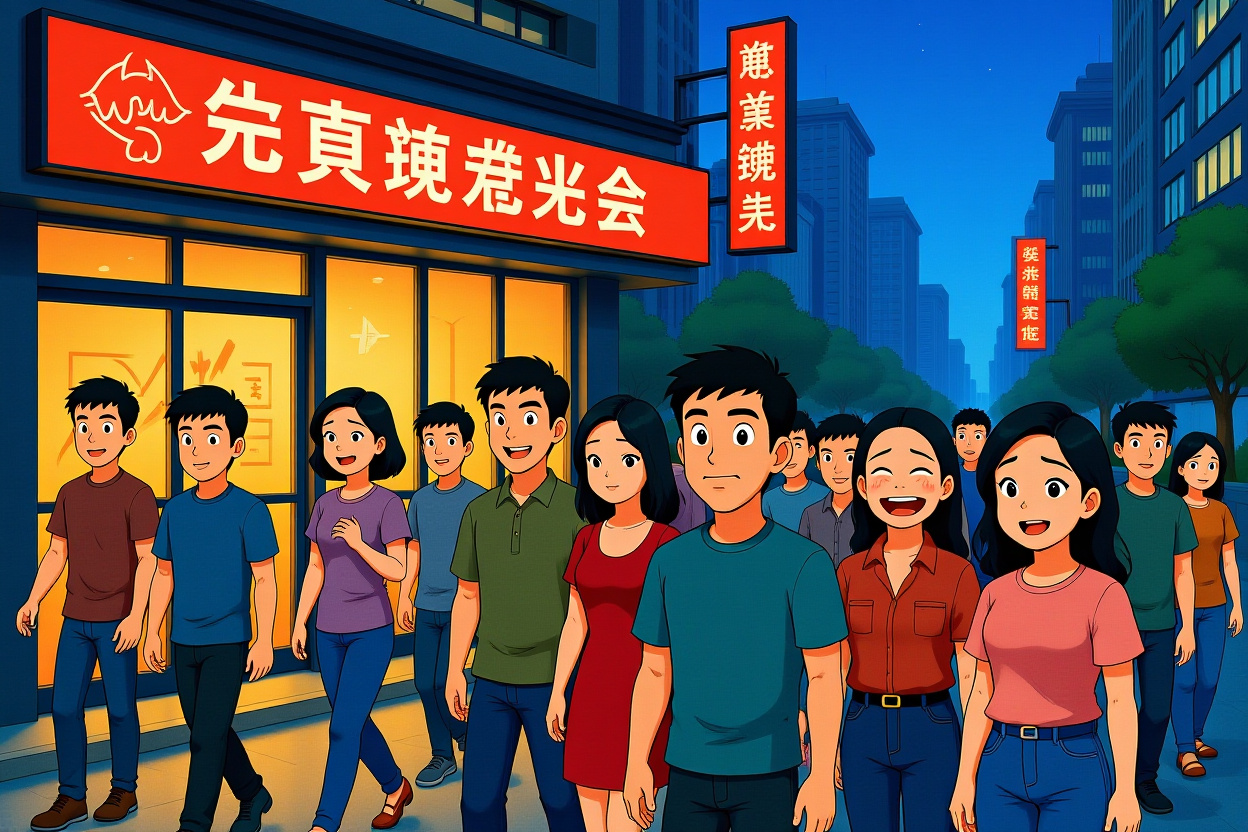
The opening of Kaozhuang’s first Shanghai store sent shockwaves through social media and industry circles. Reports detailed queues stretching up to 13 hours, with over 6,300 tables booked on the second day and more than 4,000 still waiting past midnight. This isn’t merely a dining trend; it’s a potent market signal reflecting consumer appetite, marketing efficacy, and the intense competition within China’s food and beverage landscape. For institutional investors tracking the consumer discretionary sector, such phenomena offer real-time data on brand heat, but they also warrant a deeper analysis of underlying fundamentals. The ‘hunger game’ strategy, characterized by artificial scarcity and hype-driven demand, is a double-edged sword that can inflate short-term metrics while jeopardizing long-term stability.
Data-Driven Hype: From Beijing to Shanghai
Kaozhuang’s expansion narrative has been meticulously crafted around queuing statistics. During its Beijing debut in 2024, promotional materials highlighted uninterrupted customer flow from 10 AM to midnight without discounts. The second Beijing store boasted 450 tables booked within an hour and an average wait time of 6.5 hours. The Shanghai launch pushed these numbers further, cementing queuing as a core brand identifier. This data-centric approach fuels media coverage and social buzz, but it also raises questions about authenticity and sustainability. In a market where consumer patience is finite, reliance on such metrics may signal a lack of diversified growth drivers. Investors should note that while queue length can indicate initial demand, it is a poor proxy for repeat business or profitability.
The Scalper Economy and Systemic Vulnerabilities
The overwhelming demand has spawned a secondary market, with scalpers reportedly earning over 1,000 yuan daily by reserving and selling queue numbers. In Beijing, a single number was allegedly resold for 300 yuan, while in Shanghai, the use of courier services for proxy bookings added another layer of complexity. Despite brand claims of countermeasures, these activities expose weaknesses in queue management systems. For a financial news audience, this highlights operational risks—specifically, how inadequate infrastructure can lead to consumer frustration, reputational damage, and potential regulatory scrutiny. The proliferation of scalpers distorts true demand signals and can artificially inflate perceived popularity, misleading market analysts.
Deconstructing the ‘Hunger Game’: Marketing Masterstroke or Miscalculation?
Kaozhuang’s strategy is rooted in aggressive pre-launch campaigns, including social media teasers, celebrity endorsements—such as involving star Zhang Yanqi as a Sichuan-Chongqing tasting ambassador—and trial events. The slogan ‘不吃火锅,就吃烤匠’ (‘If not hotpot, then Kaozhuang’) spread rapidly, leveraging regional cuisine pride. However, this ‘hunger game’ approach prioritizes spectacle over substance, potentially alienating core customers. On social platforms, reviews are mixed: some praise the ambiance but criticize the food as ‘mediocre’ or ‘too oily,’ while others deem the experience not worth the wait. This divergence underscores a critical risk—when marketing hype elevates expectations beyond what product and service can deliver, customer satisfaction plummets, threatening brand equity and, by extension, investor confidence in related equities.
Founder Background and Inherent Marketing Dependence
Kaozhuang’s founder, Leng Yanjun (冷艳君), hails from the television advertising industry, a background that shapes the brand’s DNA. Public records indicate that initial store performance was poor until improvements in ‘store decor’ and ‘brand marketing’ were made. This history suggests a deep-seated reliance on promotional tactics rather than organic growth through product excellence. For market professionals, this is a red flag; companies overly dependent on marketing for customer acquisition often face higher costs and lower loyalty rates. In China’s fast-evolving F&B sector, where trends shift rapidly, such dependence can lead to volatility in financial performance, affecting stock valuations for brands within the same segment.
Sustainability Crossroads: Lessons from the ‘Queue King’ Lifecycle
The trajectory of viral F&B brands in China often follows a predictable pattern: meteoric rise via marketing, followed by a ‘traffic backlash’ phase where hype collides with reality, and finally, a decisive shift toward brand sedimentation or decline. Kaozhuang now stands at this crossroads. Comparisons to Tai Er Suancai Yu are instructive; once a phenomenon with unique rules and cartoonish decor, its popularity has waned, leading to a net reduction of 135 stores in 2025 and a forced diversification beyond its core dish. This ‘hunger game’ strategy, while effective for initial customer capture, does not guarantee longevity. The fundamental challenge is converting curiosity-driven traffic into steadfast loyalty and repeat purchases—a metric closely watched by investors in consumer stocks.
Operational Strain and Consumer Sentiment Erosion
On third-party complaint platforms, grievances against Kaozhuang are mounting, targeting queue mechanism flaws, dish quality issues, and loopholes in premium ‘Black Gold Master’ skip-the-line privileges. One consumer noted that verification for proxy queuing was ‘rudimentary and virtually nonexistent.’ These operational shortcomings, compounded by massive crowds, strain resources and degrade the dining experience. From a market perspective, this erosion of consumer sentiment can rapidly translate into negative word-of-mouth, impacting footfall and same-store sales growth—key indicators for equity analysis. The ‘hunger game’ may drive top-line numbers temporarily, but without operational excellence, it jeopardizes bottom-line sustainability.
Market Implications for Investors in Chinese Consumer Equities
For fund managers and corporate executives focused on Chinese markets, the Kaozhuang phenomenon offers broader investment insights. The food and beverage sector is a critical component of consumer discretionary indices, and trends here can signal shifts in consumer behavior, regulatory pressures, and competitive dynamics. The ‘hunger game’ strategy, while not new, highlights the risks of overvaluation based on viral metrics rather than fundamental strength. Investors should prioritize companies with balanced growth strategies, robust operational frameworks, and a clear path to brand maturation. Monitoring consumer reviews, same-store sales data, and management commentary on marketing spend versus product development can provide early warning signs of potential downturns.
Regulatory and Competitive Landscape Considerations
As queuing incidents draw public and media attention, regulatory bodies like the State Administration for Market Regulation (市场监管总局) may intensify scrutiny on fair consumer practices and anti-scalping measures. This could lead to compliance costs or operational adjustments for brands employing similar tactics. Moreover, the competitive intensity in China’s F&B space means that any brand relying on gimmicks faces rapid obsolescence. Investors should assess how companies like Kaozhuang are innovating beyond queuing—whether through menu diversification, digital integration, or customer relationship management—to sustain competitive advantage. The ability to navigate this landscape will determine which brands thrive and which become cautionary tales in portfolio reviews.
From Viral Sensation to Enduring Brand: A Path Forward
The ultimate test for Kaozhuang and its peers is transitioning from a ‘queue king’ to a ‘long-term king.’ This requires a strategic pivot from hunger marketing to value-driven growth. Key steps include investing in product R&D to enhance taste and consistency, streamlining operations to improve service efficiency, and leveraging data analytics for personalized customer engagement. For instance, introducing technology solutions for queue management or offering transparent wait-time updates could mitigate consumer frustration. Additionally, building a loyalty program based on repeat visits rather than one-off hype can stabilize revenue streams. From an investment standpoint, companies demonstrating such adaptive strategies are better positioned for resilient performance, even amid market fluctuations.
Key Metrics for Investment Analysis
When evaluating F&B stocks in China, sophisticated investors should look beyond queue lengths and social media buzz. Critical metrics include:
- Customer Retention Rate: Measures repeat business, indicating brand loyalty beyond initial curiosity.
- Average Revenue Per Store: Tracks productivity and operational efficiency.
- Marketing Spend as Percentage of Revenue: High ratios may signal unsustainable growth models.
- Net Promoter Score (NPS): Gauges consumer satisfaction and likelihood of recommendations.
- Expansion Strategy: Assess whether new store openings are driven by genuine demand or speculative hype.
By focusing on these fundamentals, investors can discern whether a brand’s ‘hunger game’ is a temporary tactic or a precursor to durable value creation.
Navigating the Hype: Strategic Takeaways for Market Participants
The Kaozhuang case crystallizes a recurring theme in China’s consumer markets: the allure of viral success often obscures underlying fragility. While the ‘hunger game’ strategy can generate impressive opening numbers, its longevity is questionable without substantive product and operational backing. For business professionals and institutional investors, this serves as a reminder to approach high-profile consumer brands with disciplined due diligence. Prioritize companies that balance marketing innovation with core competencies, and be wary of those where queuing becomes the primary narrative. As consumer preferences evolve toward authenticity and experience quality, brands that master this balance will likely outperform in equity portfolios. Stay informed by monitoring industry reports, consumer sentiment indices, and regulatory updates to make data-driven investment decisions in this dynamic sector.